Wang Chuqin Ends His Last Asian Games With Three Silvers and No Joy in the Game
China's world No. 1 Wang Chuqin lost the Nagoya Asian Games men's singles final 4-0 to teammate Lin Shidong in 32 minutes, then said these Games — three silvers, no gold — were his last, and that he can no longer find the joy in playing.
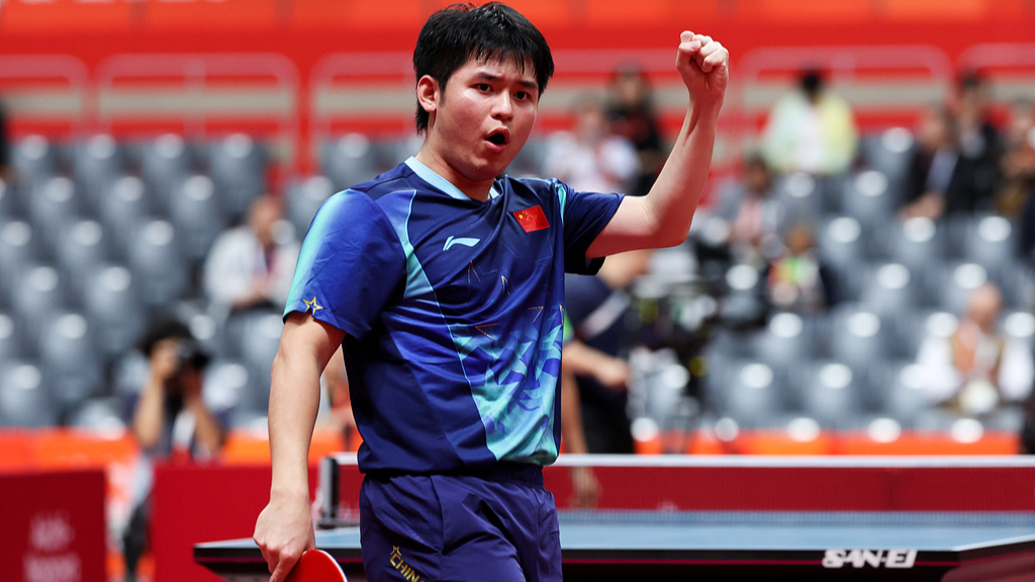
Four games, thirty-two minutes in total: the men's singles final at the Nagoya Asian Games on Sunday evening was over in less time than many training sessions. Lin Shidong beat Wang Chuqin — the world No. 1, the defending champion, the top seed — 4-0. When the ceremony ended, Wang took the silver medal off his neck almost as soon as he stepped down from the podium and walked off without looking back.
"I think this really was my last Asian Games," Wang told reporters afterwards, in remarks carried by CCTV Sports. His career, he said, moves in "spiral ups and downs," and he is "walking a road no one has walked before," facing problems China's previous stars never had to. Asked to explain the gap between his ranking and his results, he was blunter. "Playing now is just depletion — I don't know why I'm this tired. I can't find the feeling of enjoying the game" (现在打球一直在消耗,找不到享受和喜欢赛场的感觉). In another answer, he said the environment around the sport "isn't so pure anymore," a phrase his supporters on Weibo rendered as a slow poison draining the players' energy.
The case for crediting him anyway — one trending phrase reads, roughly, "still deserves a thumbs-up even without a gold" — rests on what a captain does. Wang won China's first point in the team final it lost 2-3 to Japan, the side's first men's team defeat at an Asian Games in 36 years Japan ended China's 36-year reign in the men's team event. By reaching the mixed doubles final with Sun Yingsha, he guaranteed China gold and silver in the event reaching the mixed doubles final with Sun Yingsha. And it was Wang who beat Iran's 34-year-old giant-killer Noshad Alamiyan 4-1 in the singles semi-final, sealing an all-Chinese final. The Yangzi Evening News framed his Games with the team's own proverb: success need not be credited to me, but it must pass through me (功成不必在我,功成必定有我). By that logic Wang did his job and still finished with three silvers and no gold — the team's arithmetic and the individual's prize pointing in opposite directions.
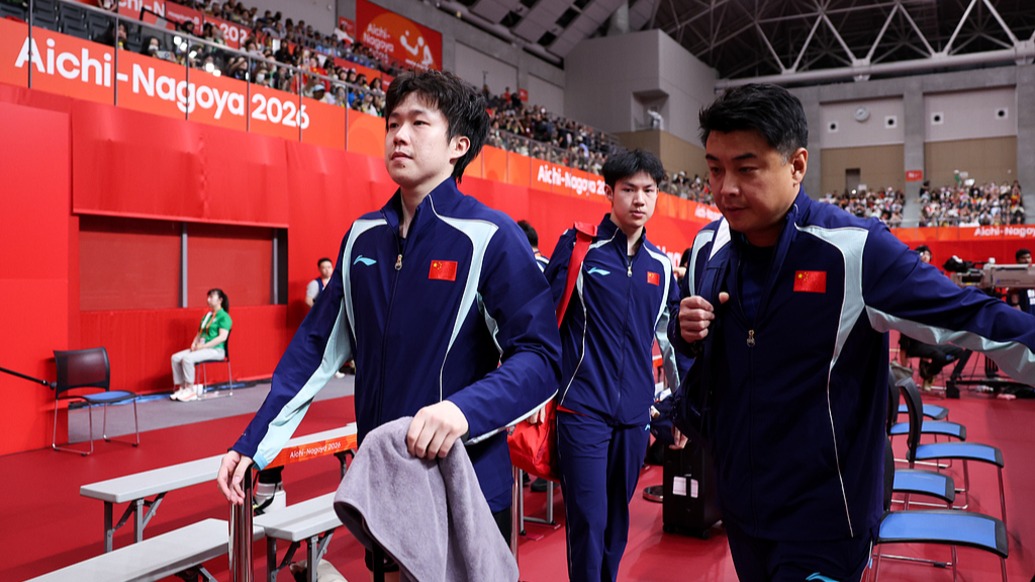
Lin's own Games read like the harder road. He reached the final of all four events he entered and left with three golds and a silver: a mixed doubles final that looks like a 4-0 sweep until you notice he trailed 2-8 in the fourth game and won it anyway; a men's doubles final against Japan's Harimoto Tomokazu and Shinozuka Hiroto in which he dropped the first game, lost the third 12-14 to trail 1-2, then took three straight, the sixth 11-1; a seven-game semi-final against Lin Yun-ju of Taiwan. After the final he said he had not expected to win 4-0, and that Wang was worn down by injury. Deng Yaping, the former world No. 1 turned commentator, judged on air that Lin had pressed Wang all match, and that the top seed carried the heavier weight.

The worry sits underneath the medal count: China still took six of the seven table tennis titles in Nagoya, yet the head of the General Administration of Sport has conceded that some traditional strength events "met challenges and results fell short of expectations" — a sentence already being pulled apart on Zhihu. Sun Yingsha, Wang's mixed doubles partner, said last week she may not last to the next Asian Games she may not last to the next Asian Games. Fans connect the fatigue both describe to the fan-circle economy that turns every loss into an inquest; one widely shared post asked why Wang should face "so much malice" for a single lost final, and Wang opened his own press conference with the pre-emption that "people will say I'm making excuses again."
Wang is 26. If this Asian Games really was his last, the team crown Japan took — and the singles crown that changed hands in thirty-two minutes — will belong to someone else the next time the continent gathers. Between now and Los Angeles, two summers away, lies the question Wang left open: whether the joy comes back.