In the Delivery Room They Hope for Boys, in the Ward They Hope for Girls: China Revisits Son Preference
An old saying — in the delivery room they hope for boys, in the hospital ward they hope for girls — went viral after a leading obstetrician paired it with a British study finding daughters provide most elderly care. The topic has become a nationwide argument about son preference, gendered care and who shows up at the bedside.
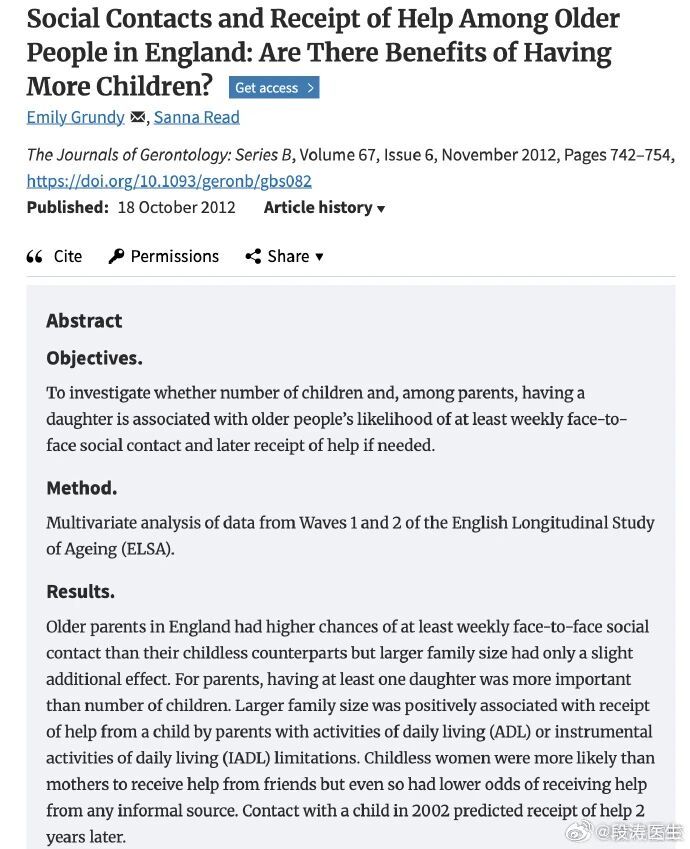
"In the delivery room families hope for a boy; in the hospital ward they hope for a girl" (产房盼男,病房盼女). An old saying about Chinese son preference went viral on Weibo this week — and the reversal it captures, a newborn son prized and a dying parent's daughter coveted, is exactly what a popular obstetrician is challenging.
The post came from Dr. Duan Tao, one of China's best-known obstetricians, who combined the saying with a British longitudinal study of more than 7,000 older people: whether elderly parents get steady care in old age depends less on how many children they have than on whether they have a daughter. Chinese social media took the finding as a diagnosis of its own family culture — under the hashtag pairing the delivery room and the hospital ward, the topic drew tens of thousands of likes and a nationwide self-audit of who actually shows up at the bedside.
Who shows up at the bedside
The proverb distills a demographic contradiction. Sons remain the preference at birth — when a first child is a daughter, Duan wrote, the second pregnancy is automatically read as "they want a son," and a family with two sons adding a third gets praised for loving children, while a family chasing a boy gets mocked for son preference. In the ward, though, it is daughters who dominate: posts under the hashtag described families "with three sons" where no one waits at the hospital bed, and one widely shared one-liner put the double standard with diary-like bluntness: "The good things all go to the sons; when someone needs caring for, they remember they have a daughter" (好事全是儿子的,需要人伺候了,想起来有女儿了).
Duan's post goes beyond the moral: it argues the "daughter advantage" is not innate. Girls are trained into care from childhood — given dolls and housekeeping games, praised for emotional expression, while boys who cry are mocked as unmanly — and much of what looks like female empathy is the daily practice of remembering birthdays, noticing moods and arranging hospital visits. Caring for the old, Duan argues, is learned behaviour, not biology; even the empathy studies he cites come with his own caveat that group averages say nothing about any individual son or daughter.
Why the saying has legs
The topic lands in the middle of China's demographic squeeze: births settling near 8 million a year, a shrinking generation of adult children facing ever longer parent-care years. The state's response — a pledged childcare law, pro-birth messaging — is aimed at fertility, not at who provides the care, and the saying gives ordinary families a vocabulary for the gap: sons inherit the pride and the property, daughters the stethoscope and the hospital roster.
It also brushes against policy. China has spent years pressing a three-child fertility campaign while saying little about why families still prize sons at birth and daughters at the bedside. The viral moment is not yet a policy debate — but it puts the question, politely and statistically, at the centre of the family. If steady late-life care really runs through daughters, the son-preference arithmetic may flip on its own: a society that learned to prize sons at birth may yet learn, from a bedside, to prize daughters.