The German Trainer Shoes Trending in China Are Sending Wearers to the Hospital
German trainer shoes have become the flat, narrow shoe of the season in China, and Hangzhou hospitals are seeing the consequence: a 32-year-old who squeezed her feet into the style for months has been diagnosed with bunions. The story has opened a debate over whether the shoes — or the way Chinese shoppers buy them — are to blame.
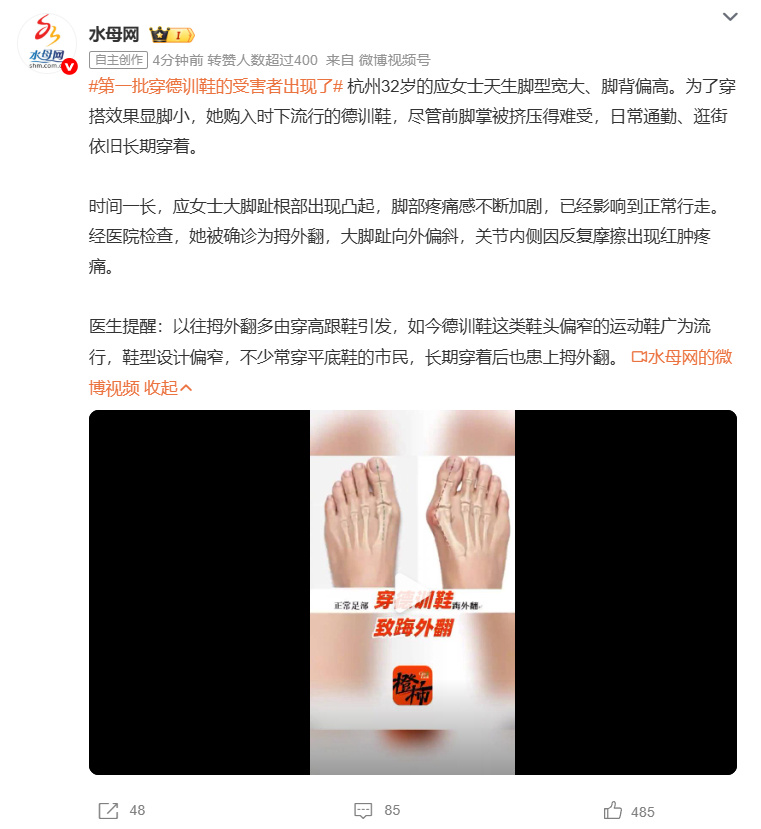
A pair of German army trainer shoes — "德训鞋" to the Chinese shoppers who made them the season's quiet uniform — has landed one Hangzhou woman in hospital. The hashtag declaring her the "first victim of the German trainer shoe" trended on Weibo this week, and with it a dispute over who, or what, is actually at fault.
The 32-year-old, surnamed Ying, has naturally wide feet and a high instep. She bought the low-profile leather trainers anyway, drawn by the way they make feet look smaller under trousers and skirts, and kept wearing them through commutes and shopping trips even as the front of her foot ached. By the time she reached Hangzhou First People's Hospital, the joint at the base of her big toe had begun to jut outward: a diagnosis of hallux valgus, the bunion deformity podiatrists more often see in lifelong high-heel wearers.
[A trend with a particular grip]
German trainers, originally a 1970s military-issue design, have ridden a wave of Chinese fashion preferences toward quiet, versatile "clean fit" dressing — flat, narrow and neutral, they photograph well and pair with everything. But the silhouette is cut narrow through the toe box, and Chinese orthopedists told local media that the style is now producing bunions in women who never wore heels. The doctor's advice was to choose shoes that fit the foot, not the outfit.
The Weibo reaction, though, split in an instructive way. One widely shared post accused the coverage of scapegoating the shoe: Ying's problem, it argued, was wearing a shoe that hurt rather than swapping it out, since bunions also involve genetics and foot structure. The same post translated an American Academy of Orthopaedic Surgeons fitting guide — try both shoes, buy for the larger foot, leave a centimeter beyond the longest toe — as the genuinely useful advice the headline buried.
That argument matters beyond one woman's foot. Chinese e-commerce makes it unusually easy to buy shoes by search term and screenshot rather than by fit; sizing is standardized on paper and returns are cheap, so a style can go massively viral before anyone asks whether it suits the foot it lands on. Doctors quoted in Chinese media urged shoppers with wide feet to resist narrow toe boxes however photogenic — advice the "first victim" might have wanted before the ache became a diagnosis.