A Newborn Died at a Guangzhou Confinement Center With Milk in Her Airway
A six-day-old girl was wheeled out of her mother's room for a feeding at a Guangzhou postpartum center and was declared dead two hours later; doctors suctioned milk residue from her airway. Police have accepted a negligent-homicide complaint against her caregiver — while the center stays open, blames a pre-existing illness, and neither side will release the surveillance video.
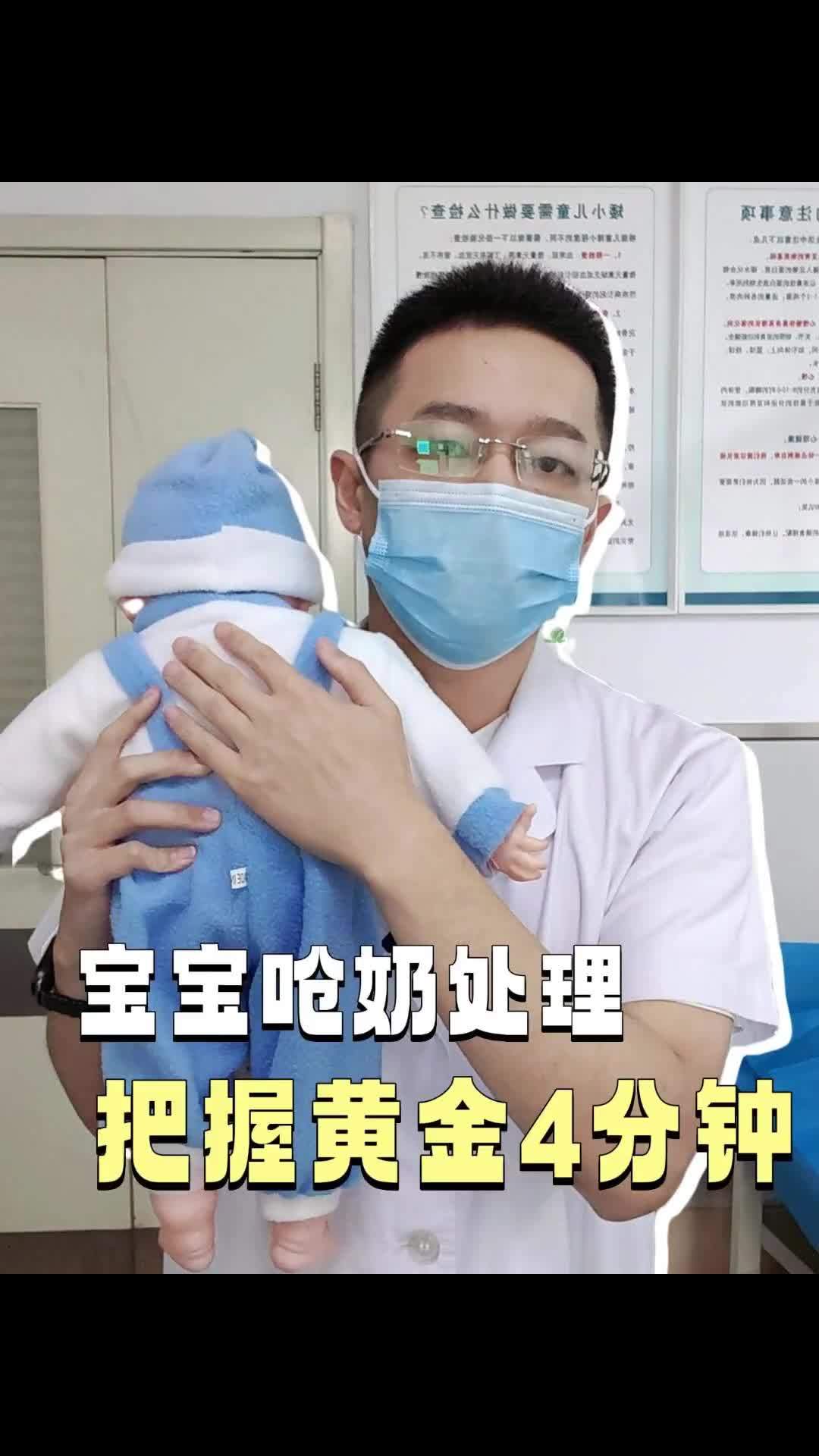
At around 12:30 pm on August 24, a caregiver at the Nuanyue postpartum center in Guangzhou's Panyu district wheeled six-day-old Dai Anlan out of her mother's room for a feeding. At 1:10 pm, the mother's phone rang: come downstairs. By then, she told the outlet Red Star News, the baby was already inside an ambulance. At 2:30 pm, doctors pronounced her dead. The diagnosis in the medical record runs three items long: cardiorespiratory arrest, sudden neonatal death, asphyxiation — cause unconfirmed.
What the paramedics found has turned a family tragedy into a criminal case. In the ambulance they cleared the newborn's mouth and saw milk; after intubating her, they suctioned a small amount of milk-curd-like residue from her trachea, according to the clinical record Red Star News reviewed. The family believes the girl choked during a feeding and was not properly rescued. On August 25, Panyu police formally accepted a complaint against the caregiver, surnamed Chen, on suspicion of negligent homicide. This week, the station handling the case told a reporter only that it was under investigation; Chen, reached by phone, hung up.
The center's own nursery cameras recorded the lunch hour in question, and the father says he has seen the footage: Chen fed the baby four times in roughly half an hour, the girl spat up, her face darkened, and the two caregivers on duty patted her back, pinched her nose and flicked her hands and feet — and she did not respond. Neither the family nor the center, however, will give that video to reporters. The decisive stretch between the start of the feeding and the 12:58 emergency call now exists only in the parties' competing accounts of it. The mother does remember one sentence from beside the ambulance, where Chen came to hold her up as she collapsed: she didn't know what had happened either, she said — she had fed the baby two mouthfuls of milk, and it had turned out like this.
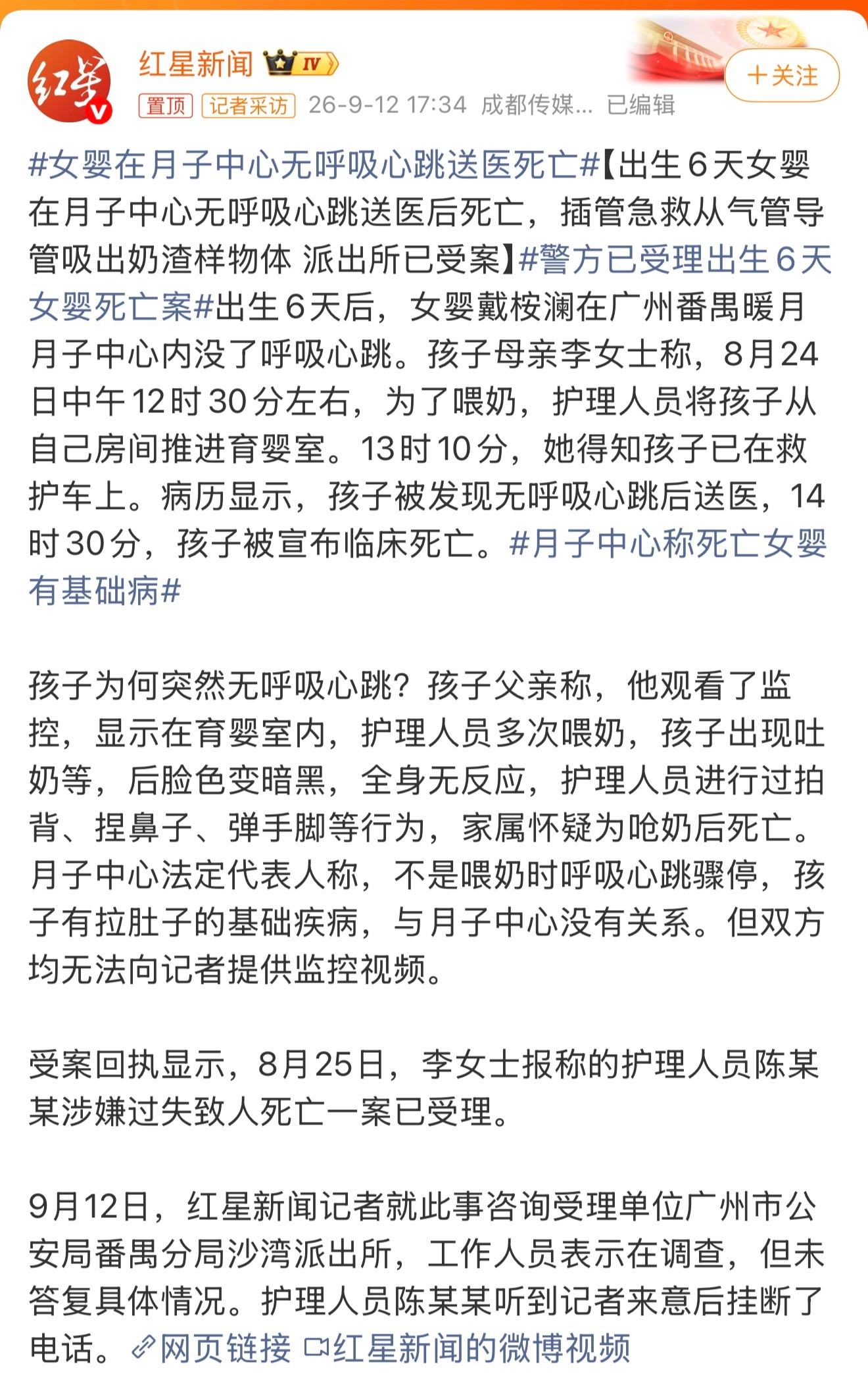
The company behind the center disputes the choking account entirely. Its legal representative told Red Star News the baby had been unwell since admission — diarrhea, a hospital visit the following day, dehydration despite medication — and denied both that she choked during a feeding and that she went into arrest while being fed. The center remains open; Chen has been given "a few days off" rather than a suspension, pending the police outcome. The mother calls the illness claim a smear — the center sent the family photos of the baby's admission check on August 22, she says — and is demanding a formal apology, accountability and compensation. An autopsy has been carried out, and the family is waiting for the forensic report that will anchor whatever case follows.
Confinement centers are the commercialized form of zuo yuezi, the traditional month a new Chinese mother spends resting indoors after childbirth — care that extended families once provided at home, now bought for tens of thousands of yuan a month. The industry has grown faster than the rules governing it, and newborn nurseries are staffed by caregivers whose training requirements vary by city. On Weibo, where the case trended on Friday, the commentary under the news was less about one Panyu center than about the pattern. "Confinement-center accidents are no longer isolated cases," one commenter wrote, calling for training, emergency drills and supervision to be moved ahead of the next tragedy rather than after it.
For now, the only witnesses to the 28 minutes in question are the nursery cameras — held by two parties who agree on almost nothing else.