China's Health Regulator Says 30 Drug Firms Paid 184 Million Yuan in Kickbacks to One Hospital
The National Healthcare Security Administration disclosed that staff at Hebei Medical University Second Hospital took bribes 46 times over 11 years, totalling 184 million yuan, from more than 30 drug and device firms — a rare, itemised look at how kickbacks are built into China's hospital procurement.
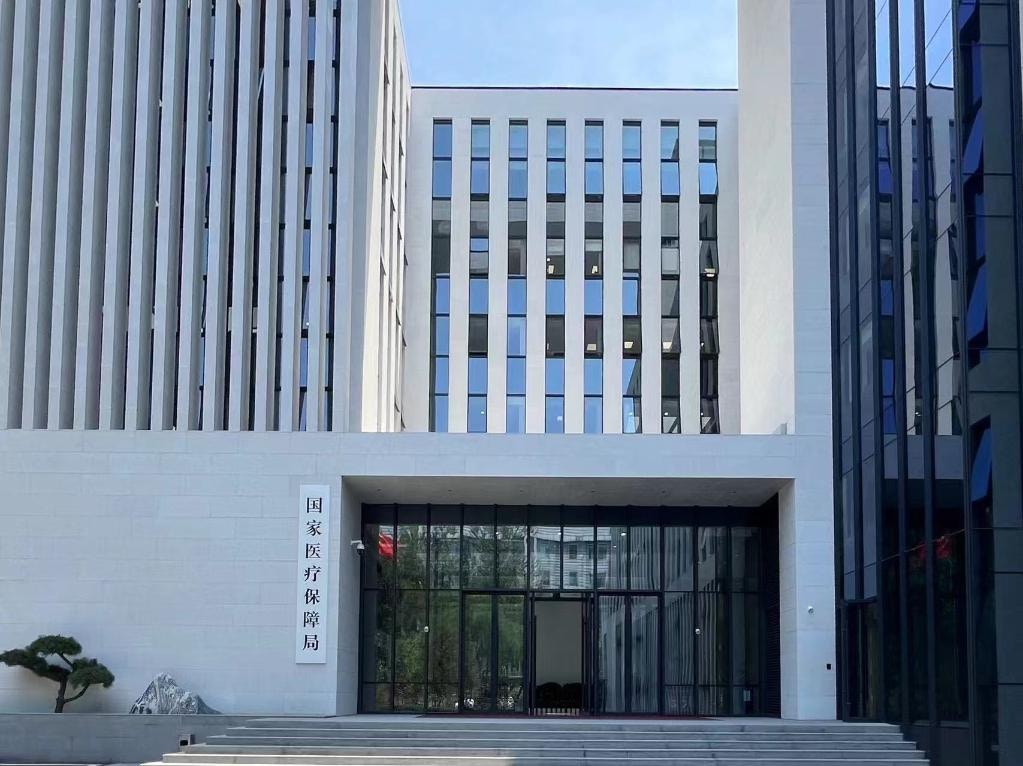
China's top health-cost regulator has publicly laid out one of the largest hospital bribery cases it has found: staff at Hebei Medical University Second Hospital in Shijiazhuang accepted commercial bribes 46 times over eleven years, from more than 30 pharmaceutical and medical-device firms, in cases totalling 184 million yuan (about 26 million US dollars).
The figures come from a disclosure published on September 13 by the National Healthcare Security Administration, the agency that runs China's national medical insurance scheme and polices drug pricing. Analysing three years of commercial bribery cases in pharmaceutical purchasing, it flagged hospitals where "internal education and management are lax" — and made the Shijiazhuang hospital its exhibit. The largest single case involved 16.58 million yuan, and in the second half of 2025 alone the hospital appeared in nine criminal court judgments.
Five thousand yuan per stent
The case first cracked open through a supplier. As the regulator's filing recounts, a Shanghai trading company's bribery case exposed that hospital staff took a 5,000-yuan kickback on every cardiac stent they implanted. The same campaign has already put three consecutive chiefs of Zhengzhou's largest hospital under investigation, and the Shijiazhuang disclosure shows the pattern running far below the level of hospital bosses — down to whichever staff member signs off on a purchase order.
On Weibo, the story quickly found its metaphor. The hashtag #30家药企围猎1家医院# — "30 drug companies hunting one hospital" — grouped the coverage, and as one user put it, the sight of three dozen firms surrounding a single institution recalled "a hunt on the African savannah" (@装老师有毒).
The comment that travelled furthest made the economics explicit: the 184 million yuan "isn't a number — who paid it? Patients. Every inflated consumable, every expensive drug pushed onto you ends up on your bill. A firm spends tens of millions on bribes, then recovers double from insurance funds and patients" (@simple不完美却最美). It is a familiar arithmetic to anyone who follows China's medical system: a kickback is not a transfer between companies and staff but a cost built into prices, reimbursed in part by the state insurance pool and in part by households.
What the regulator is offering instead
The administration's answer, so far, is publicity plus market exclusion. Since 2020 it has run a credit-evaluation system for pharmaceutical procurement, and the firms named in this week's disclosure — the filing lists companies including Hebei Xiang'en Medical Devices and Beijing Jinkaihui — face consequences that operate through procurement itself: tainted firms can find their products barred from hospital tenders, the channel through which nearly all of their revenue flows.
Whether that bites harder than past crackdowns is the open question the disclosure leaves hanging. China's anti-corruption drive in healthcare has run for three years, reached thousands of hospital officials, and coexists with the kickback economy it targets; the regulator's own framing — that some hospitals' controls are "lax and soft" — is an admission that detection has outrun deterrence. What is new in this case is the granularity: a single hospital, eleven years of payments, and a per-stent price for corruption, all laid out in public.