Honor Rejects Claim That a Full-Screen Ad Delayed an Emergency Call Before a Woman's Death
A Jinan family says a full-screen 'Magic Wallpaper' ad trapped the 120 emergency call as the father tried to summon help for his wife's heart attack; Honor calls the account inaccurate. The dispute has put China's built-in phone advertising on trial.
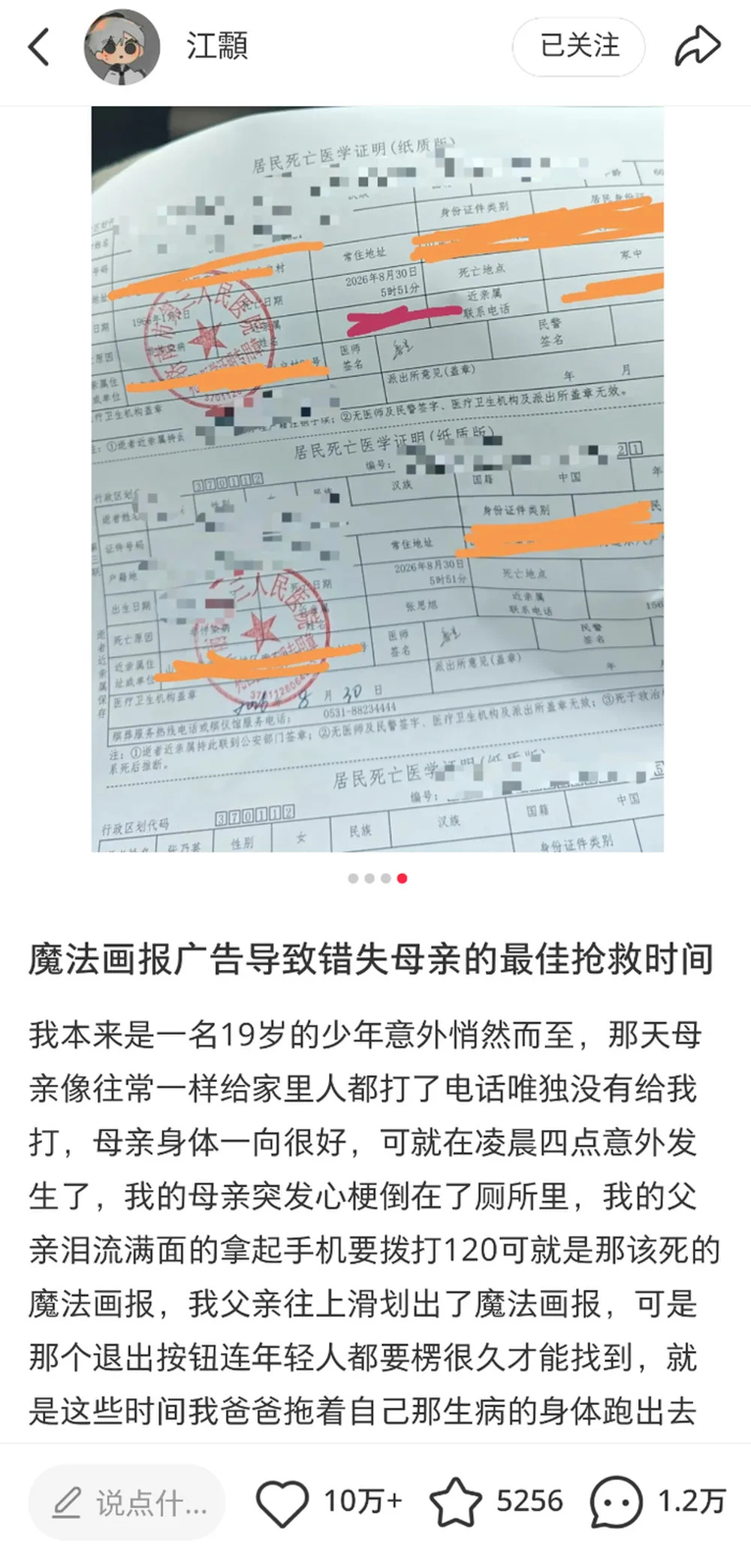
A complaint posted on Weibo on the night of September 10 has put one of Honor's built-in advertising features at the centre of an argument about the advertisements stitched into Chinese phones. The poster, a man surnamed Zhang in Jinan, Shandong, wrote that his mother suffered a heart attack before dawn on August 30 and collapsed in the bathroom. His father grabbed the nearest phone — an Honor X70 — to dial 120, China's emergency number, but swiping the lock screen summoned "Magic Wallpaper" (魔法画报), a full-screen feed of promotional content, and he could not find his way out of it. The father, who has survived a stroke and struggles with touchscreens, gave up on the phone and ran next door to hammer on neighbours' doors, as Taiwan's Central News Agency recounted in its own write-up. His wife died that morning. In the family's telling, the golden window for treating a heart attack closed while a phone displayed an advertisement.
"120 couldn't be dialled, because of your Magic Wallpaper"
Zhang's post included screenshots of his exchange with Honor's online customer service, and the exchange is what carried the story. "120 couldn't be dialled out, because of your Magic Wallpaper," he wrote to the agent. "My mother's phone was still stuck on Magic Wallpaper in the end. That day there was clearly a chance to make that call, and it wasn't made." The reply he received, per screenshots carried by the Xiaoxiang Morning Herald, was customer service at its most procedural: the situation had been noted down and flagged for him.
Honor's public response, reported on September 13, took a different tack: the company said the account circulating online "did not match the facts", but that out of humanitarian concern it would not pursue the matter against the poster. It also said this was the first feedback it had received about Magic Wallpaper interfering with use.
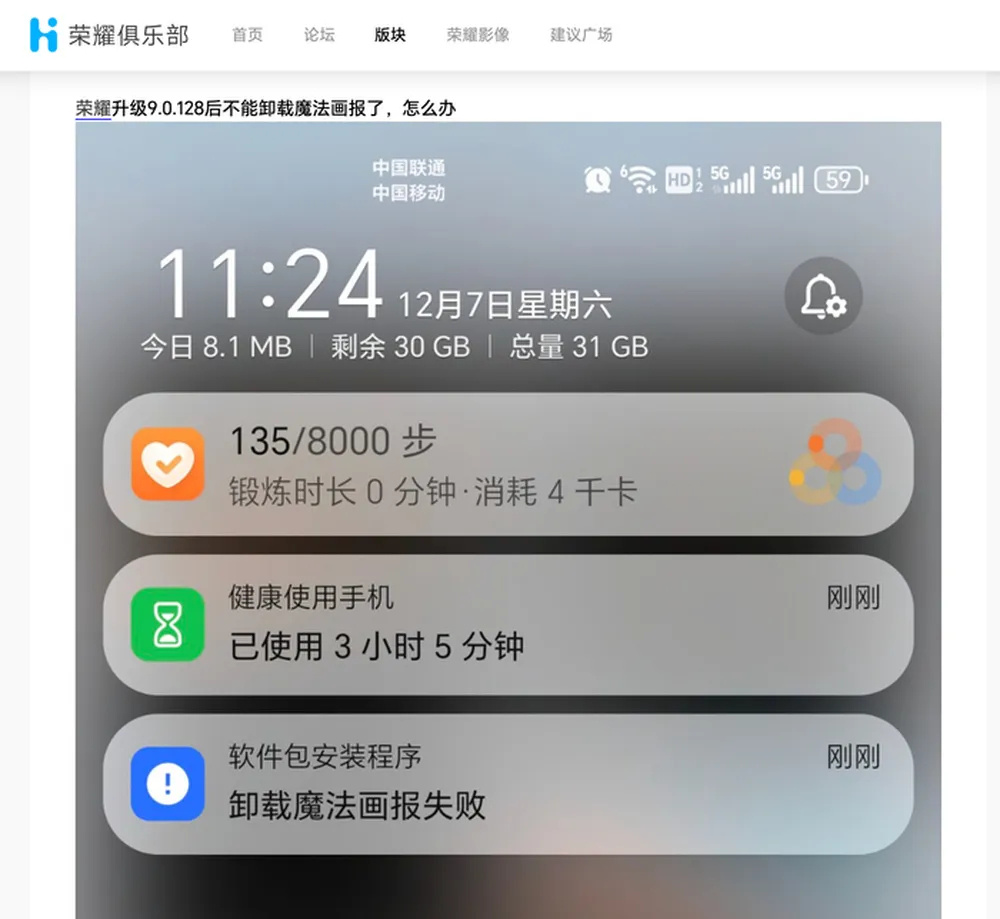
That claim of a first is the part the internet has tested hardest. Within days, users were circulating an older post from Honor's own community forum, titled "After upgrading to 9.0.128, cannot uninstall Magic Wallpaper, what to do?", above a system notification reading "Failed to uninstall Magic Wallpaper". The family's demand that the feature be taken offline, in other words, collides with a design that users had already found hard to remove.
Ads built into the operating system
Magic Wallpaper is not a third-party app but a lock-screen content service shipped by Honor itself, in the tradition of the system-level advertising Chinese Android makers build into their phones — preloaded feeds, splash screens and push notifications that users have complained about for years and that are hardest of all to switch off on the devices of older, less confident owners. An emergency call trapped behind one of those surfaces is the nightmare scenario that explains why the story did not stay a consumer complaint: the family's grievance is not merely that an ad annoyed them, but that interface design decided who got to ask for help, and when.
Whether regulators treat it that way is the open question the case leaves. Honor has offered condolences, a disputed account of the facts, and no announced change to the feature. The phones, meanwhile, continue to ship with it.