He Paid 84,800 Yuan for the Sheep He Killed. He Still Couldn't Take Them Home.
A driver on one of China's most popular self-driving routes hit a flock of sheep, paid 84,800 yuan in compensation — and was told the dead animals were not his. The reason is a corner of tort law that city drivers keep rediscovering.
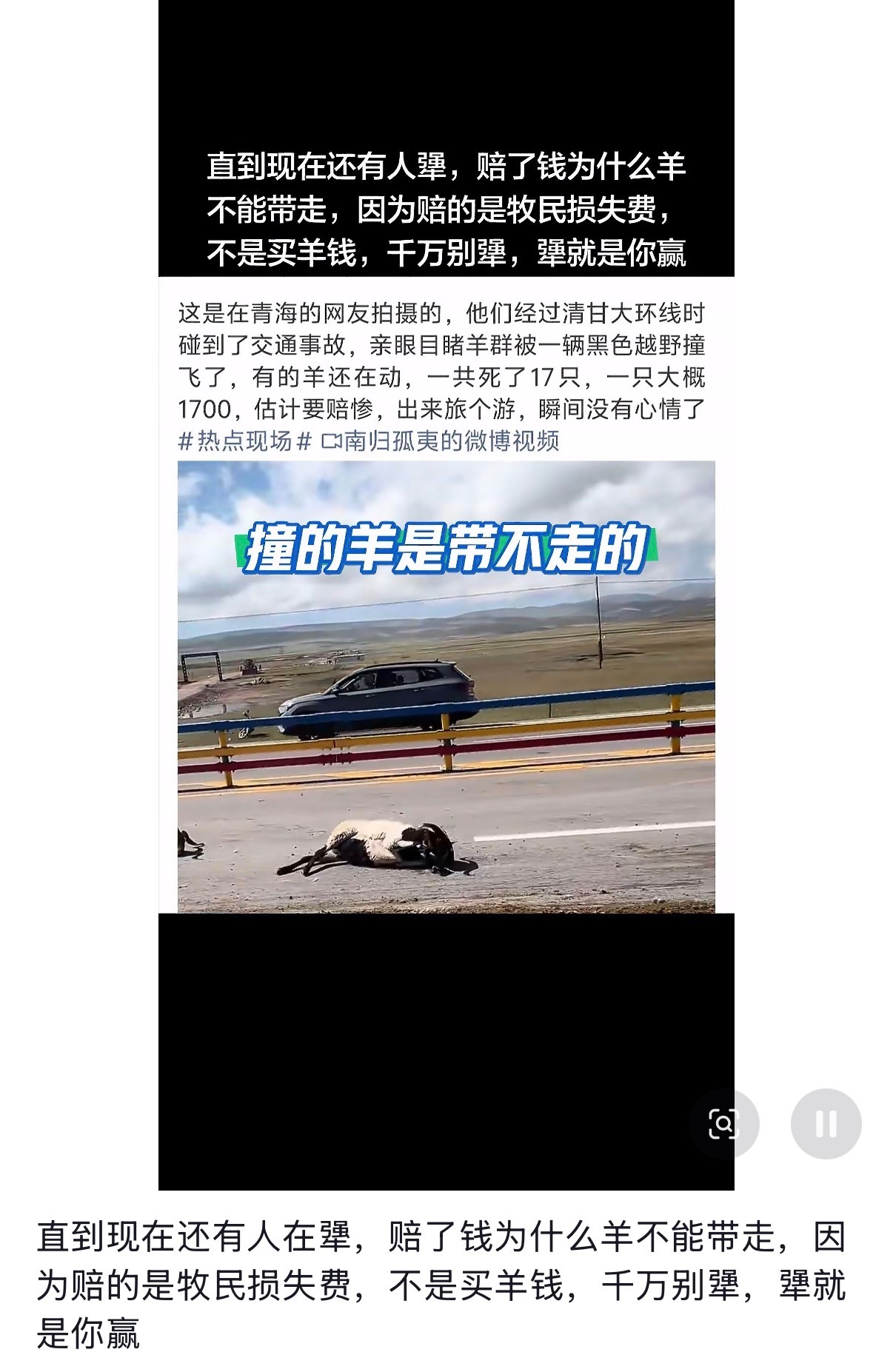
Of all the arguments China's internet settled this week, one of the most contested was pastoral: if you drive into a flock of sheep on a highway in Gansu, pay the herder 84,800 yuan in compensation, do the dead sheep belong to you? The answer, posted under a hashtag that sped up Weibo's hot list on Tuesday, is no — and the reasoning explains a good deal about how rural China and its roads actually work.
The case unfolded on the Qinghai–Gansu Grand Loop, the roughly 3,000-kilometer circuit past salt lakes and the Gansu Corridor that has become the country's signature summer road trip. Flocks graze unfenced beside much of it, and on this stretch a black SUV plowed into a herd, killing 17 sheep, according to accounts circulated on Baidu's trending board and in the Weibo posts that followed. The compensation figure — 84,800 yuan, roughly 5,000 per animal — drew less argument than the sequel: the driver, having paid, asked for the carcasses and was refused.
The distinction, as science blogger Jizhi de Kepujun laid it out in the post that anchored the hashtag, is between a sale and a tort. The 84,800 yuan is damages for destroying someone's property — the herder's lost animals, and the income they would have produced — not the price of acquiring them. A compensation payment restores the owner to where he was; it does not transfer ownership of what was destroyed. Commenters reached for homely analogies: a driver who kills someone's pet dog and pays for it does not get to take the body home, and a courier who demolishes a birthday cake owes its price but leaves the ruined cake behind.
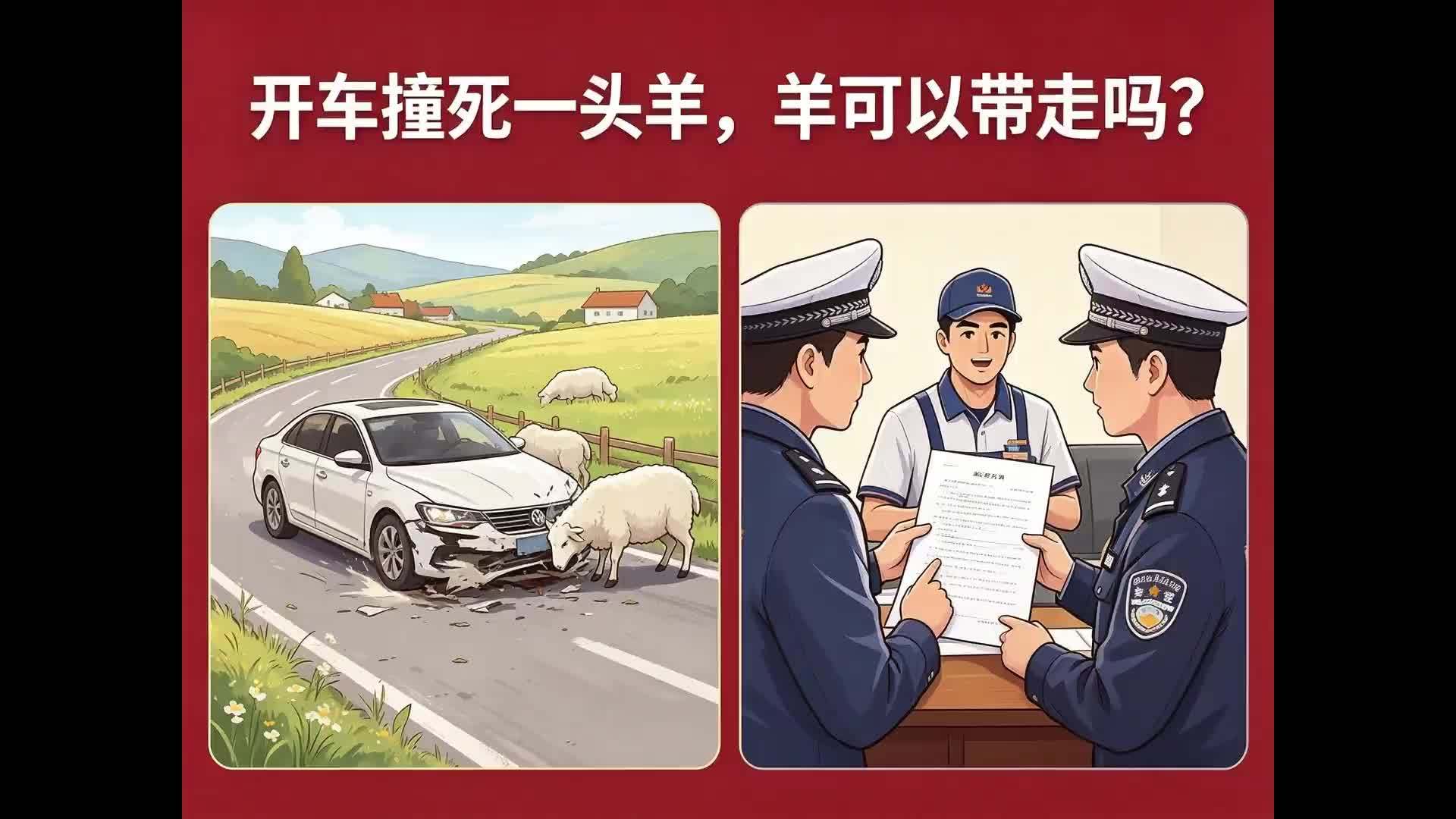
Lawyers quoted on Baidu's board added the procedural caution: the traffic-police accident determination is the document on which any insurance claim turns, and a driver who drives away from livestock collision risks being treated as a hit-and-run — which voids coverage entirely. Fault, they noted, can be apportioned: a herder who lets sheep wander onto an unfenced road, or a driver who was speeding or distracted, each carries a share, and the compensation scales accordingly.
The topic stayed up all day because it sits on a real seam. Hundreds of thousands of city holiday-makers drive the Grand Loop each year, meeting an economy where a ewe is a producing asset, not a purchase — meat, wool and future lambs on four legs. The 5,000-yuan-per-head figure that looked extravagant to commenters priced, in fact, a year or more of a herder's balance sheet. The sheep stayed with their owner. The payment stayed with his loss.