Hong Kong Brothers Found Dead Weeks Apart After Their Only Carer Died
Two reclusive brothers in their fifties were found dead in a Hong Kong estate flat, weeks apart, after the younger brother — the elder's sole contact with the world for over twenty years — died suddenly. The case has become a cross-border conversation about hidden households, ageing alone and care networks one person deep.
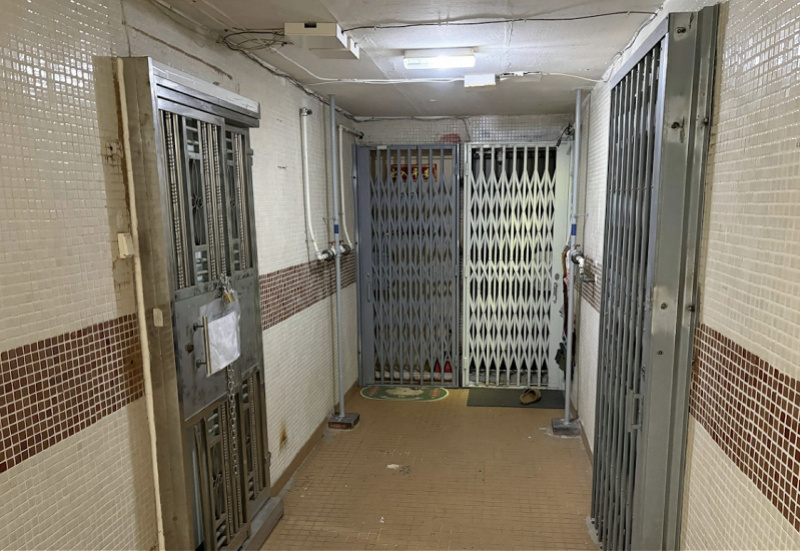
A security guard's report of a smell led Hong Kong police into a flat in Lei Tung Estate, on the island's southern shore, on September 14 — and to the bodies of two brothers, aged 53 and 55, who had been dead in their home for weeks. Police say there was nothing suspicious: the younger brother died first, suddenly, some weeks earlier, and the elder — who had severe social phobia and had barely left the flat in over twenty years — could not summon help and died in the home they shared. The case has trended across Weibo and Baidu under a hashtag that states the tragedy plainly: "weeks after the younger brother died, the socially phobic older brother, unable to care for himself, died too" (弟弟离世数周社恐哥哥无法自理死亡).
Hong Kong police confirmed the brothers' identities to reporters on September 15, saying the deaths await coroner's findings and have been classified as a "body-found case" handled by the Aberdeen district's investigation team. Hong Kong media reported that the pair had been cut off from the outside world for more than two decades.
Twenty years of one relationship
What Chinese readers have seized on is the shape of the brothers' lives rather than the deaths themselves. The elder brother's social phobia had kept him from work, neighbours and services since his twenties; the younger brother — himself past fifty — was the household's single point of contact with the world: he bought the food, dealt with the housing authority, answered the door. A sister tried to visit periodically, but the brothers declined contact, and after the younger brother's death the flat went silent. Nobody checked. The bodies were found because a smell reached the corridor.
On Weibo and Baidu's hot search, where the case entered the top fifteen, commenters have treated the story as a parable about care networks with no redundancy. Social workers quoted in follow-up posts describe a known pattern in Hong Kong's ageing public estates: hidden households — 隐蔽家庭, in the local term — whose members withdraw from every institution until one relationship does the work of a welfare state, and whose risk is invisible precisely because they ask for nothing. Hong Kong has catalogued such cases before, but the twenty-year depth of this isolation has shocked readers.
A mainland mirror
The story has travelled to the mainland, where it reads as a forecast. Commenters note that China's cities are filling with one- and two-person households as birth rates fall and young adults migrate: the sibling who monitors, visits, and signs the forms is becoming a scarce resource, and millions of only children face old age with no sibling at all. A widely shared post put the arithmetic bluntly — when the one person who opens the door for you is gone, invisibility is the remaining condition, and weeks can pass before anyone measures it.
The coroner's findings will settle the medical questions. What the case has already settled in public discussion is the social one: ageing alone is not primarily a housing problem or a pension problem, but a network problem — and in the Leung brothers' flat, that network was one man deep, and it failed silently.