Hong Kong Imposes Salary Freeze on All Government Employees Amid Economic Slowdown
In a move to control government expenditure, Hong Kong's Financial Secretary, Paul Chan, announced that all government employees, including the Chief Executive, Carrie Lam, would have their salaries frozen for the 2025/2026 financial year. This decision is part of a broader effort to reduce government spending and mitigate the impact of the city's economic slowdown. The salary freeze affects all government employees, including those in the administrative, legislative, and judicial branches, as well as district council members.
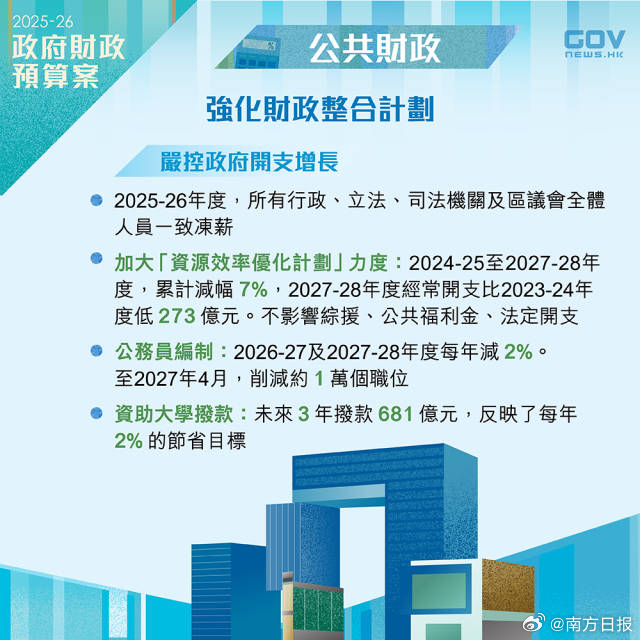
This is not the first time that Hong Kong's government has implemented a salary freeze; in the past 26 years, there have been five instances of salary freezes, including during the SARS outbreak, the 2008 financial crisis, and the COVID-19 pandemic. According to the Public Servants' Bureau, the total expenditure on civil servants' salaries reached HK$156.2 billion in the last financial year, an increase of HK$7.1 billion from the previous year, accounting for approximately 26% of the government's total expenditure.
The government has announced plans to reduce its recurrent expenditure by 7% over the next three years, with a 2% reduction in each of the 2026/2027 and 2027/2028 financial years. This is expected to result in the elimination of around 10,000 government jobs by April 1, 2027. Additionally, the government plans to increase funding for various initiatives, including the development of the Northern Metropolis, the establishment of a Hong Kong Artificial Intelligence Research Institute, and the provision of subsidies for public transportation.
The salary freeze will have a significant impact on Hong Kong's government employees, potentially leading to job losses and affecting morale and productivity. However, the government maintains that the freeze is necessary to address the fiscal deficit and maintain the efficiency and quality of public services. The government has also pledged to provide support and training to affected employees.
The new financial budget plan includes measures to control government operating expenses, optimize human resources, and promote high-quality enterprises to list in Hong Kong. The government will also implement various measures to increase revenue, including adjusting government fees and charges, and introducing a "global minimum tax" scheme. The scheme aims to impose a 15% global minimum tax on large multinational corporations with an annual turnover of €7.5 billion or more.
The government predicts that these measures will increase revenue by approximately HK$15 billion per year. The budget also forecasts that the government's "operating account" will reach a balance in the 2025-26 financial year and return to a surplus in the 2026-27 financial year. However, the "non-operating account" is expected to increase significantly due to the ongoing development of the Northern Metropolis project.
The government's decision is expected to have a significant impact on Hong Kong's economy and society. While the salary freeze may bring short-term instability, it may also help optimize government spending, improve Hong Kong's fiscal situation, and drive sustainable economic development. The reduction of government jobs may lead to increased efficiency and reduced personnel costs, potentially promoting the development of other industries, such as technology and innovation.
However, the government must take measures to mitigate the negative effects of the salary freeze and job reductions, particularly for those who rely on government employment for their livelihood. By providing necessary support and assistance, the government can ensure social stability and development. Ultimately, the government's decision is an effort to address current fiscal challenges and promote sustainable economic growth, which may have a positive impact on Hong Kong's development in the long run.