A Hunan Family Returns the ¥19,000 Taken From a Shopkeeper Who Tried to Help Their Dying Father
A Hunan family that took 19,000 yuan from a shopkeeper after their elderly father died in her doorway has returned the money and admitted the claim was improper, with mediators' records showing how the original settlement was reached.
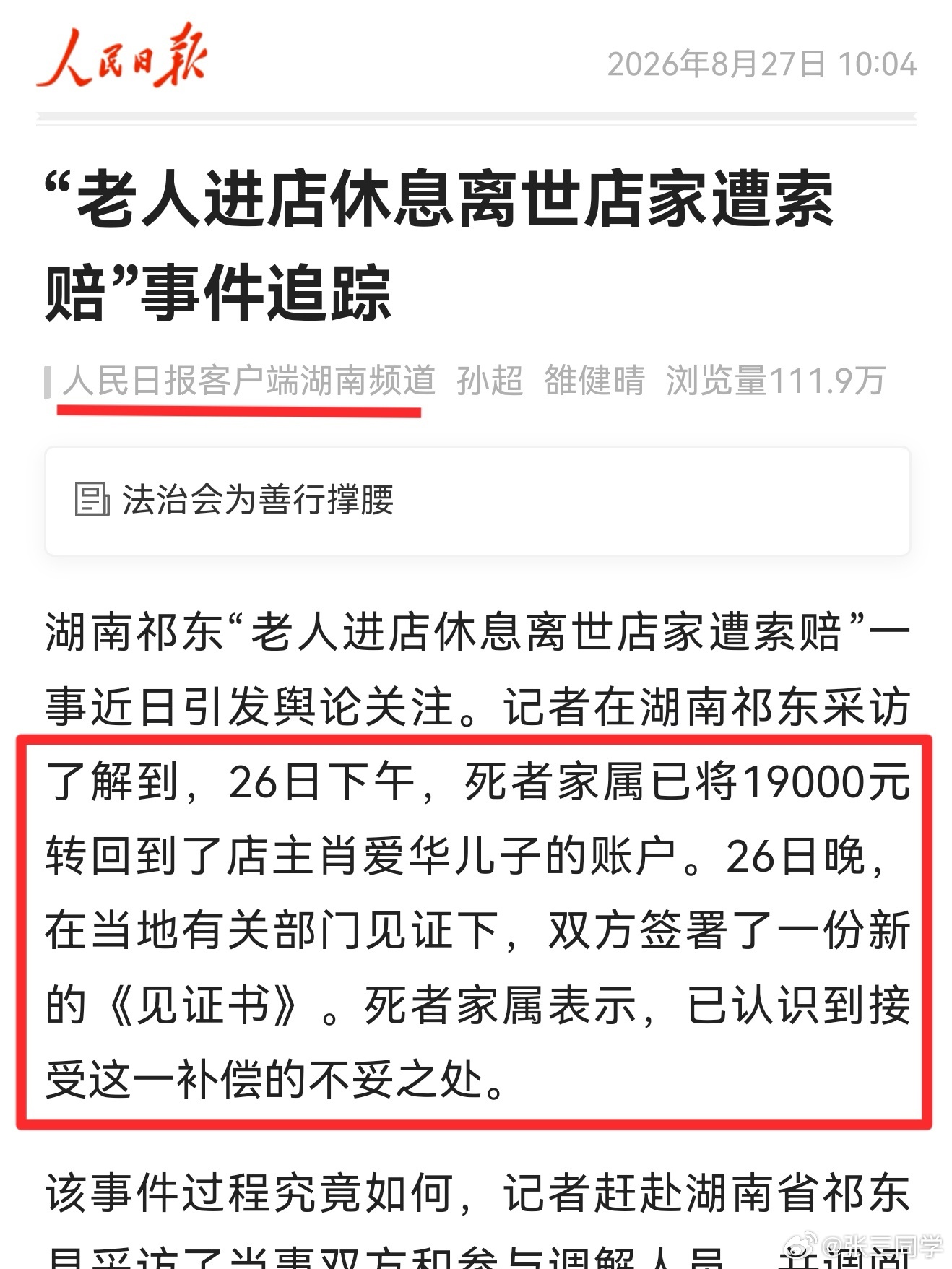
The family that demanded 19,000 yuan from a Hunan shopkeeper after their elderly father died in her doorway has reversed course, returning the money and stating publicly what Chinese courts have wanted neighbors to accept all along: without fault, there is no compensation.
Xiao Aihua runs a small shop in Qidong, Hunan. In mid-August, a neighbor in his seventies collapsed outside her store in the heat, and she moved him toward the door for fresh air—following a local folk belief about heatstroke. The man died, and his family sought money from the woman who had tried, however instinctively, to help him. The case became national news after reports that relatives had threatened to leave the body at the shop's door and that a first mediation produced a 19,000-yuan payment.
On August 26, that story's ending changed. The dead man's relatives transferred the full 19,000 yuan back to the shopkeeper's son's bank account, with a note reading "return of humanitarian compensation." That evening, under the eye of local officials, the two sides signed a new certificate of witness. The family said they now understood that the compensation had been improper. "Without fault, there is no need to compensate—we now accept this point," the man's son said, apologizing for the trouble caused and the public resources consumed.
The detail that matters most is how the 19,000 yuan was reached in the first place. Mediation records reviewed by People's Daily reporters show no corpse-in-the-doorway ultimatum. The family initially asked for 100,000 yuan; a mediator explained the civil-law rule that a compensation claim requires proof of fault, and that mediation is voluntary. The sum fell step by step—100,000, 50,000, 20,000, then a 15,000 offer raised by one of the shopkeeper's relatives in the spirit of neighborhood custom—until it settled at 19,000. "We had no power to force anyone to pay," one mediator said afterward.
What the records also show is the softer texture of a local tragedy. The shopkeeper had moved the man outside hoping the "open sky" would revive him. Her son said the family had only ever wanted to give a few thousand yuan, and accepted nearly ten times that because his mother had not slept since the death. The family that took the money have now given it back; the family that paid it plan to donate part of the public donations they received to charity and to keep helping people as best they can.
As the case closed, legal scholars drew a sharper line than the one the mediators had walked. The purpose of grassroots mediation, one said, is to settle disputes according to right and wrong, not simply to calm things down. For a country that has spent years encouraging ordinary people to help strangers without fear, the quiet lesson of Qidong is as plain as the refund receipt: sometimes the most humane way to end a dispute is to say who was never liable in the first place.