Four Ministries Move Against 'Instant Cars' as the Zunjie Brake-Pedal Scandal Reaches People's Daily
A test video showing three flagship electric vans losing their brake pedals has drawn China's official newspaper into the fray — one day after a four-ministry draft rule against rushed EV development.
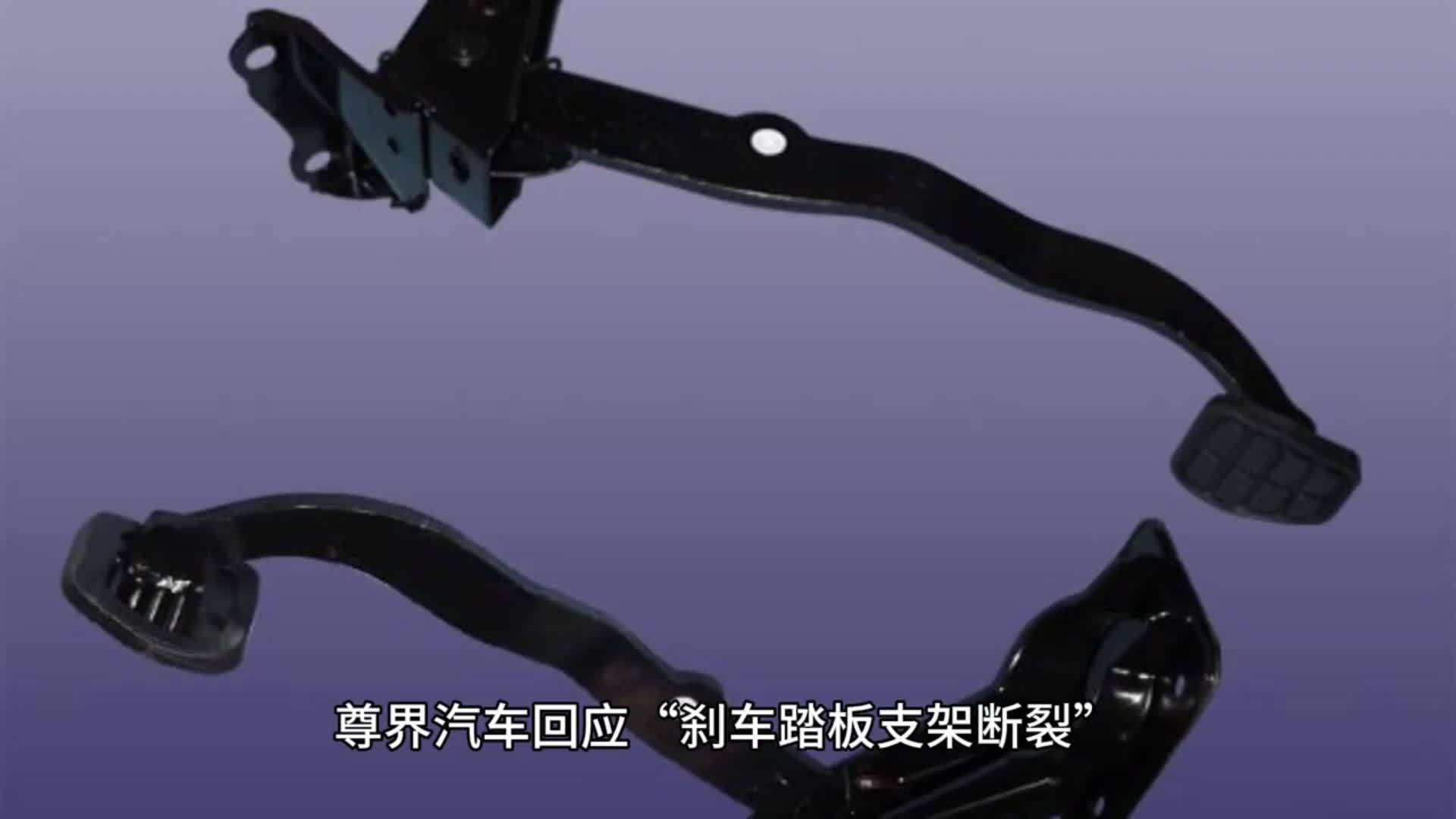
Three days after a test video showed the brake pedals of three luxury electric vans snapping under emergency braking, China's most-watched newspaper weighed in — one day after the country's industrial regulators had already moved. On October 11, People's Daily's client app published a commentary under the headline "Four departments join hands to say no to 'instant cars'" (四部门联手,对"速成车"说不!), declaring that in the whole affair one thing was beyond dispute: "A car's brake pedal should absolutely never fracture while driving" (一辆汽车的刹车踏板,绝不应该在驾驶中出现断裂!). The line put the state's weight behind a scandal that had already knocked the stock of the van's maker, JAC, to its limit-down earlier in the week.
The test, published on October 8 by the auto-media platform Dongchedi, put three brand-new Zunjie V800s — "million-yuan-class" flagship vans built by JAC under Huawei's HarmonyOS mobility alliance — through 100-km/h emergency stops on a closed course. All three pedal brackets snapped at roughly 1,612 newtons of force. Eight other models tested at the same force that day stopped six times each without incident. Zunjie Automobile answered the same evening with a statement whose sequence one car commentator reconstructed with a sense of déjà vu: braking validated above national and industry standards; no pedal bracket ever fractured in real-world use; the test dismissed as a non-standard extreme condition; then the remedies — an optimised part, free upgrades for every delivered vehicle, a review of testing boundaries and quality management. The commentator compared the playbook to a well-known corporate apology from the food industry. A rival car blogger was less delicate, staging a mock tutorial: "Zunjie owners can't reproduce the brake-pedal fracture! After the upgrade, just remember to bring in the hydraulic press."
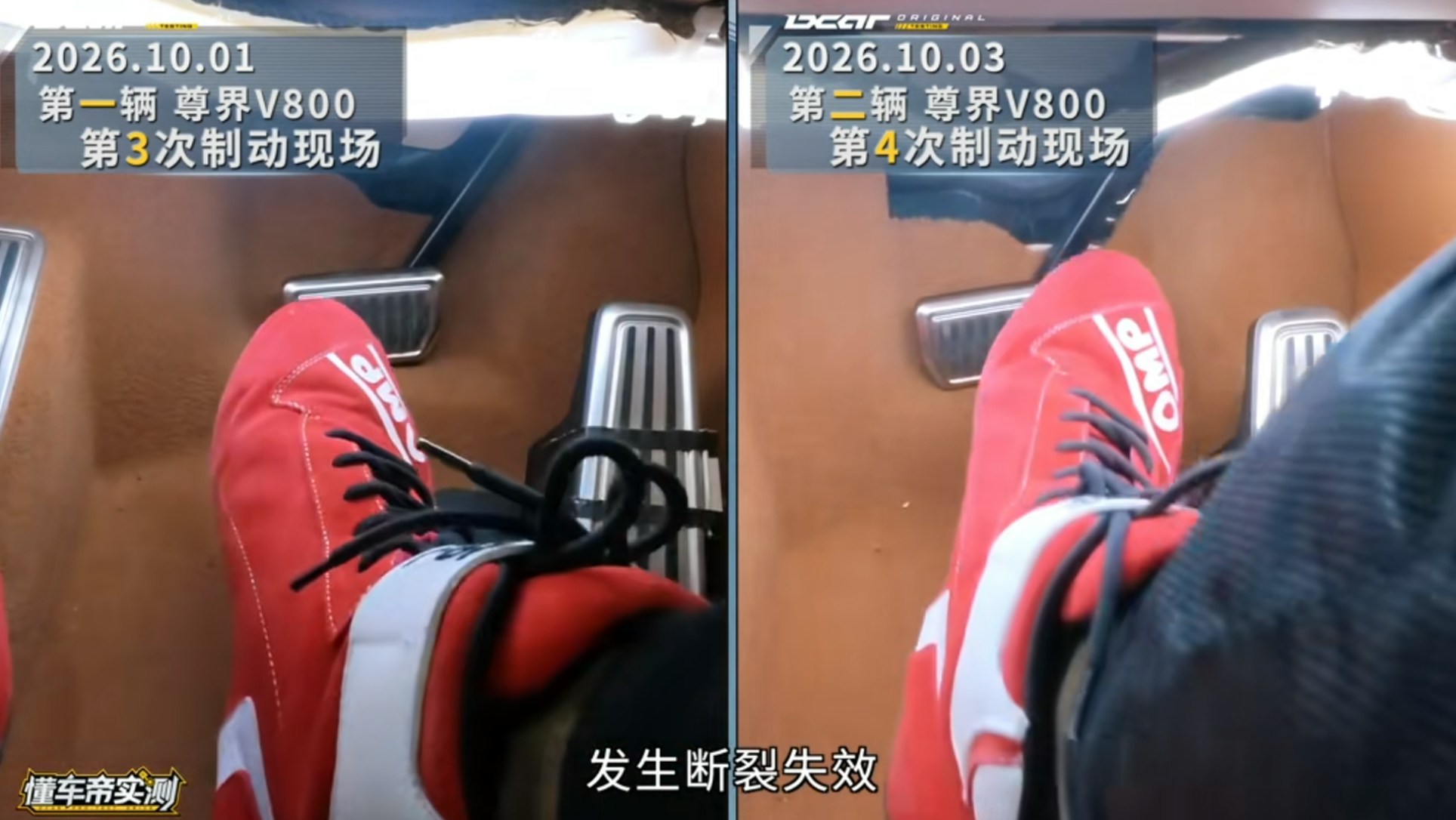
What has turned a component failure into a national conversation is the commentary's target. "Instant cars" (速成车) is the commentary's term for vehicles rushed from sketch to showroom by compressing research cycles and substituting simulation for physical road testing. One day before People's Daily published, the Ministry of Industry and Information Technology and three other departments had released a draft notice tightening design and test-validation requirements for new cars — covering virtual controls, door handles, new human-machine interfaces and wide-angle seats. This site has followed the proposed ban on fully hidden door handles that grew from the same rulemaking, and Zunjie's denial and free-upgrade offer as it stood on October 8. What has changed since is the company the story keeps: state media have stopped treating the episode as one brand's PR problem and started treating it as an industry-wide warning.
Weibo's car commentators read the escalation the same way. A lawyer-blogger in a post liked more than 1,800 times put it bluntly: owning the fault and announcing a recall on day one would have cost Zunjie little — "it's not the kind of fault that detonates at once; consumers have plenty of patience." Instead, he wrote, the discourse had dissolved into a tangle of PR accounts and paid posters that no one could tell apart. The car blogger behind Dasheng Shuoche (大圣说车) counted the institutions lining up: first the Xinjiang government's media account asking whether carmakers could answer safety questions "in plain human language" — an article since taken down — and now People's Daily, with the harshest line yet. On Zhihu, users were already asking whether the wave of rival carmakers posting their own hard-braking stunt videos would push the industry toward higher safety redundancy — a question that treats the scandal less as one company's embarrassment than as a referendum on the speed-first culture of China's EV boom.
The free upgrades and the draft rules may close the loop. What remains open is the question People's Daily posed without quite answering: how a brake pedal on a million-yuan flagship came to be the industry's proof-of-concept.