China Launches Its 27th Group of Satellite-Internet Satellites
A Long March 12 rocket put the 27th group of China's satellite-internet constellation into orbit before dawn on October 10 — the latest round in a build-out meant to end the dead zones in one of the world's most wired countries, and to hold low-orbit slots before rivals claim them.
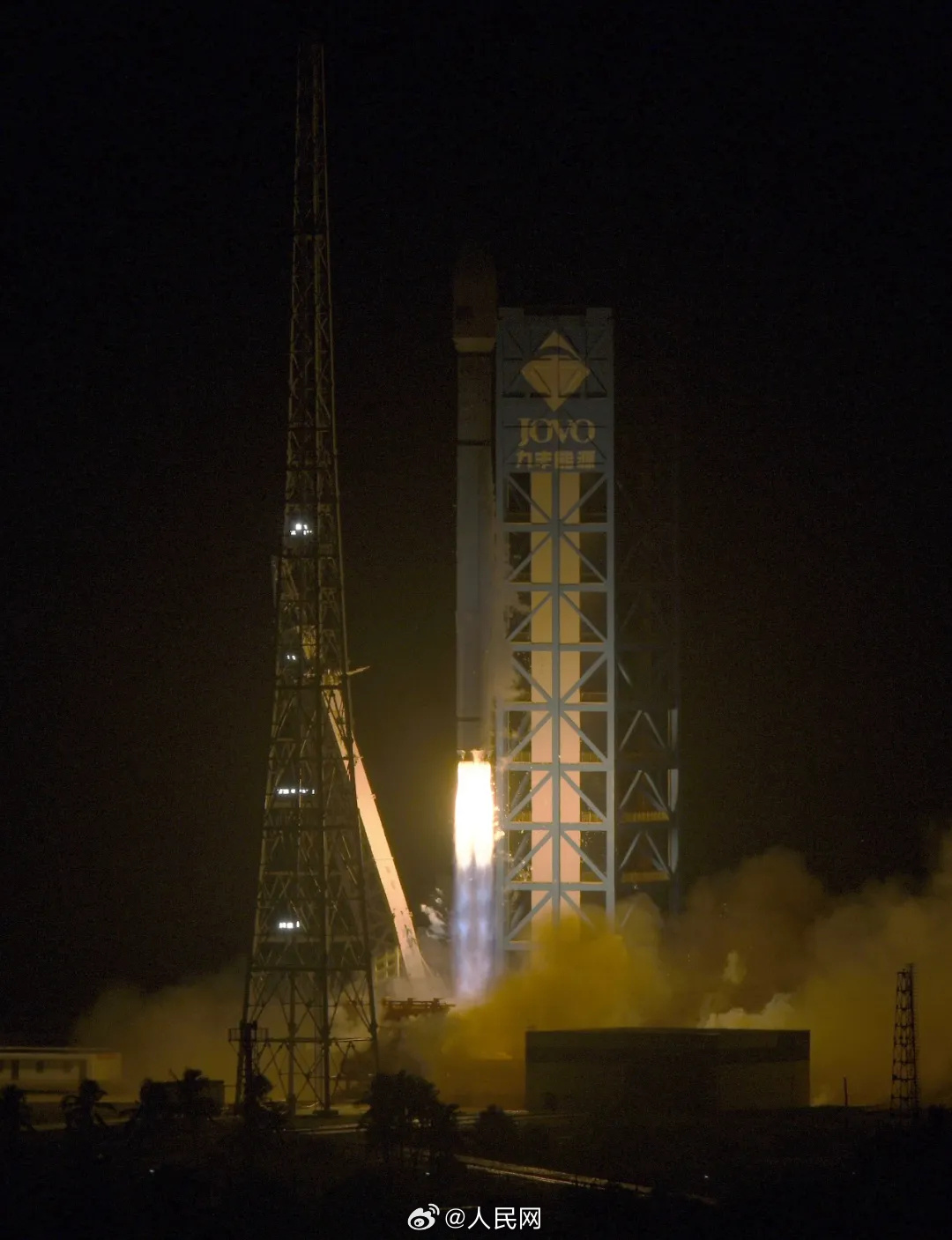
At 3:27 a.m. on October 10, a Long March 12 rocket lifted off from the commercial spaceport on Hainan island and delivered the 27th group of China's satellite-internet satellites into low orbit. State media covered the launch the way it covers a great many launches — CCTV announced the success within hours — but the detail worth reading is the number in the mission's name. These satellites now go up in numbered batches nearly every month, and the batching is the point of the exercise.
As one widely shared analysis of the launch put it, the number 27 matters more than the word "success": success is a single event, while 27 is cumulative — launching one satellite is news, but launching the twenty-seventh group is a programme. The same post explained what the batches are actually racing for. Low orbits and the radio frequencies that serve them are finite, and the international rule is effectively first to register, first to use. Every numbered launch pins down a slot that latecomers — including Western constellations already flying — will not get back.
What the network is for is visible in the places it will reach. A photographer who travels China's far west described relying on a satellite phone in the Taklamakan Desert — "making a satellite call in front of a 2,000-year-old stupa" — and greeted the launch as the thing that will eventually cover the mountains and no-man's-lands where ordinary signal dies. China's mobile networks are dense in its cities and thin across exactly the terrain that fills a third of the country's map; the constellation's premise is that the gap should be closed from above, with phones connecting straight to satellites rather than through ground hardware.
Posts tracking the programme put the constellation at 222 operational satellites in orbit, a count that climbs with every batch. The launch came in the opening days of the 15th Five-Year Plan, whose first-month coverage the site has already followed — state media's frame is six national networks under construction at once, and the satellite constellation is the one of the six that lives in orbit. Batch launches like this one are how a five-year target gets met: quietly, at 3:27 a.m., one numbered group at a time.
The open question is the one the launch posts themselves raised: how dense the constellation has to get before a subscriber in the mountains stops losing signal. The batch numbers — 27 now, 28 next — will keep answering that in public.