Jay Chou's 'Famous Chinese Singer' Moment at the Shanghai Masters Becomes a Cross-Strait Comment Fight
The Mandopop star reposted an announcer's introduction of him as a 'famous Chinese singer' — and his Instagram comment section turned into a referendum on who gets to be called Chinese.
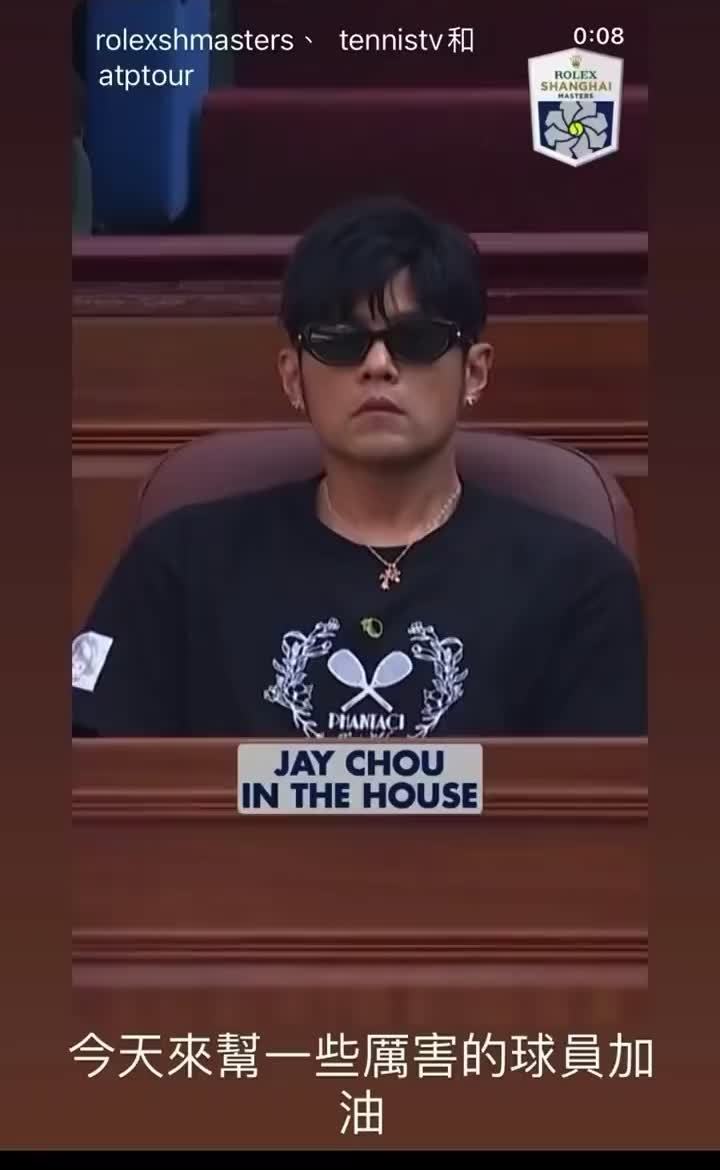
The introduction lasted a few seconds. Jay Chou — the Mandopop superstar, in sunglasses and a black T-shirt, seated courtside behind a placard reading "JAY CHOU / IN THE HOUSE" — was welcomed at the Rolex Shanghai Masters tennis this week as "a famous Chinese singer" (中国著名歌手). The broadcast clip went up on Weibo; Chou reposted it to his Instagram without adding a word of his own. That repost was the whole story, and it was enough.
On Weibo, the post reporting it — liked more than 6,000 times — framed the aftermath in the vocabulary of a cross-strait skirmish: after the repost, it said, "the green frogs breached and stormed his comment section" (绿蛙破防后冲了周杰伦评论区). "Green frogs" (绿蛙) is mainland slang for pro-independence Taiwanese netizens — green being the colour of Taiwan's ruling party — and 破防, "defences breached", is the standard term for a political meltdown. What had actually happened, in his Instagram comments, was a fight over a single adjective: Chinese.
The comment screenshots circulating on Weibo show the two sides at their registers. One English-language commenter wrote, "Jay is from Taiwan! Not Chinese." Another reached for documents: "Taiwanese not Chinese. Look at his passport. He's not even on Weibo." A third reached further, calling him "from TAIWAN, not the temu Chinese." Against them, a Chinese-language commenter offered the thread's most-shared rebuttal: "The artist himself is happy to be called a 'Chinese singer', and a crowd of people stubbornly insist he's a 'Taiwan singer'. It's like your mother telling you you're an orphan, and you answering that you grew up with your family — how could you be an orphan?"
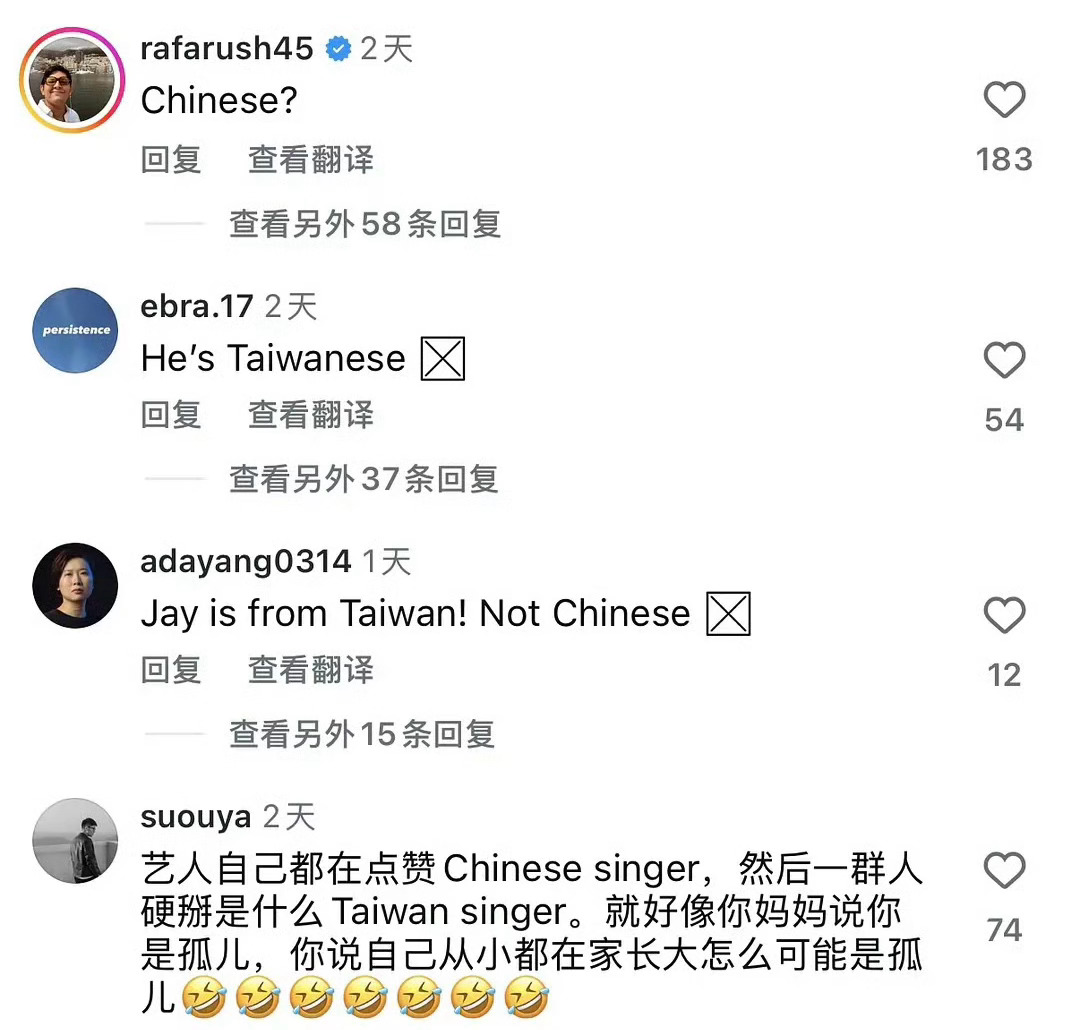
Why the adjective mattered is Chou's own position in Chinese pop. Born in Taiwan and launched to stardom in 2000, he is the biggest Mandarin-language pop star of his generation, and mainland audiences have long claimed him without much protest from the man himself — which is precisely why the label "Chinese singer", said aloud in a mainland stadium and then endorsed by his own repost, reads to his objectors as a political statement rather than a courtesy. Weibo's counter-mockery arrived in slogan form. One post put it: "Want the island but not the people? Then leave Jay Chou behind! He's utterly upright — and Taiwan province can't do a thing about him: he's too red." The last phrase is a pun; in Chinese, 太红了 means both too famous and, in the wrong company, too red.
The flare-up had company. It coincided with October 10 — the date Taiwan marks as its national day and the mainland commemorates as the anniversary of the 1911 revolution. On Baidu's trending board that day, a Taiwanese influencer's declaration that "Taiwan is a province of China", demonstrated with the back prints of Taiwanese ID cards, charted beside footage of Taipei street demonstrators chanting "we want unification". A singer's introduction joined a weekend of set-piece identity argument across the strait, and his Instagram thread is still collecting them.
So far, his only comment is the repost.