Chopped Down: Japan Beats China's Women 3–2 for the Asian Table Tennis Title
Japan's women edged China 3-2 in the Asian Championships team final on Thursday, with defensive specialist Honoka Hashimoto winning both her matches — a rare defeat for China in its signature sport, and a debate about how its players prepare for a disappearing style.
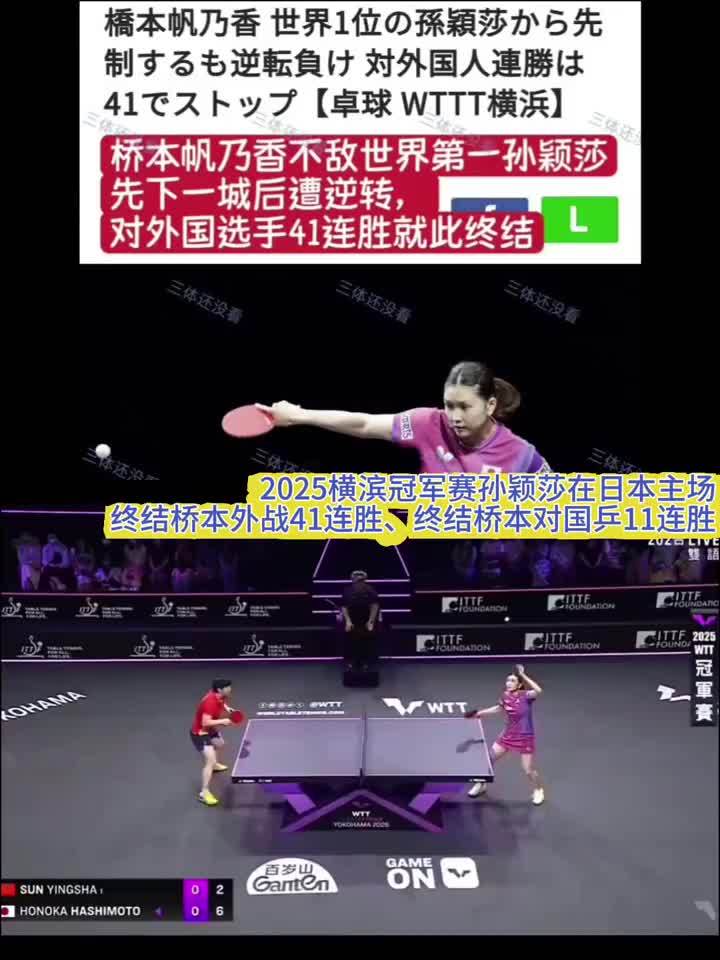
Japan's women beat China 3-2 in the team final of the Asian Table Tennis Championships on Thursday night, taking the continental title from the country that has dominated the sport for decades. The decisive blow came from Honoka Hashimoto, a defensive specialist whom Chinese fans have been watching with growing alarm all year — and whose style, more than the result itself, is what Chinese social media spent the night arguing about.
The tie see-sawed to the last match. Chen Yi lost the opener 0-3 to Hashimoto. Wang Yidi steadied China by outlasting Miwa Harimoto in five games, and Kuai Man swept Hina Hayata 3-0 to put China 2-1 up. But Chen Yi, given a second turn, lost 0-3 again — this time to Harimoto — and in the decider Wang Yidi fell 3-1 to Hashimoto. Japan took gold; the home of table tennis settled for silver, with the result sitting tenth on Baidu's trending board overnight and a "how do you evaluate this final?" question on Zhihu drawing heated argument into the small hours.
Hashimoto is why this defeat stung differently. She is a chopper — a defensive player who returns almost everything with heavy backspin and waits for attackers to force the error — a style once widespread in the women's game and now nearly extinct at the top level. China's production line turns out attacking players by the batch, and meeting a genuine elite chopper has become a rare, awkward occasion rather than a drilled routine. Fan tallies circulating on Weibo credit Hashimoto with an 11-1 record against Chinese national-team players in the current Olympic cycle toward Los Angeles 2028; her lone loss came against Sun Yingsha at the WTT Champions event in Yokohama last year. "It was Sun Yingsha who ended Hashimoto's 11-match winning streak against the national team," one post read; another called her matches "the textbook" for teammates facing a chopper.
Neither Sun Yingsha nor Wang Manyu, the player fans credit as the only mainstay to have beaten Hashimoto in both a "flag-raising" event — where the national anthem plays — and a team event, was in Thursday's line-up. The absence sharpened the postmortem into a structural argument. "I really agree with Sun Yingsha's fans on this one," one fan wrote after the final. "Whoever has rarely played choppers should play them more. Whoever hasn't beaten Hashimoto at a flag-raising event should play her more. Wang Manyu can sit this round out — the rest of you sisters, Hashimoto is coming for you next."
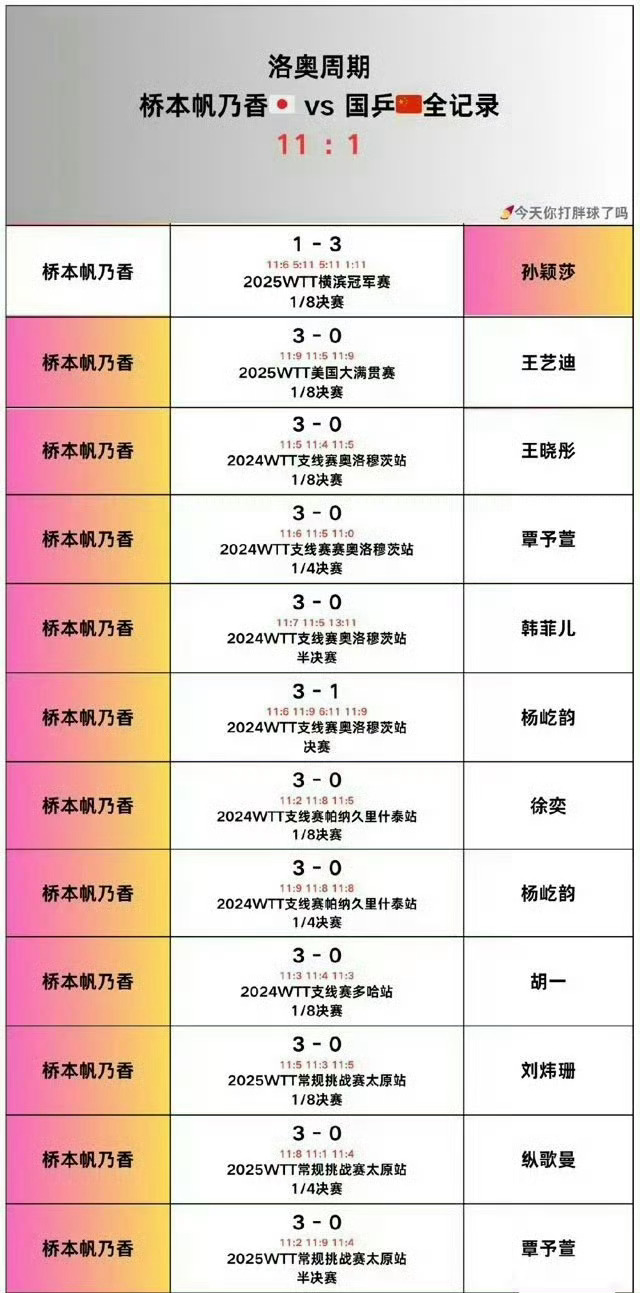
The contrast with the men only cut deeper: on the same night China's men beat South Korea 3-0 for a fourth consecutive Asian team title, and a year ago China's women had beaten Japan 3-0 in this same final. Chen Yi's two winless losses made her the immediate focus of the criticism. The sharper question trending beneath the scorelines was why the sport's deepest talent pool currently has no answer to a style of play that has nearly vanished everywhere else — and whether that answer arrives before Los Angeles 2028.