Why a Beijing Woman's 5-Million-Yuan Estate Went to the State After She Died Without a Will
A 41-year-old unmarried Beijing woman died with no will, no spouse and no children — so her apartment escheated to the state and nine aunts and uncles who sued for the rest split only part of her savings. The verdict is being read as a warning to China's growing ranks of single, childless adults.
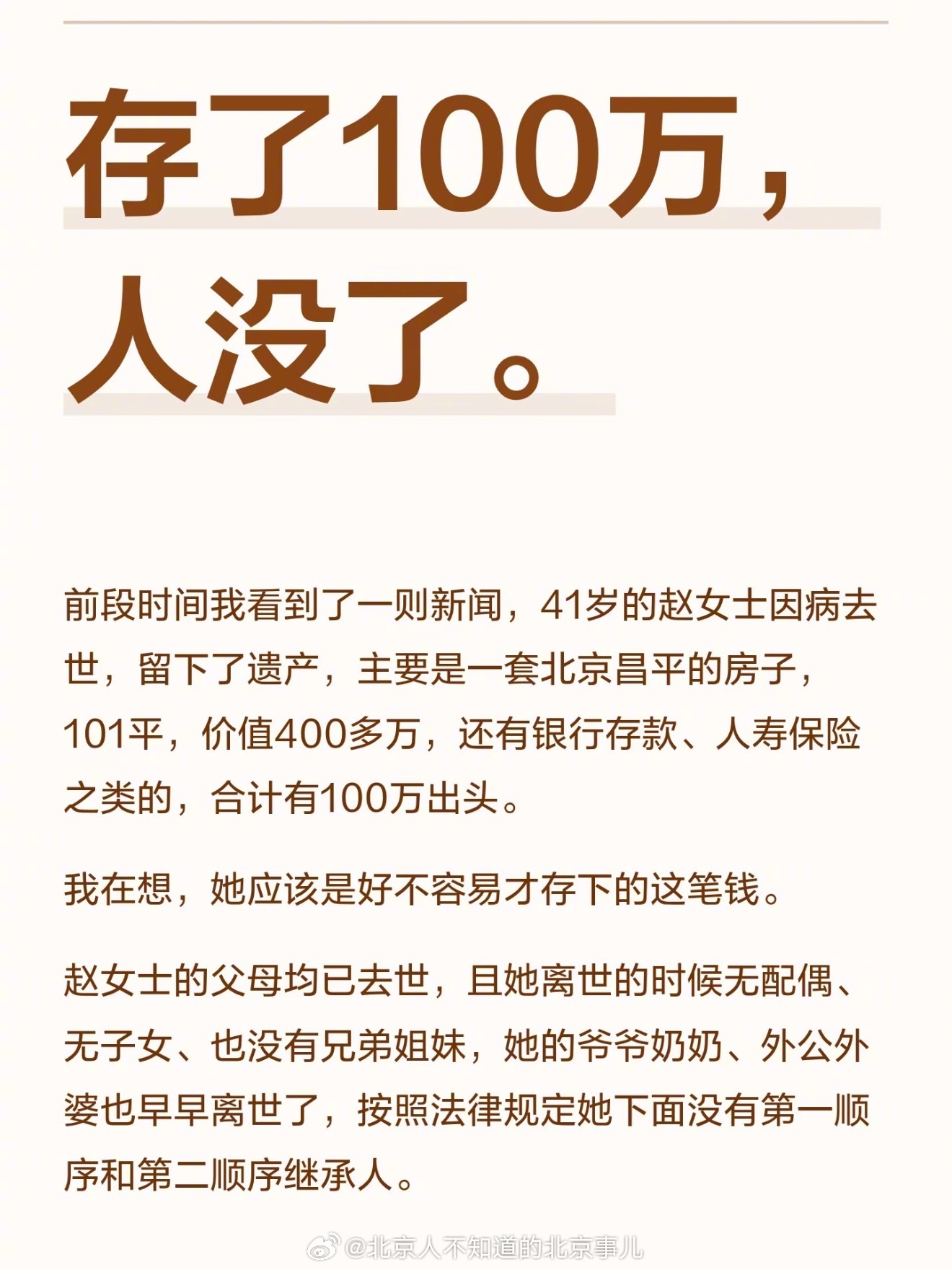
When a 41-year-old Beijing woman known in court papers as Ms. Zhao died earlier this year, she left behind a 4-million-yuan apartment and about 1.1 million yuan in savings and insurance. She had never married, had no children, and her parents and siblings were all already gone. She also left no will — and under Chinese law, that combination produces an outcome many families find hard to accept. This week a Beijing court spelled it out: the apartment escheats to the state, and the savings go to the nine aunts and uncles who sued, in shares sized to how much they had actually helped her.
The relatives had not come to court expecting crumbs. Nine of Zhao's uncles, aunts and their spouses argued that they had looked after her over the years — holiday visits, hospital trips — and should inherit. The court disagreed on the main question: uncles and aunts are not statutory heirs in China, where succession runs first to a spouse, children and parents, and then to siblings and grandparents. With no will naming them, the estate had no legal owner at all. Under the Civil Code, such property goes to the state for public-welfare use. The court's compromise was to treat the 1.1 million yuan in cash as compensation for care: the uncle judged most attentive received 20 percent, the other eight got 10 percent each, and the apartment — the bulk of the estate — went to the state.
Chinese law does give relatives a path to an inheritance without a blood tie of the right kind: a bequest-and-support agreement, a signed contract binding care in old age to property after death, or a notarized will. Zhao had neither. The verdict's arithmetic — roughly a tenth of the liquid savings per household, and nothing of the flat — turned that legal dry point into a viral warning. A post summing it up in ten characters, "Saved a million, and she's gone," drew more than 5,000 likes.
The story touched a nerve because Zhao's family situation is no longer an outlier. China has a fast-growing population of unmarried and childless adults — the very group the verdict's loudest readers said should take note. "Whether you're child-free, unmarried, or an elderly person whose children live far away, this alarm bell has to ring," one widely shared summary of the case urged. "The law isn't partial; it protects those who plan ahead." Courts, for their part, keep fielding the consequences of families that didn't: in another widely discussed case this week, a man in Zhejiang trying to withdraw his late father's 180,000 yuan of savings discovered that the bank's inheritance paperwork required him to document a "sister" no one in the family knew existed.
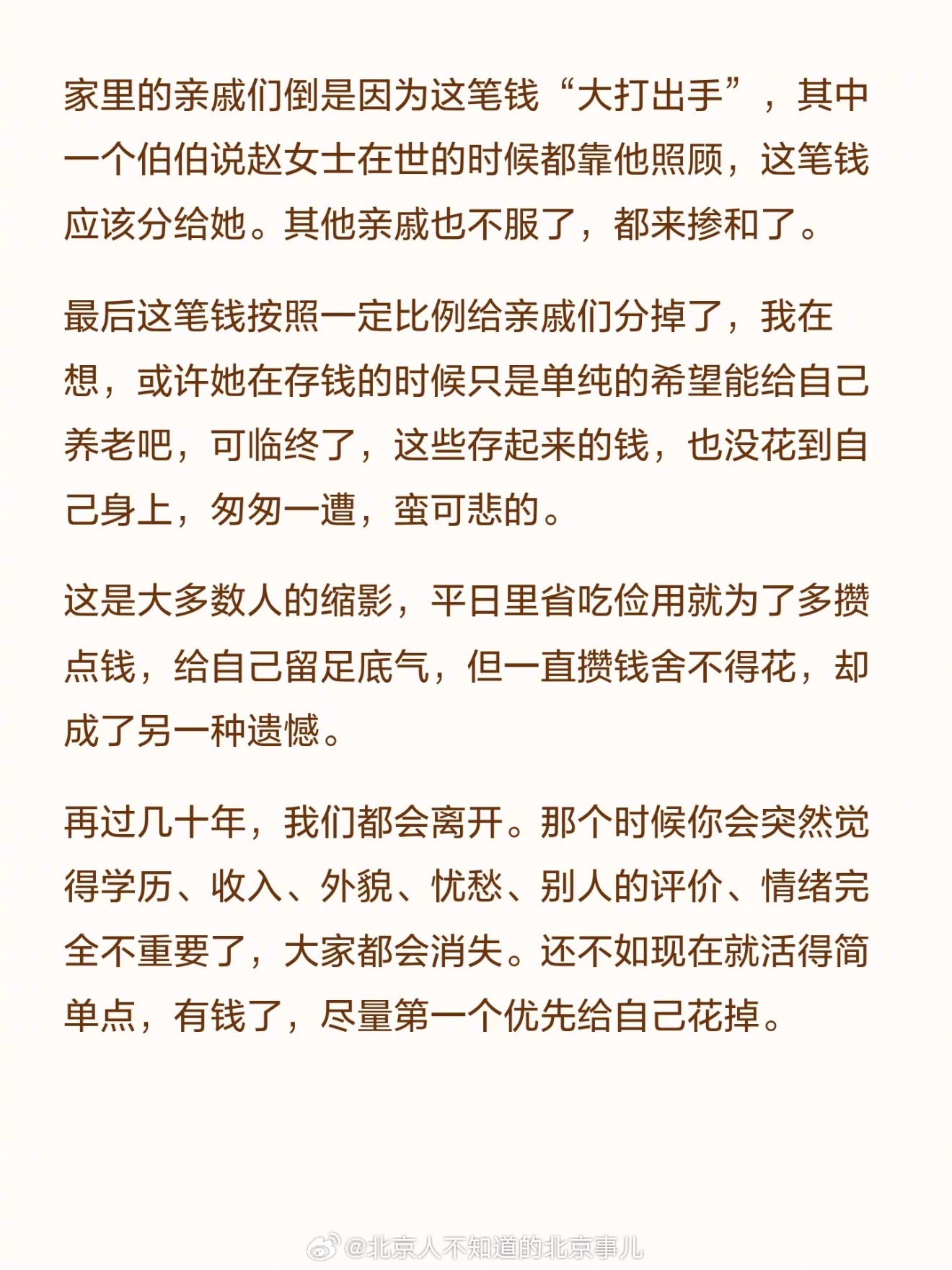
What remains of Zhao's estate will fund public welfare, as the Civil Code directs. Her relatives' ten percent shares are the law's recognition that care counts — but only when it is real, and only out of the cash. For China's millions of single and childless adults, the case's practical message travels further than its facts: the state is your default heir, and family kindness, however sincere, is not a succession plan.