Japan's Second-String Squad Knocked China Out of the Asian Games Basketball Final
China's men's basketball team lost 77-97 to a largely second-string Japanese side in the Asian Games semifinal in Nagoya on Sept 18, the anniversary of the 1931 Mukden Incident. The defeat, the second heavy loss to Japan's domestic core in two months, has triggered calls for the coach's dismissal and a national reckoning over Chinese basketball's decline.
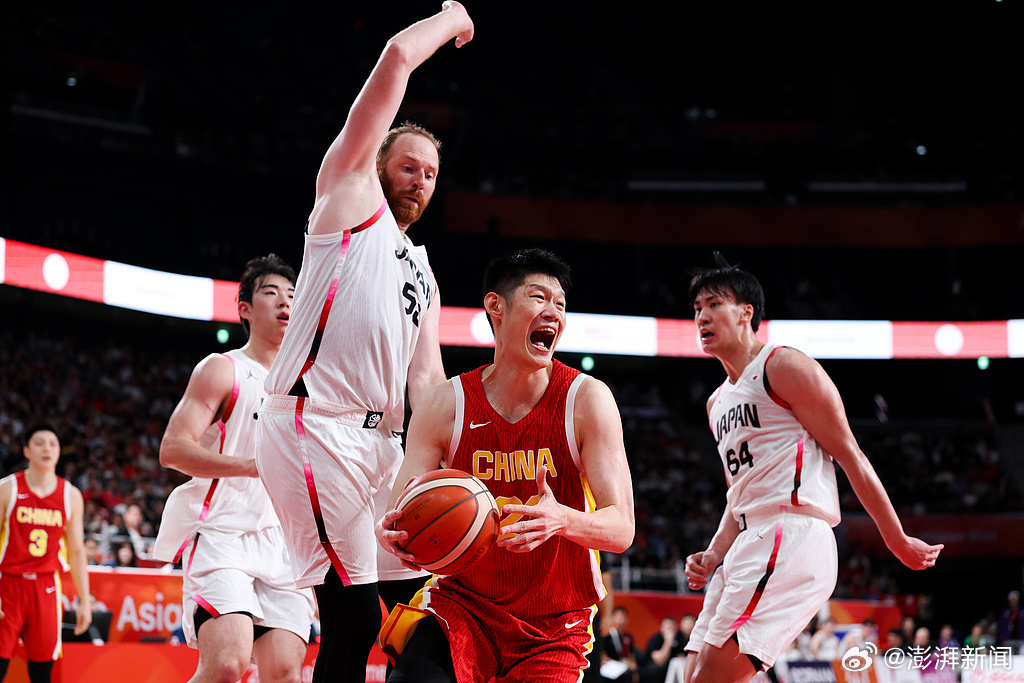
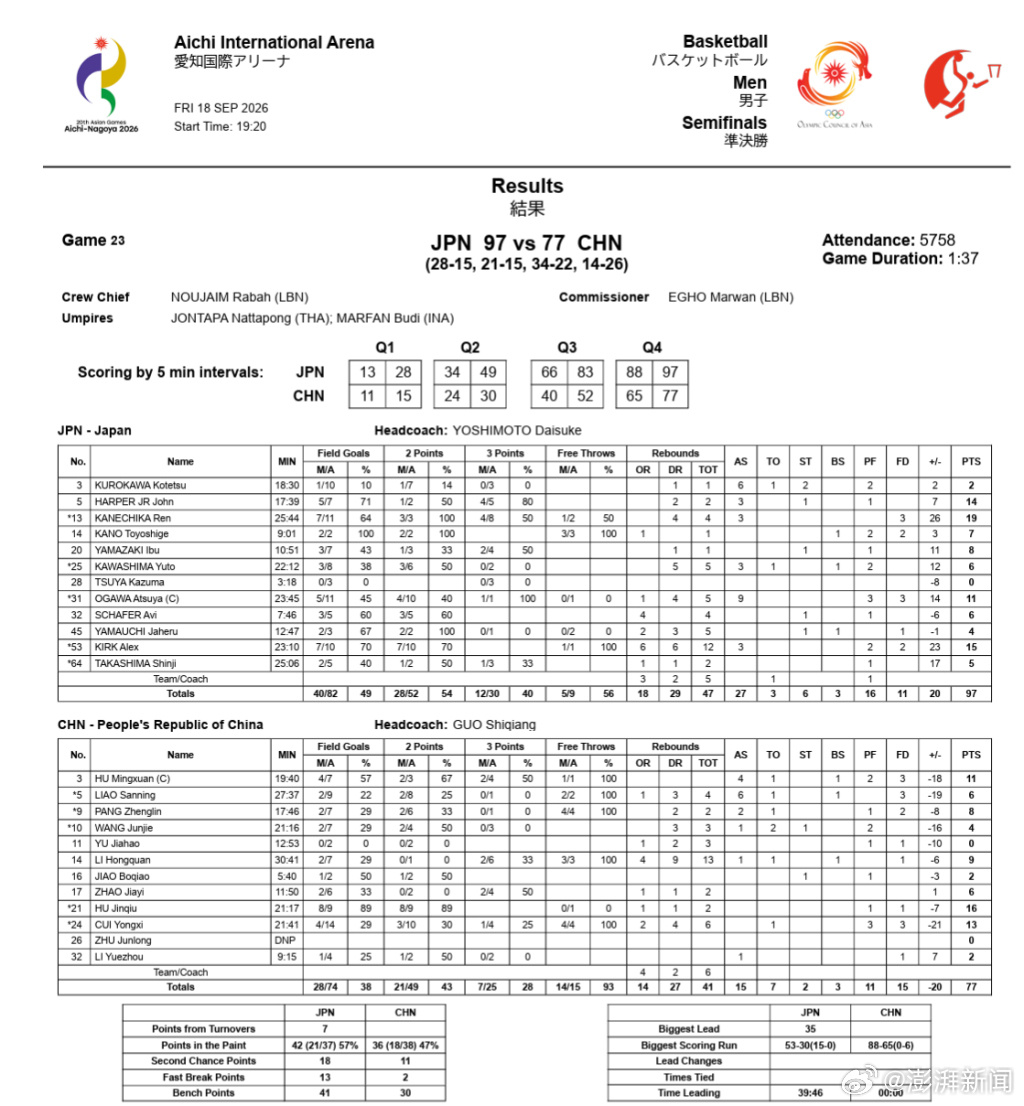
China's men's basketball team arrived at the Asian Games in Nagoya talking about gold. On Friday evening it walked off the court at Aichi International Arena beaten 77-97 by Japan — a defeat that carries weight well beyond the scoreline, because the Japanese squad is largely its second string, and because of the date on which it happened.
The semifinal was never close in the way the group games had been. Hu Jinqiu, the team's most reliable scorer, finished with 16 points; Cui Yongxi added 13 and Hu Mingxuan 11, but Japan led by double digits for long stretches and pulled away late. China will now play Iran for bronze on Sunday, while the hosts advance to the final.
Hu's own assessment after the game was blunt: the team had not prepared well and had treated the match as simpler than it was, he told reporters, according to a report carried by The Paper (澎湃新闻).
The reaction in China was immediate and unusually harsh. The sports commentator Wang Weichen wrote that watching the game felt like "a university team playing against adults" — no shooting, no rebounds, defenders beaten with one change of pace (王玮晨). His post drew thousands of comments within hours. The analyst behind a popular basketball account put it more starkly: time for people to go home, time for resignations, time for an investigation — Chinese basketball needs surgery "from top to bottom" (球圈赵探长).
Calls for head coach Guo Shiqiang to be dismissed trended within the hour, joined by a familiar grievance: this is the second heavy loss to Japan's domestic-based core in two months, after a World Cup qualifier defeat at home. What stings most, many posters noted, is the opponent's lineup. Japan's NBA and overseas players did not come to Nagoya; the team that eliminated China is essentially its "B team." On commentary, the veteran journalist Yang Yi relayed an equally cutting verdict from former NBA player Wang Zhizhi: the Chinese players did not lack effort — the gap in fundamentals and physicality is simply real (杨毅谈).
Then there is the calendar. September 18 is the anniversary of the 1931 Mukden Incident, the opening act of Japan's occupation of northeast China, marked this year with sirens and memorial bell-ringing across the country. Losing to Japan's reserve squad by twenty points on this particular evening turned a bad night of sport into something closer to a national mood event; one viral post on the coach put it directly — "today is 9.18" — before asking where the resistance had gone (王者老闫). The topic sat at the top of Baidu's search board through the night (百度热搜).
The context makes the collapse harder to explain away: only three days earlier this same Chinese team demolished the Philippines by 44 points in the group stage. Whether Sunday's bronze game against Iran becomes a consolation or the start of a longer accounting — for the coach, and for a system whose players keep arriving at Asian and world stages physically outmatched — will define how this loss is remembered.