How a Five-Hour Hike Got a Nanjing Teaching Assistant Fired
A teaching assistant at a Nanjing test-prep company was dismissed after a Saturday hike left her five hours away from her work phone. Her labor-arbitration filing — backed by more than 900 screenshots of after-hours work — has turned one dismissal into a national argument about China's "hidden overtime."
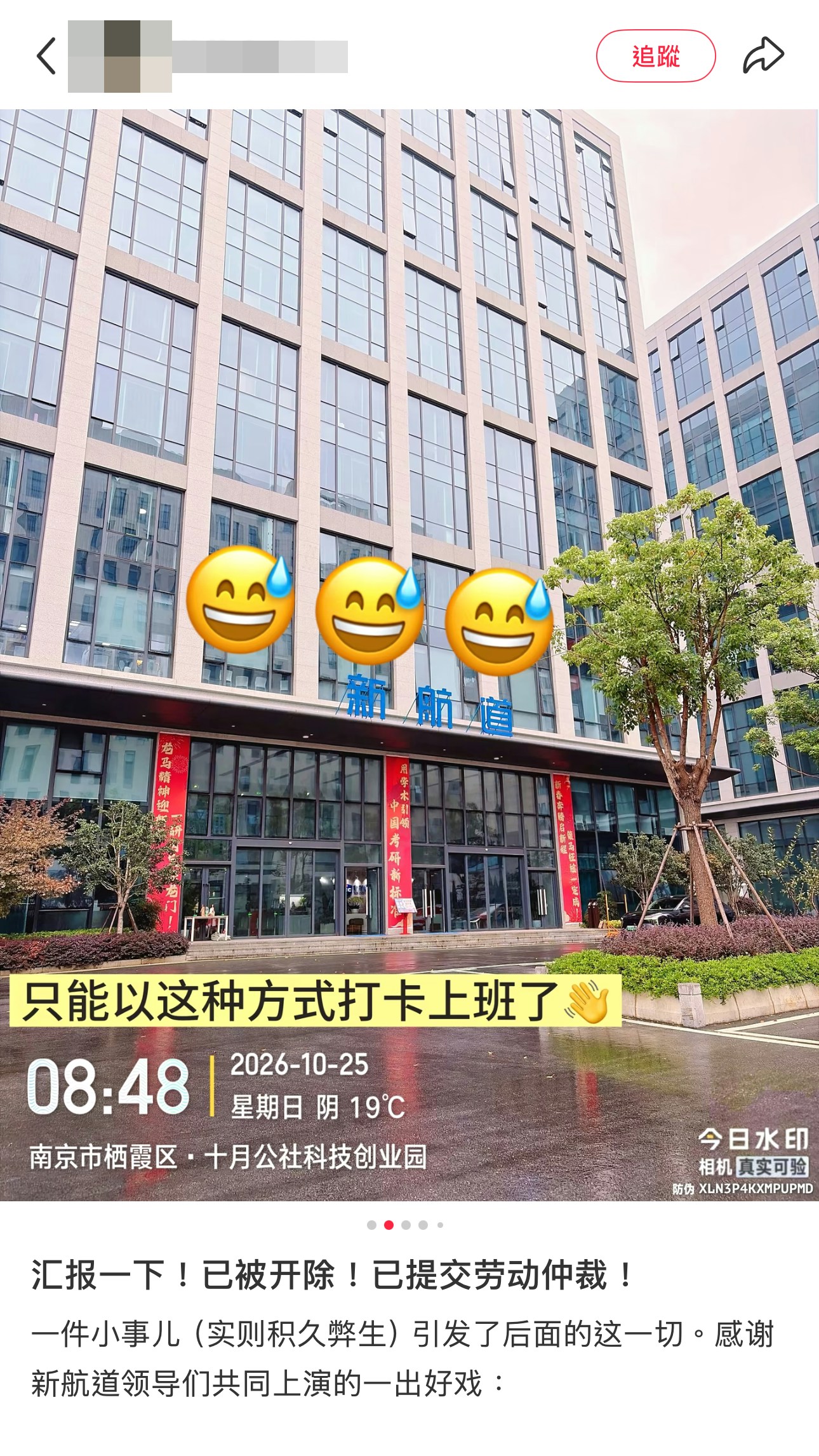
On Saturday, October 17, an assistant at a Nanjing education company went hiking. She left the work phone behind, and for five hours nothing in her coaching groups got an answer. One of the parents kept waiting, the company would later say, was an important client. By October 25 she had been fired.
The assistant, who gave her surname as Lu, worked for a Nanjing subsidiary of New Channel, one of China's best-known test-prep groups, advising families through the postgraduate-recommendation admissions process. The unit, registered only last year, listed 56 employees on social insurance in its first year. The day the dismissal landed, Lu posted a photograph of the office she could no longer enter, captioned "Reporting in: I've been fired. I've filed for labor arbitration" (汇报一下!已被开除!已提交劳动仲裁!), with a yellow banner joking that the building shot was "the only way left to clock in."
Her account of the firing, reported by Sina News and argued over on Zhihu and in Hong Kong, reads as a case study in China's hidden overtime. Her contract specifies standard hours — five days a week, no more than forty, overtime only with approval. But the company's standing rules required her to check the work account three times on rest days, and response speed was written into her performance pay. After the hike, a new rule arrived: from then on she was expected to check her phone every three hours, even on her days off.
Lu had kept receipts. She told reporters she had assembled more than 900 screenshots documenting after-hours work, and that colleagues had quit over the always-on demands before her.
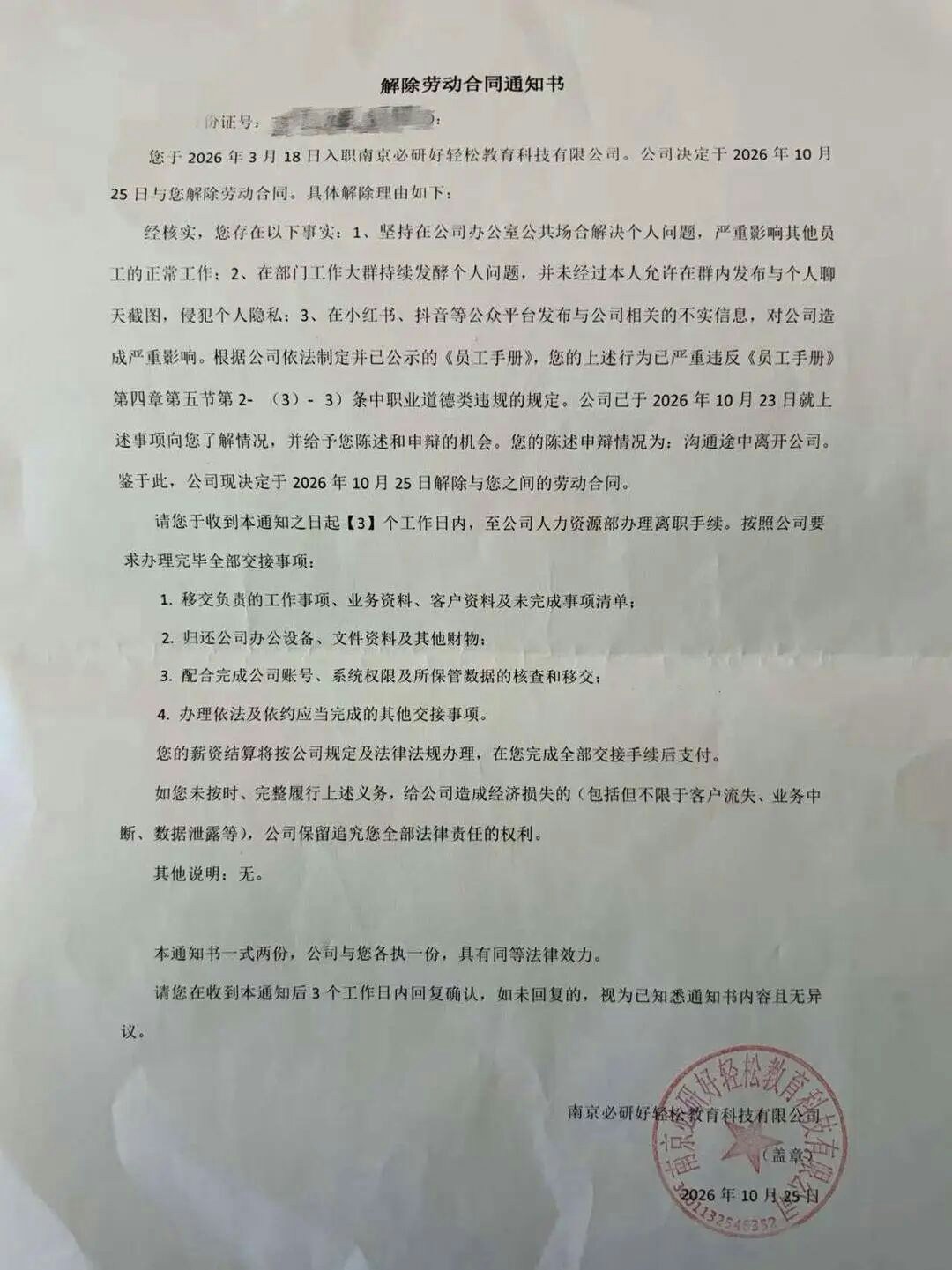
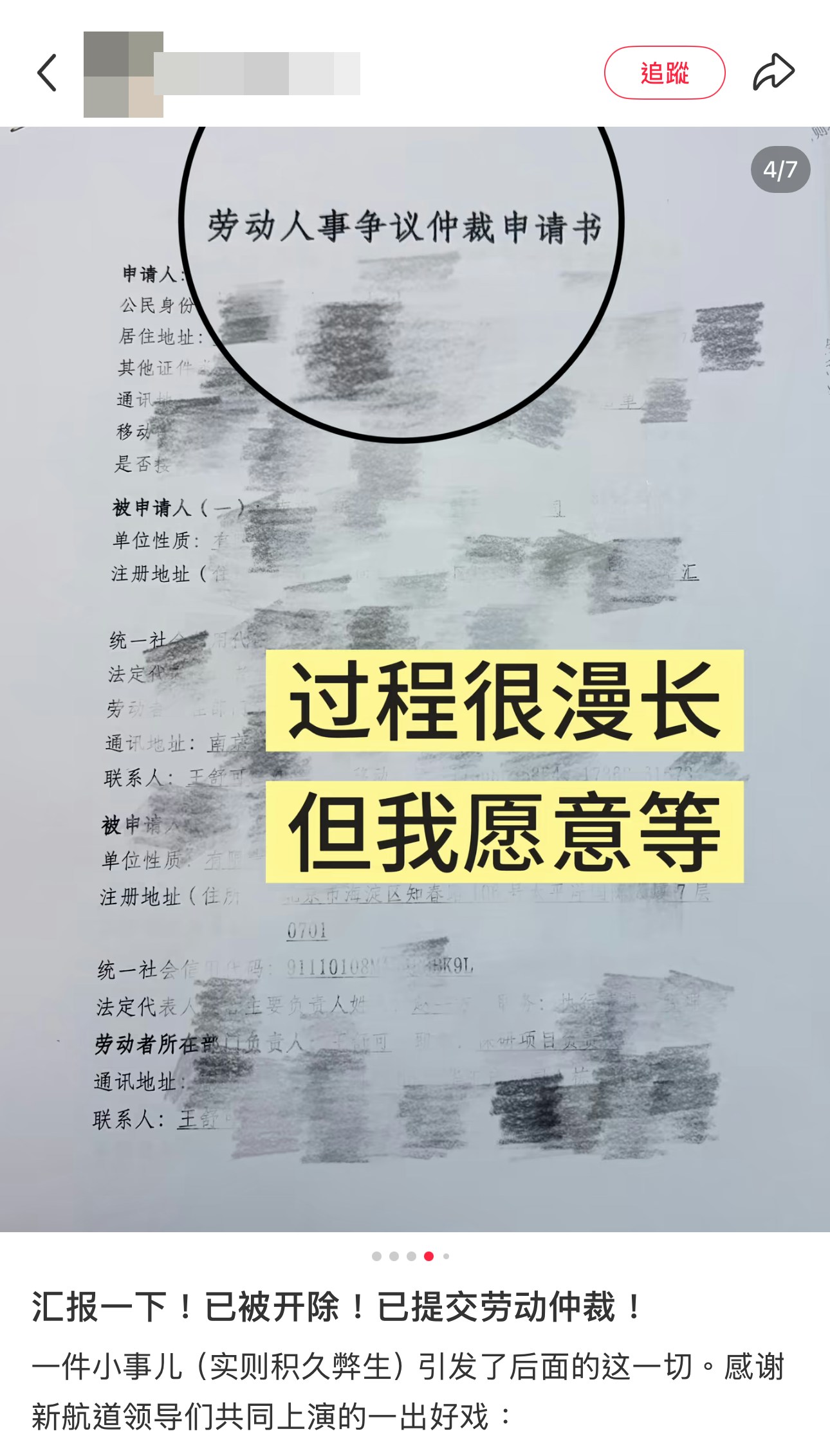
She disputes that characterization and has gone to labor arbitration, seeking the "2N" compensation Chinese law provides for unlawful dismissal, her unpaid overtime, and an audit of the social-insurance and housing-fund payments she says were irregular. A lawyer who reviewed the case for a local broadcaster put the legal issue plainly: for a standard-hours employee, mandatory frequent availability on rest days is disguised overtime, and the dismissal's legality is in doubt.
The story caught fire because it lands on a nerve far beyond one office tower in Nanjing. The message-driven office — the one WeChat built — has been eroding the boundary between the workday and the evening for years. And her complaint about irregular social-insurance payments arrives the same week new rules took effect fining employers up to three times what they withhold.
The arbitration tribunal has not yet scheduled a hearing. When it does, the question before it will be narrow, and uncomfortable well beyond Nanjing: whether a written rule can convert a rest day into an on-call shift, and whether five hours of silence on a mountain is a fireable offense.