Suspect Admits All Charges in Murder of Chinese Graduate Student in South Korea
The 31-year-old suspect, a Chinese lecturer at the victim's university, acknowledged every charge against him at the Daegu District Court on Monday, including murder and concealing the body. Prosecutors say further sexual-violence allegations may be joined to the case. The killing has sat on China's trending lists since August.
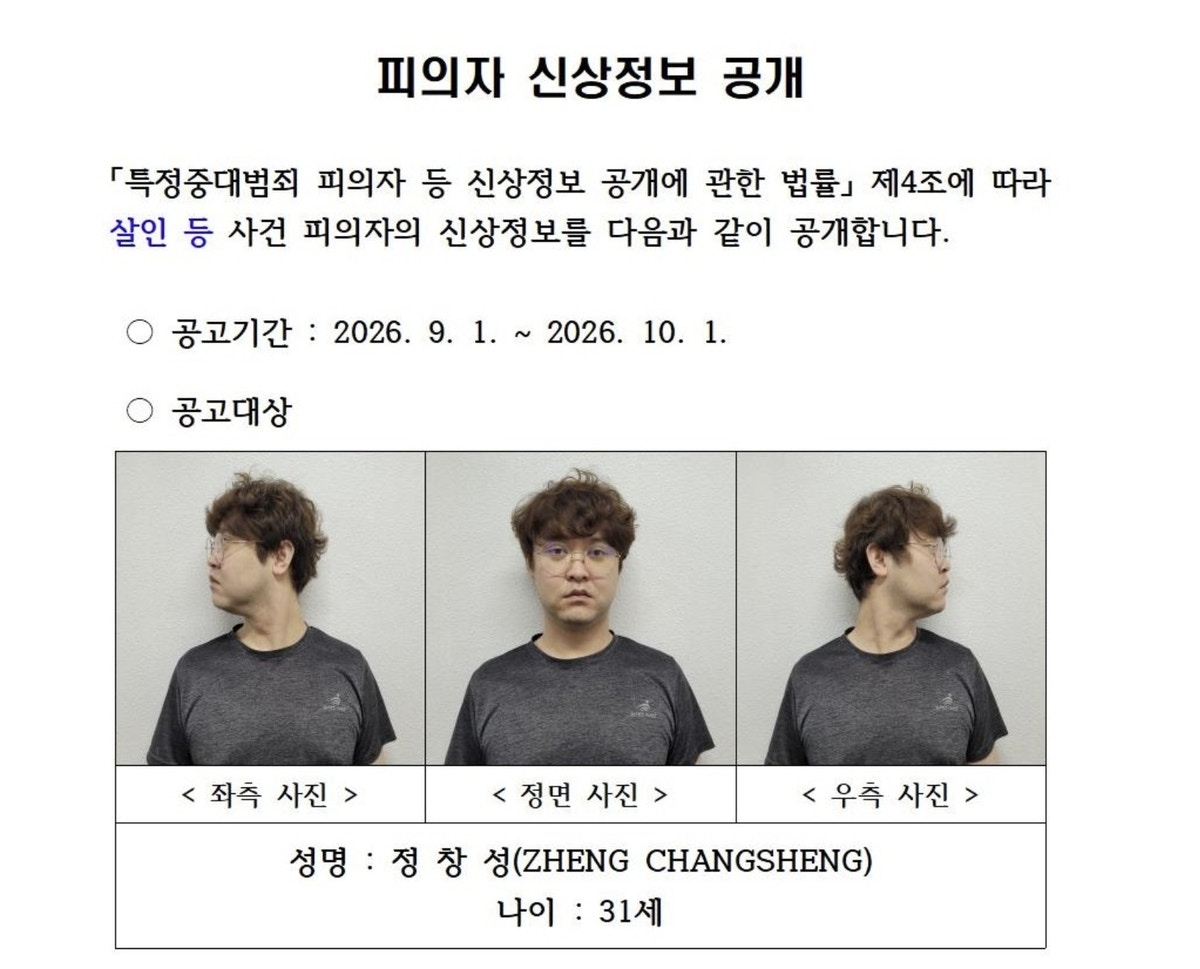
The man accused of murdering and dismembering a Chinese graduate student in South Korea admitted every charge against him in court on Monday, a plea that moves one of the most closely followed Chinese crime stories of the autumn from investigation toward sentencing.
At the Daegu District Court's 13th criminal division, the defense counsel for Zheng Changsheng, 31, told the panel that his client acknowledged all of the prosecution's charges — murder; damaging, abandoning and concealing a corpse; and obstructing officials in the performance of their duties — and consented to the evidence submitted, as Knews' report of the hearing detailed. There will be no contested trial on the facts; what remains is the panel's judgment on the penalty.
Chinese readers know the case's outline well, because it has charted repeatedly since late August, when Korean media published the suspect's photograph and security-camera stills showing him dressed as a woman on the day of the killing. The victim, a Chinese national in graduate study in South Korea, was killed and her body dismembered and abandoned; the suspect is a Chinese man who taught at the same university. HK01's account of Monday's hearing retraces the timeline, including the police decision to release his identity information — front and profile photographs, name and age — under the Korean statute that permits public disclosure for suspects in certain grave crimes. That practice is itself a contrast Chinese commenters noticed: it is not how a suspect would be presented at home, where pre-trial disclosure runs far more cautiously.

Monday's hearing added a darker dimension. Prosecutors told the court that Zheng is also under investigation for sexual violence against other victims under South Korea's Sexual Violence Punishment Act, and that the cases will be prosecuted together when conditions allow. The victim's killing and the suspect's admission of it are therefore not the whole of what the court will eventually weigh.
On Weibo, where the plea pushed back onto the hot list, the reaction was sorrow rather than spectacle: "The tragedy is heartbreaking. We hope the law punishes him severely — and it reminds every student abroad to stay safe," one widely read post ran. Chinese students form one of the largest international student communities in South Korea, and since August the case has fed a running conversation about campus trust and personal security — sharpened by the fact that victim and suspect were both Chinese, known to each other through the university rather than strangers to one another.
The plea does not close the case. With a possible second set of charges to be joined, sentencing awaits the court's schedule.