Why Open Source Sits at the Center of China's World Internet Conference
The 2026 World Internet Conference opened in the water town of Wuzhen on Monday under a theme that would have been unthinkable at its first editions: open source, held up as the measure of China's tech ambitions. Tencent and Alibaba arrived with rival flagship models released openly, and the country's first national open-source exhibition hall opened the day before the summit did.
TheWorld Internet Conference opened in the canal town of Wuzhen on Monday for its twelfth edition, and the tell that something has shifted was on the marquee. The 2026 theme — "open source, openness; co-building, sharing" — puts open software and open models not in a side forum but at the absolute center of an event that has run since 2014 and was long known abroad chiefly for its language of cyber sovereignty. More than 670 companies are exhibiting through Wednesday: robots, AI agents, 6G testbeds, smart zebra crossings and a flying rescue ring that Hangzhou police already deploy on West Lake.
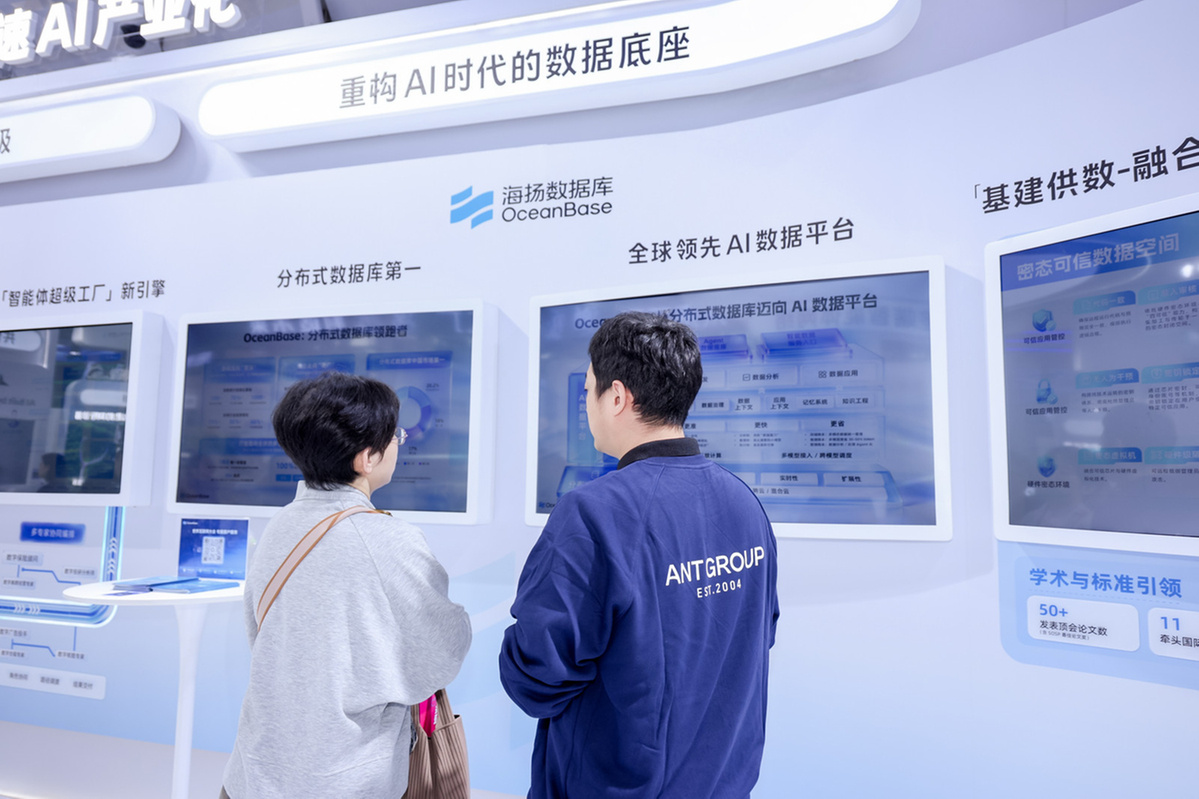
The pivot was cemented the day before opening, when China's first open-source-themed exhibition hall — built under the internet regulator and Xinhua — opened at Wuzhen's internet science museum. Then the companies arrived with receipts. Tencent chose the summit to release the full open-source version of Hy4, its new flagship large language model, deliberately head-to-head with Alibaba's Qwen4. Zhejiang's flagship lab put its 021 science model online, DeepSeek's latest work was on show, and the database project OceanBase, five years into open-sourcing its core code, could point to more than 200,000 deployments.
Provincial broadcaster Qianjiang Video framed the shift in one phrase that has traveled well beyond Zhejiang: Chinese AI is moving from "borrowing a boat to go to sea" (借船出海) to "building its own ship" — from consuming other people's open source to open-sourcing its own foundations, so that standards and developer loyalty take root at home. In a model economy, the argument runs, the winner is not whoever trains the largest model once, but whoever thousands of small firms, university labs and solo developers build on top of.
The summit's Leading Technology Award, announced Monday, went to twenty results spanning quantum computing to autonomous-driving intelligence — among them the Jiuzhang-4 photonic quantum computing prototype, a list that made front pages on Baidu and news wires alike.
Not everyone in the audience was swept along. One widely read finance commentator filed a useful dose of doubt: open-sourcing code, he wrote, is only the first step — the hard part is holding together the tools, the developers, the customers and the delivery. "Don't just watch whether the robots can make tea," he added. "Where are the orders?" That is the open question the summit leaves: whether China's open-source turn converts into the ecosystem pull its organizers are after, or stays a very well-attended exhibition.