South Korea Weighs Scrapping Its Athlete Draft Exemption After Footballers' 'I Won't Enlist' Comments
South Korea's under-23 footballers won a fourth straight Asian Games gold — then told reporters, with varying degrees of tact, that the medal mattered mainly because it excuses them from military service. The candour ignited an argument at home, and a lawmaker now wants the exemption itself abolished.
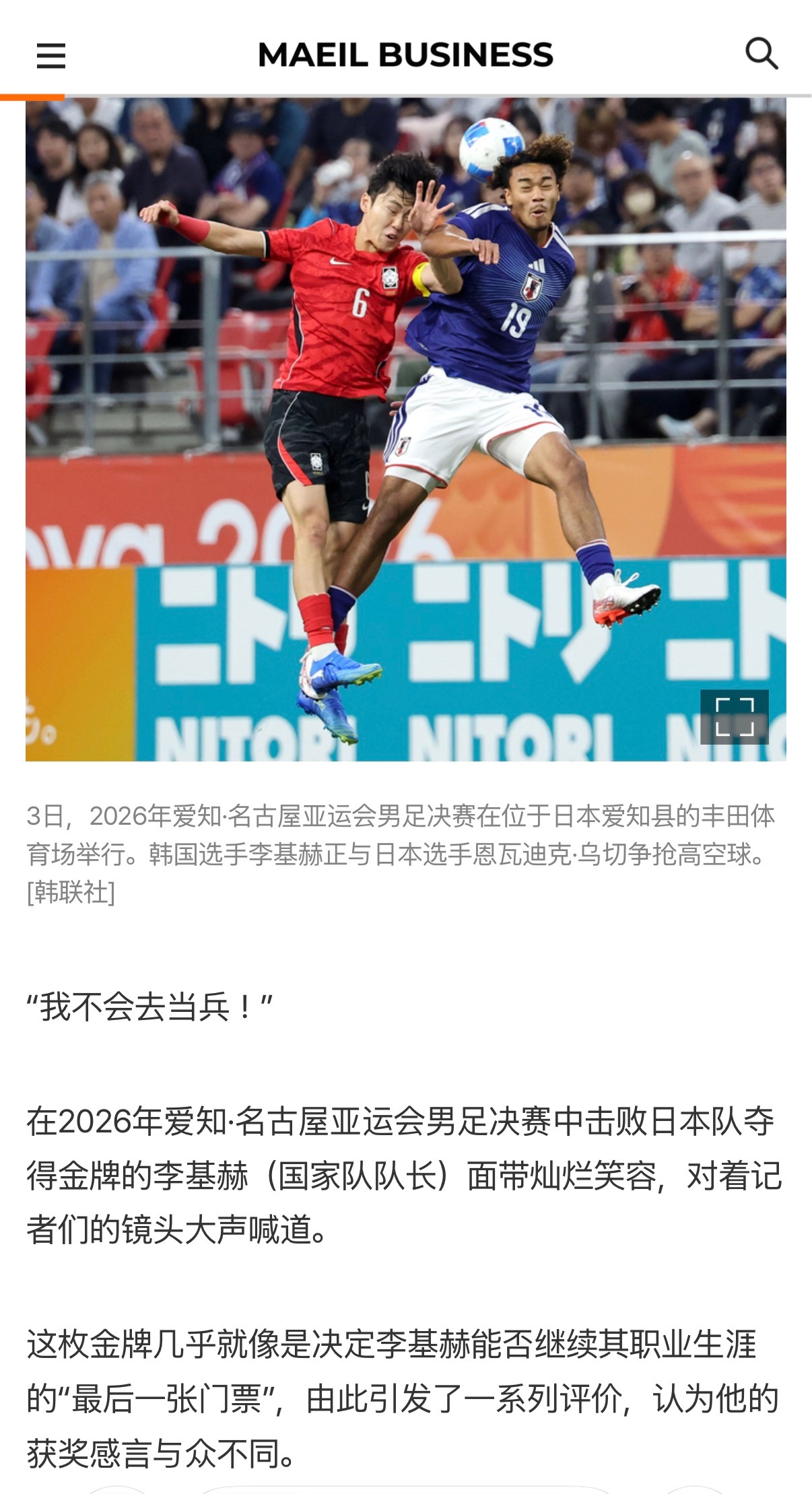
South Korea's under-23 football team beat Japan 1–0 in Nagoya on Saturday night to win a fourth consecutive Asian Games title — and, with it, the prize the players had been chasing all along. Under South Korean law, a gold medal at the Asian Games exempts an athlete from roughly eighteen months of compulsory military service, and images of the squad weeping at the final whistle read, correctly, as relief as much as joy. As we covered when the final ended, the tears were the story.
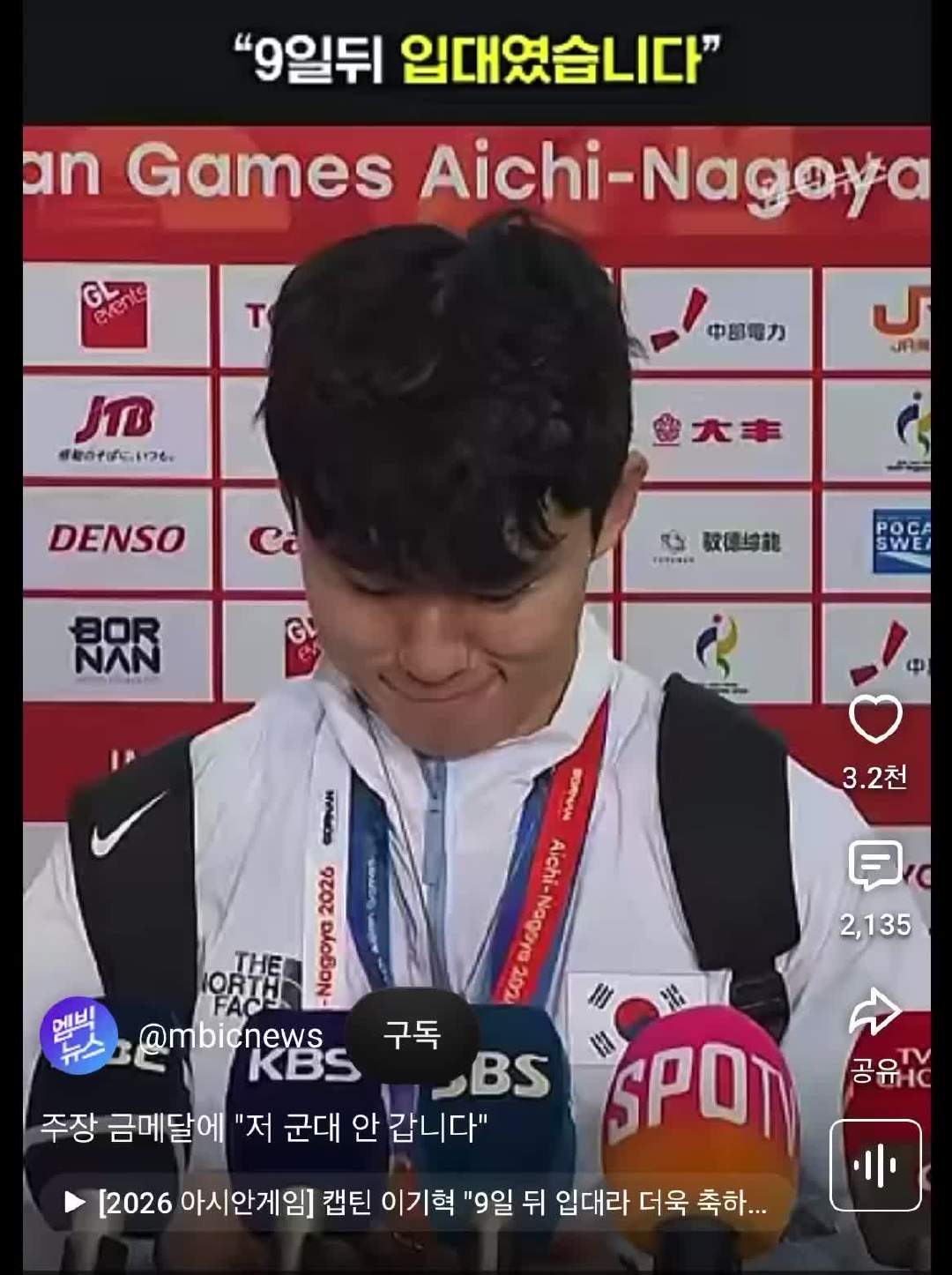
Within hours, the story had turned. Asked what the trophy meant, forward Yang Min-hyuk replied that the gold medal and the cup "don't really matter — the whole team came here for the military exemption." Lee Ki-hyuk, who was nine days from his enlistment date when the tournament began, put it more plainly still: "I don't have to serve now" (我不用去当兵了). Both interviews were clipped and reposted across Korean forums, where the reaction was not amusement but anger.
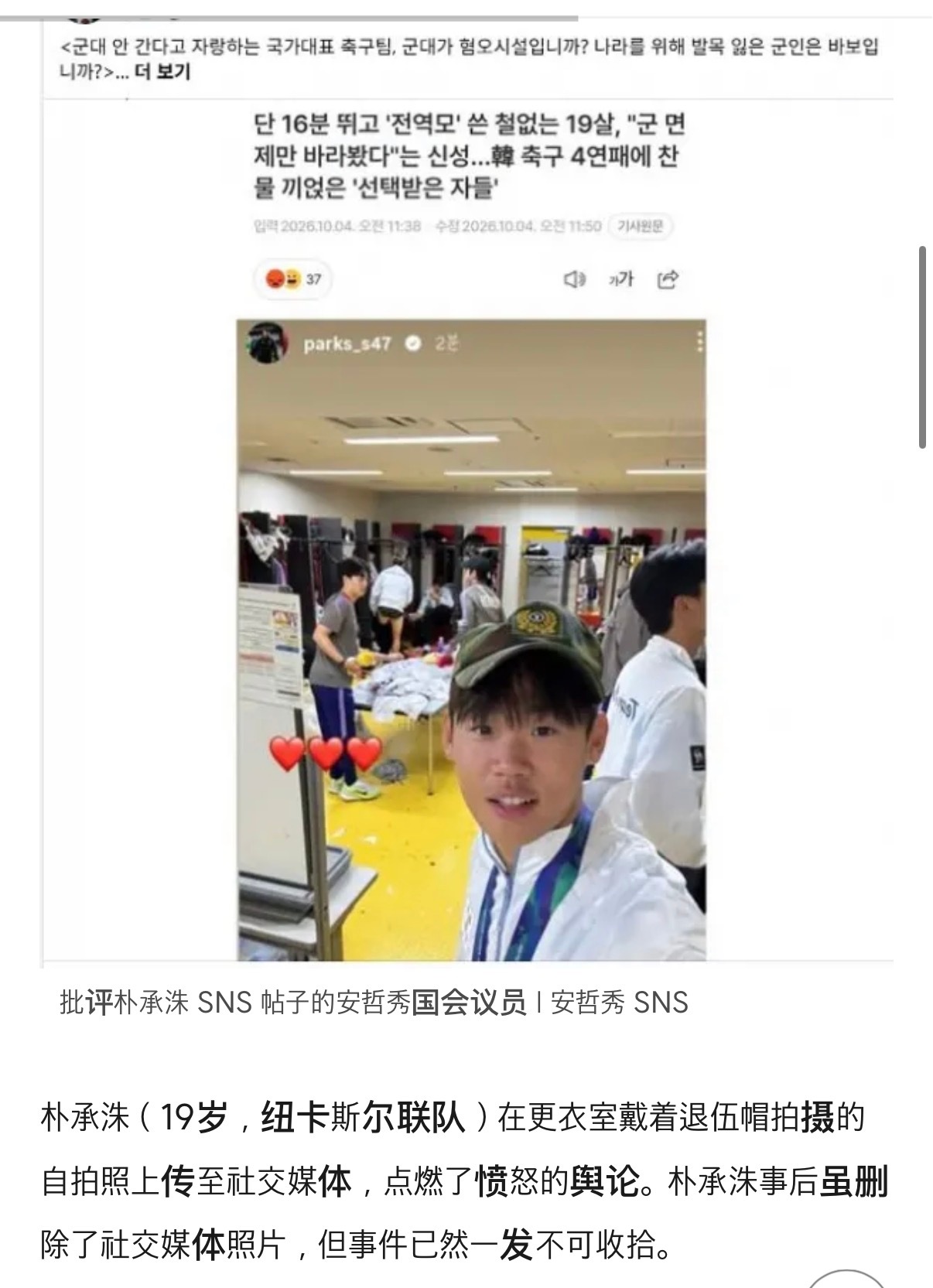
The anger had plenty to feed on. Park Seung-su, a 19-year-old who plays for Newcastle United, posted a locker-room selfie in a cap marked "discharged", deleted it once it went viral, and was scolded by a lawmaker anyway. Ahn Cheol-soo, a prominent legislator and former presidential candidate, went further on Facebook, demanding the exemption itself be reconsidered. "Is the army something you resent?" he wrote. "Are the young men who report for duty every year just suckers (冤大头)?" Days earlier, he noted, a soldier on the western border had lost an ankle to a North Korean landmine — "for one's country" should not leave a footballer's mouth like this.
The rule they tripped over is a Korean institution: Olympic medallists and Asian Games champions earn exemption because they are held to have brought the country honour abroad, and winners in other sports — an archery squad, a swimmer — accept the medal and the deferral without a press conference. What inflamed this Games was the gap between the rule's premise and its beneficiaries' own words. A summary post laying out the quotes was liked more than 17,000 times on Chinese Weibo within a day, and the Korean debate it relayed split the same way. One camp held that exemption is a legitimate reward for international achievement — and pointed out, as Korea's Maeil Business did, the awkward benchmark of BTS, whose members all enlisted at the peak of their fame. The other asked why one tournament medal should buy a way out of a duty everyone else shares, with the sharpest voices calling for the special case to be scrapped altogether.
Chinese readers followed along with a mixture of amusement and recognition. China's own under-23s took bronze in the same tournament, their best finish in 28 years, so the final was hardly a foreign affair; some Chinese commenters marvelled that the Korean players had simply said the quiet thing out loud, others jabbed at Seoul's hazing-heavy service culture — "maybe fix 'military service equals suffering' first," one widely liked comment ran — and a few took the egalitarian line: everyone serves, and there should be no special class of Koreans.
The exemption stands, for now. What has changed is that its most public beneficiaries no longer pretend to want it — and one of South Korea's most famous lawmakers has decided that, this time, the answer is not to forgive them but to take the rule away.