Satellite Images Show Myanmar's Demolished Scam Compounds Rebuilding
Satellite imagery shared on Weibo shows new enclosed compounds rising near Myawaddy, Myanmar, months after the demolition of the KK Park scam complex, and recruiters have posted more than 9,300 job ads for the rebuilt parks. The finding, trending alongside CCTV's documentary on the scam trade, is the warning Chinese commenters repeat in the same breath: the four crime families are gone, but the industry they served is rebuilding.
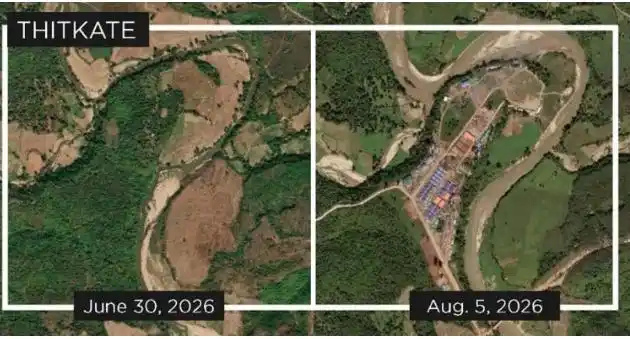
In early January, Myanmar's government announced what looked like the end of the story: every illegal building at KK Park, the fraud compound in Myawaddy that had become the emblem of Southeast Asia's online-scam industry, had been demolished — 635 structures in all. Ten months later, the story is restarting. The hashtag now high on Weibo's trending list translates roughly as “the scam parks may rise from the ashes again” (缅甸电诈园区或卷土重来), and the evidence being passed around is difficult to dispute.
Toutiao News posted a two-panel satellite image of a site near Myawaddy. The left panel, dated June 30 this year, shows a cleared patch of ground by a river bend. The right panel, dated August 5, shows the same patch enclosed, with a dense cluster of new buildings under freshly colored roofs. The report behind it counts more than 9,300 job ads that recruiters attached to the rebuilt compounds have published on social media — the same high-salary pitches that once drew tens of thousands of people, most of them Chinese, into the industry. The audience for those ads, commenters note, is people scrolling inside China.
The topic surfaced in the same week as the final episodes of CCTV's documentary on the scam trade, whose revelations have dominated the preceding days. Its most discussed material includes a pre-execution interview with Ming Zhenzhen, a leader of the Ming family, one of the four Kokang clans behind the region's worst compounds. Asked about workers who tried to escape, she described shooting them and having the bodies buried — “since they're already dead, arrange for people to bury them” — delivered, as several posts observed, with a smile. She was executed on January 29 along with ten other members of her family's organization. The documentary also put faces to the trade's industrial scale, including a survivor who was sold between compounds and forced to surrender a kidney.
That machinery is what China's multi-year campaign has been dismantling. A state-media recap high on Baidu's search board counts more than 57,000 suspects arrested since mid-2023 through joint operations with Myanmar and Thailand; Chinese police had summoned the four families' representatives three times before moving against them. In the documentary, investigators describe entering Kokang under fire — Myanmar's fighter jets passed overhead, one detective recalled — to exhume three Chinese nationals the Myanmar side had long insisted were never dead.
The sobering commentary now circulating concerns the rest of the map. The four families, as one military-affairs commentator put it, controlled only the Kokang corner of the industry — one county's worth of a much larger trade. Parks elsewhere in Myanmar were untouched by the crackdown, never stopped operating, and are among those now rebuilding and hiring. Demolishing buildings, as another post summed it up, is easy; dismantling a criminal chain with local protection is not. The job ads, still counting upward, are the leading indicator — and the warnings trending alongside them read like public-service announcements: whatever the salary, do not believe the overseas job offer.