Seven Hours, Not Eight: The Sleep Number Going Viral in China
A cluster of new studies has given Chinese social media permission to stop chasing the eight-hour night: frailty risk bottoms out at roughly seven hours of sleep, according to research in the Nature journal npj Aging using Chinese survey data. On Weibo, the finding is arriving alongside traditional Chinese medicine's own bedtime timetable — and visible relief from tracker users who never hit eight.
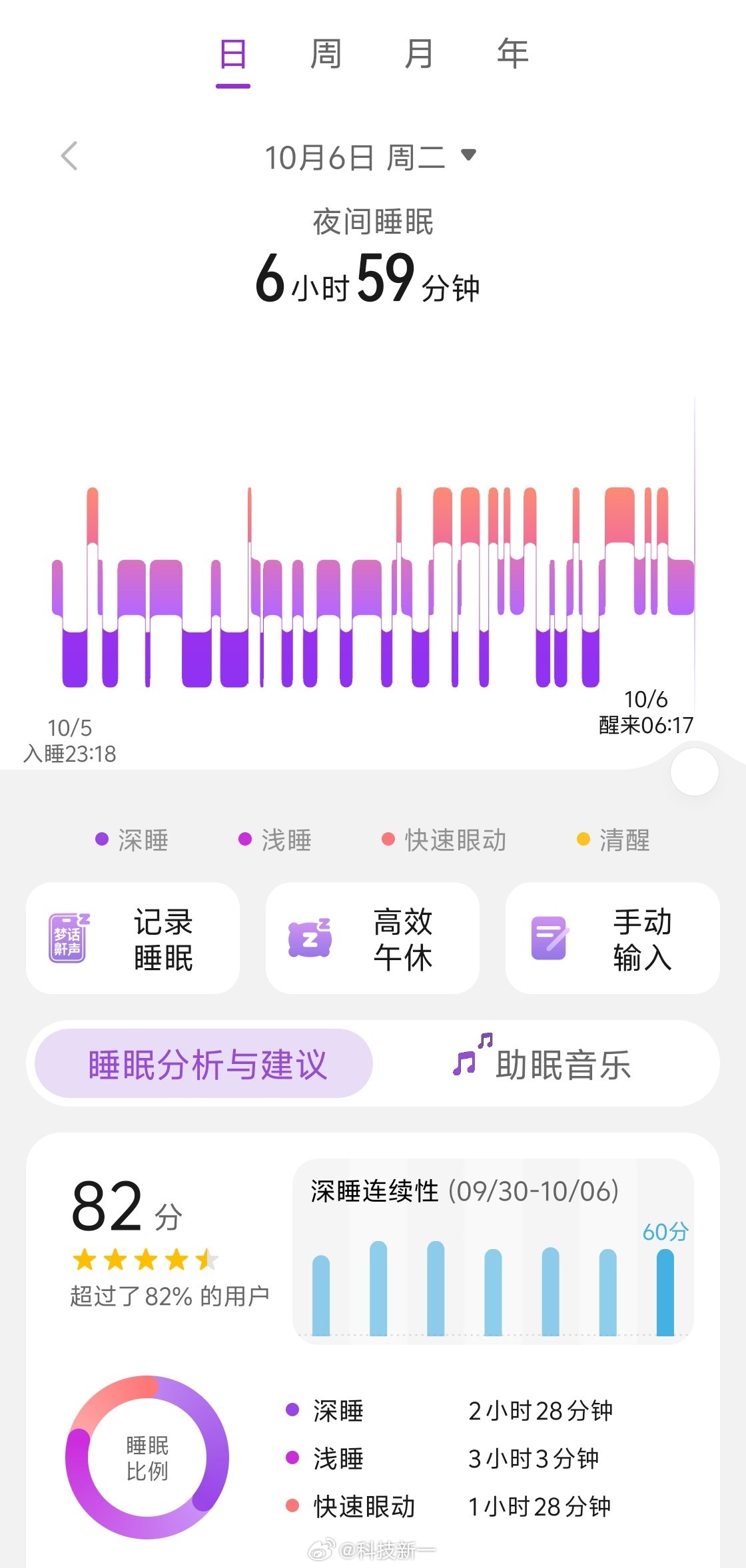
Sleep, for a certain kind of Chinese office worker, has become a nightly exam. Fitness bands and smart watches score every night, and the syllabus everyone memorized says eight hours — so a tracker that reads seven hours, night after night, reads as a small failure. One screenshot circulating under this week's trending topic shows a verdict of six hours and fifty-nine minutes. A Pear Video explainer summarizing the new research has drawn more than 3,000 likes since it went up on Monday, much of the response, apparently, relief.
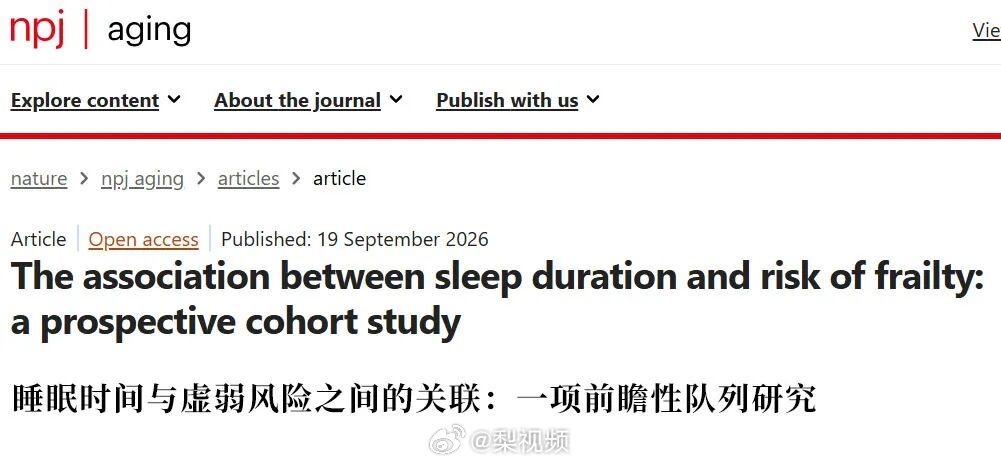
The research behind the topic is real and recent. In September, npj Aging, a Nature Portfolio journal, published a cohort study built on CHARLS, China's health-and-retirement survey: more than 18,000 middle-aged and older adults, followed for a median of nearly nine years. Over that period, 11.6 percent of participants developed frailty — geriatric medicine's shorthand for declining resilience, marked by exhaustion, weakness and slow recovery. Frailty risk traced a U-shaped curve against sleep length: too little raised it, too much raised it as well, and the trough sat at about 7.1 hours.
Different datasets keep finding the same trough. A Nature analysis of nearly half a million adults put the healthiest band for the pace of organ aging at 6.4 to 7.8 hours; a study published in a BMJ-family journal in March tied peak insulin sensitivity to almost exactly 7.3 hours; a JAMA-family paper following more than 320,000 people put the mortality floor at seven hours, with risk climbing in both directions; and a 2022 Nature-family study connected seven hours to the best cognitive and mental-health outcomes. None of this says more sleep is better. It says the old rule was roughly one hour too strict.
The topic's other viral item braids the science with an older clock. A graphic shared by People's Daily's health outlet explains why 11 p.m. to 3 a.m. is the “golden repair window”: in traditional Chinese medicine, those hours belong to the liver's and gallbladder's watch, when yang qi recedes and the organs repair themselves; in the Western version, the same window is when melatonin and growth hormone peak. Sun Yong'an, a neurologist at Peking University First Hospital, told the outlet that long sleep is not the same as efficient repair — the problem for people who wake exhausted after eight hours is usually quality and structure, not quantity — and his advice is a regular bedtime before 11. The fusion is characteristic of Chinese social-media health content: cohort studies on the bottom layer, meridian theory on top, and no sense of contradiction among the readers nodding along.
The practical advice that survives beneath the trend is unfussy: keep a fixed schedule, keep naps to twenty minutes, do not self-medicate with melatonin, and treat chronic insomnia as a medical problem rather than a willpower one. What the new number actually changes is the grade curve. For the tracker generation, seven hours has been a nightly shortfall. It is now, according to the research going viral this week, the target.