After a Man Jumps to His Death at Nanning Station, Sympathy Shifts to the Train Driver
A man died at Nanning Station on Monday after jumping in front of an arriving train despite the driver's emergency braking. Within hours the trending conversation had moved past the death itself to the driver and station staff who witnessed it — and to the little-known rule that track deaths can leave families liable for damages.
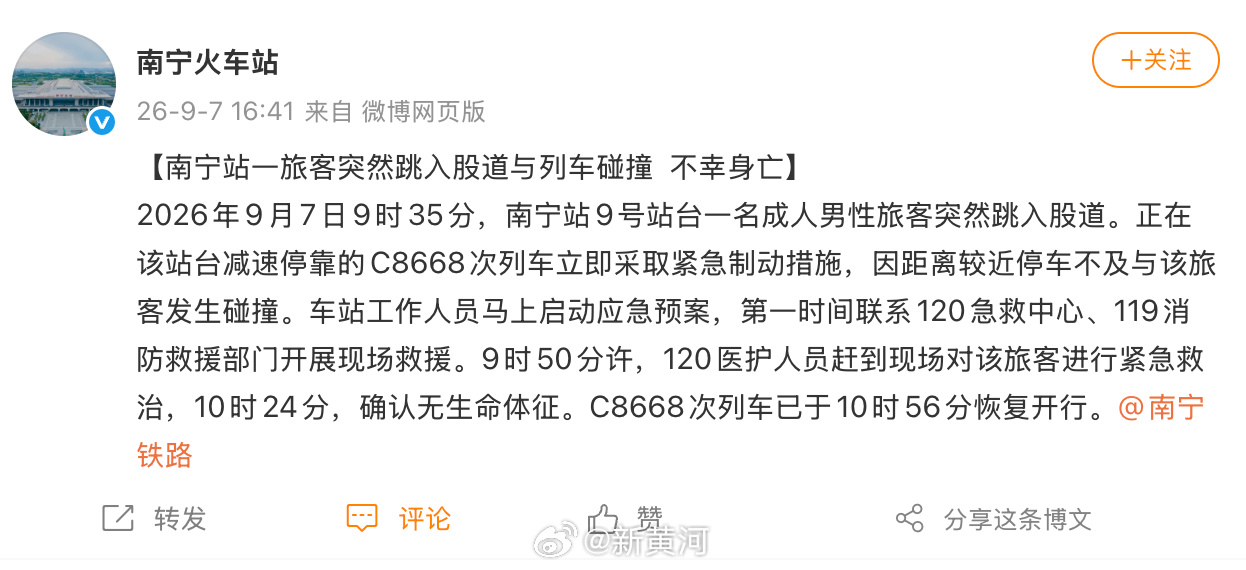
A man died at Nanning railway station on Monday morning after jumping from Platform 9 into the path of an arriving intercity train, in an incident that quickly drew two separate waves of public attention: one to the death itself, and one to the train driver who could not avoid it.
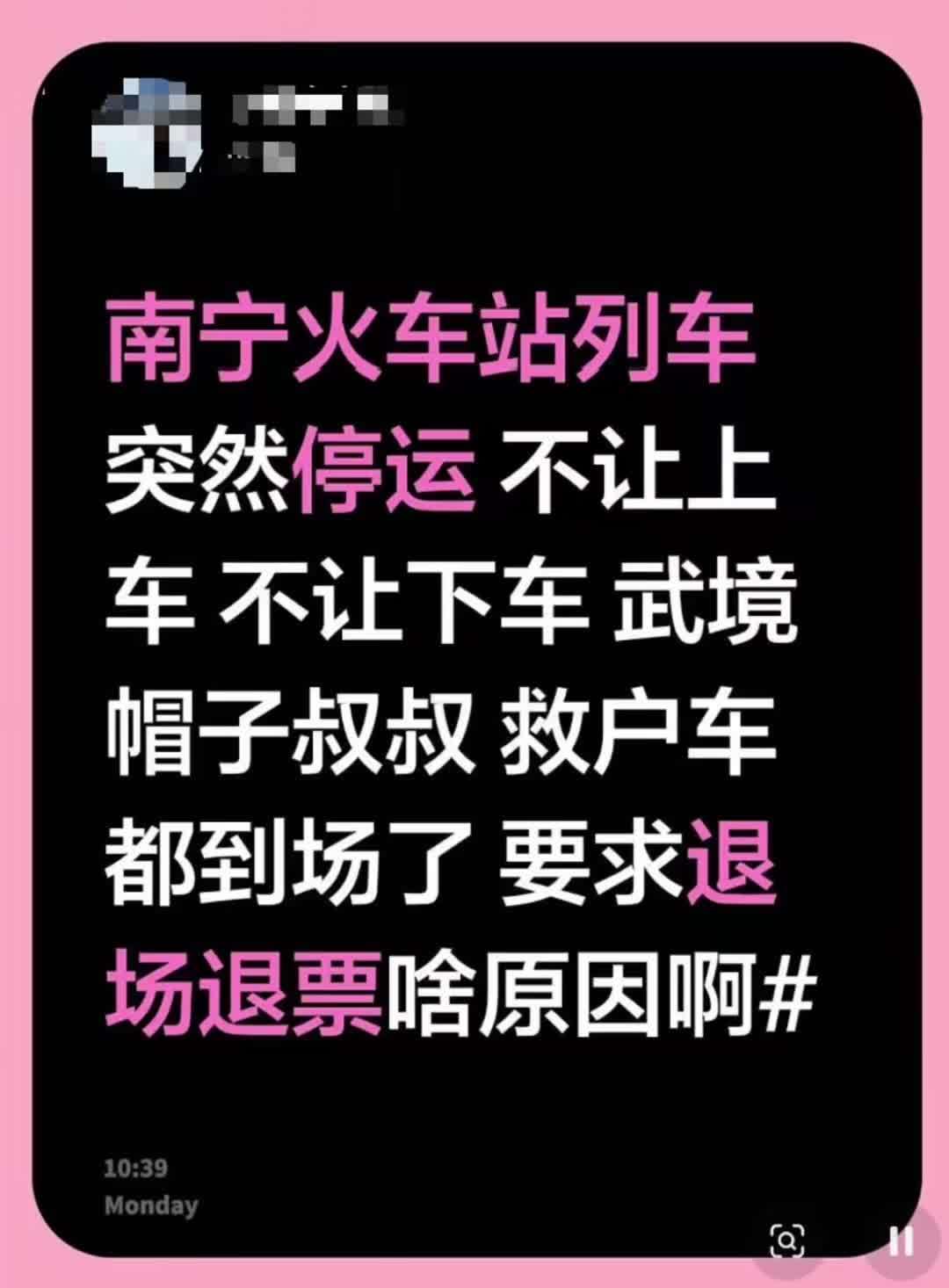
The railway's account was unusually prompt and unusually specific. In a notice issued the same morning, Nanning Railway Station said the man jumped into the track at 9:35 a.m. as train C8668 was slowing to stop; the driver braked but the distance was too short. Station staff triggered emergency procedures and called paramedics and firefighters, who worked on the man for half an hour before he was declared dead at 10:24. Service on the line resumed at 10:56. (The station's official notice) The notice was liked more than 10,000 times within hours, as passengers posted about sudden holds on the station's boards. "Trains suddenly suspended, no boarding, no alighting, armed police, ambulances all here," read one message circulated by the outlet New Yellow River before the official statement appeared. (The eyewitness post)
Then the conversation turned to someone the notice never mentioned by role: the driver. A second trending phrase paired the station's name with "the driver's psychological shadow" — Chinese internet shorthand for lasting trauma — and the discussion underneath was strikingly unsensational. Commenters walked through what the morning would have looked like from the cab: a normal approach into the platform, full emergency braking, and a collision no reaction time could prevent. "The driver was just bringing the train in normally," one post argued. "Even braking with everything, it happened all the same. A scene like that hits a person hard — nightmares after, a burden every time he drives afterward." (That post)
Others supplied detail that deepened the unease. One commenter relayed accounts that the man had lingered at the edge of the yellow safety line, been shouted back by staff, and then dashed in front of the train — an image that left readers reckoning with the staff who saw it coming and could not stop it. (The comment) Psychologically minded posts circulated explaining that witnesses to a sudden death on the tracks — drivers above all, but also platform staff and delayed passengers — are at real risk of post-traumatic stress, and that the "helplessness of doing everything right" is the injury that lasts. (One such post)
A drier piece of legal knowledge also spread: under Chinese railway rules, a death by suicide on the tracks is not treated as a private act. Commenters pointed out that entering the track is illegal, that it can disrupt the wider network, and that families can in principle be held liable for damages to the railway — a fact that reframed the morning's tragedy for many readers as also a public one. "Jumping the tracks is despair performed in public," as one post put it, arguing that the right response is a system that catches people before the platform. (That argument)
The station itself returned to normal within 80 minutes of the all-clear. The debate about the people it takes along with it — the driver, the staff, the witnesses — was still running at the day's end.