Homeowners Vote to Ban Electric Cars From Their Own Underground Garage, and Lawyers Say the Vote Means Nothing
An owners' committee in Nanping, Fujian has voted to bar new-energy vehicles from its underground car park and given residents ten days to move them, on the property manager's fear of fire. Lawyers call the ban an unlawful infringement of owners' parking rights — the sharpest local skirmish yet in China's collision between its EV boom and ageing residential infrastructure.
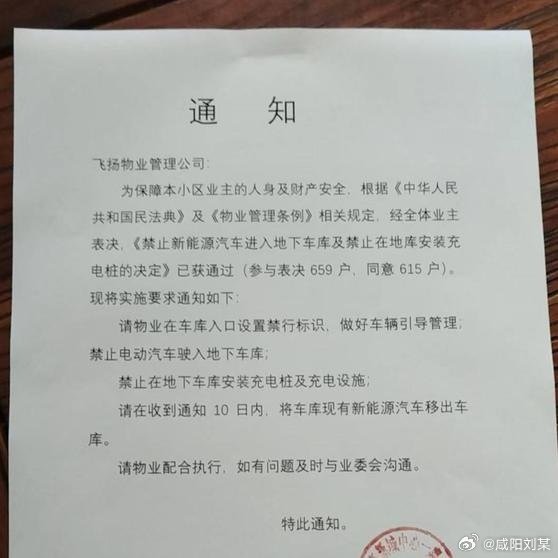
A printed notice on a table in Nanping, Fujian province, has become the document of the week for China's electric-vehicle owners. It records an owners' committee vote — 659 for, 615 against — to prohibit new-energy vehicles from entering the neighbourhood's underground garage, and orders cars already parked there to be moved out within ten days. The property manager's reasoning, per local reports, was blunt: fear of explosion. The case, flagged by a lawyer as an infringement of owners' parking rights, is now Baidu's number-two hot search.
The fear is not invented. Lithium batteries that go into "thermal runaway" burn ferociously, self-sustain, and can reignite; state media explainers circulating with the story note that battery thermal runaway is the leading cause of EV self-combustion, and that a garage fire involving one is harder to contain than a petrol fire. What the ban dodges is why that danger concentrates in garages in the first place. CCTV's explainer lists the real bottlenecks: underground car parks whose electrical capacity was never designed for chargers, smoke-extraction standards that lag behind how batteries burn, and a retrofit bill that can run to a million yuan that nobody wants to pay. Property managers who fear liability and cannot upgrade, simply bar.
The insurance of a one-size-fits-all ban is what lawyers are challenging. A blanket prohibition, even one backed by a majority vote, intrudes on the parking rights attached to deeded spaces — some of the barred owners bought their spots years before the first EV arrived — and an owners'-committee decision that strips a minority of a property right can be sued into invalidity, the commentary accompanying the Baidu trend concludes. Owners who lose the vote do not lose the lawsuit: courts have consistently sided with EV owners in similar disputes around the country.
The collision was predictable. China put tens of millions of new-energy vehicles on the road in a decade, so fast that CATL's chairman has warned publicly that quality is being traded for speed, and the first generation of those cars is now ageing into residential garages built in the petrol era. The state's answer so far has been pilot-and-subsidise — Shenzhen pairs fire-safety standards for garage retrofits with money to pay for them — but a national retrofit standard is still catching up with the fleet.
Until it does, the garage is where the EV transition's paperwork gets decided: between a committee with a printer and an owner with a lawyer.