Pakistan Becomes the First Country to Close Its Airspace to Taiwanese Airlines
Pakistan has barred Taiwanese carriers from its airspace in support of the One China policy — a first that forces China Airlines and EVA Air onto longer detours through Russian skies.
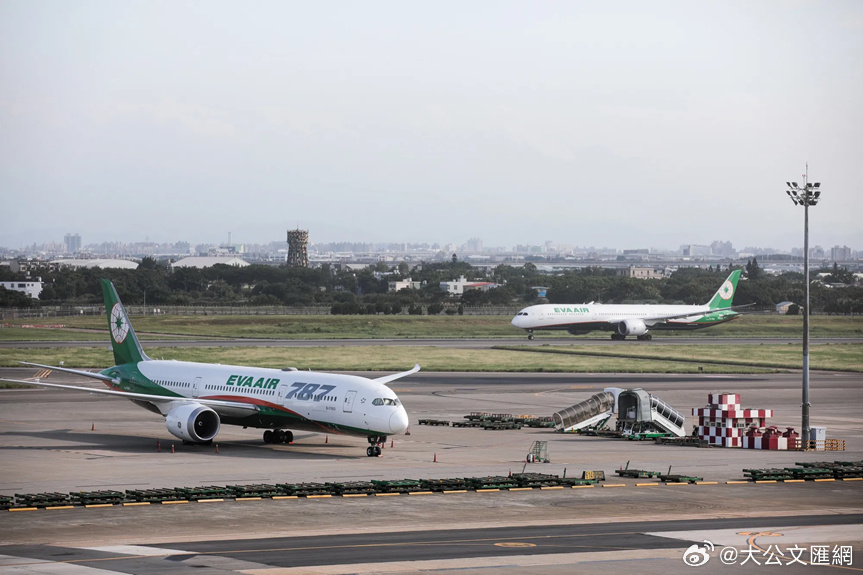
Pakistan has closed its airspace to airlines from Taiwan, becoming the first country in the world to take such a step, Bloomberg reported on Tuesday. Pakistan's defense minister, Khawaja Asif, confirmed the move, telling the agency that the aviation department "follows the One China policy" and that "we only allow Chinese (mainland) carriers to fly over Pakistani airspace."
The change took effect days before it made headlines. Flight-tracking data cited by the Global Times show that China Airlines and EVA Air, the two carriers that handle most of Taiwan's long-haul flying, stopped overflying Pakistan on the morning of October 25, and at least a dozen of their Europe-bound flights have since rerouted through Russian airspace. The detour is an ironic one: both airlines have deliberately avoided Russia since the war in Ukraine began, and Pakistan's corridor was precisely the workaround that kept their Europe routes viable. Neither airline, nor Taiwan's Civil Aeronautics Administration, commented on the rerouting; the administration noted only that it has never barred its carriers from Russian airspace.
Geography explains why the loss stings. Pakistan sits almost astride the great-circle path between East Asia and Europe, and for airlines steering clear of Russian airspace since the invasion of Ukraine, the corridors over Central and South Asia are the main alternative. Losing one of them means longer flight times, higher fuel burn and crowded detours on the busiest long-haul routes Taiwanese carriers operate.
On Chinese social media, the story landed less as an aviation headache than as a diplomatic gesture. The Global Times' writeup — headlined "First! Pakistan closes airspace to Taiwanese airlines, backs One China" — drew more than 2,000 likes within hours, and Taiwanese outlets including the United Daily News picked it up from Bloomberg's report, as did Turkey's Anadolu agency and Hong Kong's Ta Kung Pao, whose accompanying photograph shows EVA Air jets on the tarmac under a hazy skyline. Baidu's search board, which reflects what the whole Chinese web is looking at rather than Weibo alone, placed the story at No. 13 — evidence that it had broken out of a single platform's bubble.
For Beijing, Pakistan's move is a rare, concrete instance of another government operationalizing the One China policy rather than merely stating it. Dozens of countries acknowledge diplomatically that they consider Taiwan part of China; almost none has translated that into restrictions on Taiwanese airlines, which fly the world's routes under deliberately ambiguous names like China Airlines and EVA Air. Whether other states follow Pakistan's lead is now the question aviation watchers in both Beijing and Taipei are asking — and for the island's carriers, every answer carries a fuel bill.