Xi Orders Accountability After 25 Die in Cargo Ship Fire at Qingdao Shipyard
A fire aboard a Liberian-flagged bulk carrier under repair at a state-run Qingdao shipyard killed all 25 people listed as missing, and President Xi Jinping has ordered an investigation and accountability. The daylong rescue exposed how lethal fires in enclosed ship compartments can be.
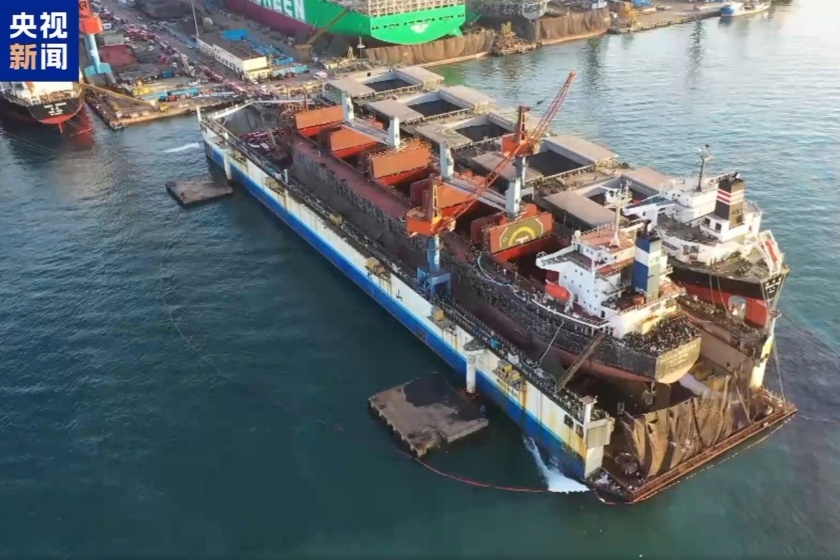
All 25 people who had been missing after a cargo ship caught fire at a shipyard in the eastern port city of Qingdao were found dead by Thursday evening, according to state broadcaster CCTV, ending a daylong rescue operation that had been broadcast live to the country. The ship, the Liberian-flagged bulk carrier Ocean Melody, had been in the yard for repairs for less than two weeks.
The fire broke out shortly after 11 a.m. at the Beihai Shipbuilding yard, part of state-owned China State Shipbuilding Corp., while the vessel was berthed for maintenance. Forty-two people were aboard: twelve escaped safely, five were taken to the hospital with injuries described as stable, and twenty-five were listed as missing through the afternoon. Officials have not said how many of the dead were crew members and how many were shipyard workers. By 5:30 p.m. twenty bodies had been recovered; the last five were found by 7:24 p.m.
The response at the very top of China's government came within hours. President Xi Jinping issued a directive calling for a full accounting — rescue first, then compensation for the families, an investigation into the cause, and people "held accountable in accordance with the law." Premier Li Qiang told the State Council's work-safety committee to press local governments on inspections. In China's system, a personal directive from both leaders signals that a disaster has been classified as nationally significant; the last such directives followed the deadly mudslides along the Nepal border.
A ship known to its port of call
Financial news outlet Caixin pieced together the vessel's recent history: the Ocean Melody had loaded 46,000 tons of iron ore in Monrovia, Liberia in early July, discharged it at the Yangtze River port of Taicang in late August, and entered the Beihai yard on August 28 for scheduled repairs. The fire was extinguished by around 2:30 p.m., roughly three hours after it began, but the delay in reaching anyone below deck shaped the outcome.
Firefighters described the conditions that kept the recovery going into the night: crews had to descend through narrow hatches into the ship's lower decks, where heat and smoke lingered after the flames were out, and stairs slick with residue made moving the injured difficult.
Weibo commenters filled in the physics that official accounts left out. "If a fire starts inside the hull, that narrow, sealed space barely vents," one wrote. "Corridors and corners everywhere, too many compartments, no way to find an escape route in time. And steel walls conduct heat — high temperature plus thick smoke. It's despair."
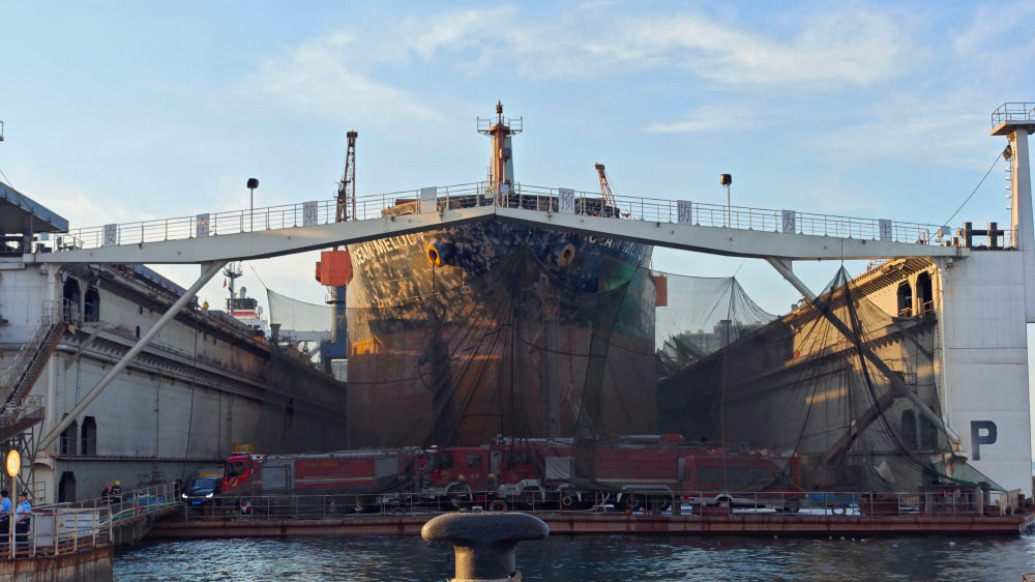
The fire dominated Baidu's hot board at No. 1 all day and drew a Zhihu question with tens of thousands of followers before the death toll was final. It also renews a familiar argument about safety in heavy industry: ship repair involves "hot work" — welding, cutting, grinding — in some of the most confined spaces in any workplace, and Chinese readers noted that the same week's news has carried one industrial accident after another. The cause of the fire has not been announced. What the directive promises, and what the shipyard's owners will be pressed to explain, is what work was underway when it began.