Seres Takes the Wheel at AITO as Huawei Steps Back From Its Biggest Car Brand
Huawei and Seres announced on September 15 that Seres will now lead product definition, design, marketing, retail and service for AITO — the most successful marque of Huawei's five-brand car alliance. The restructure leaves the alliance's younger, loss-making brands on a Huawei-led model and raises the question of what Huawei's car business is without its profit engine.
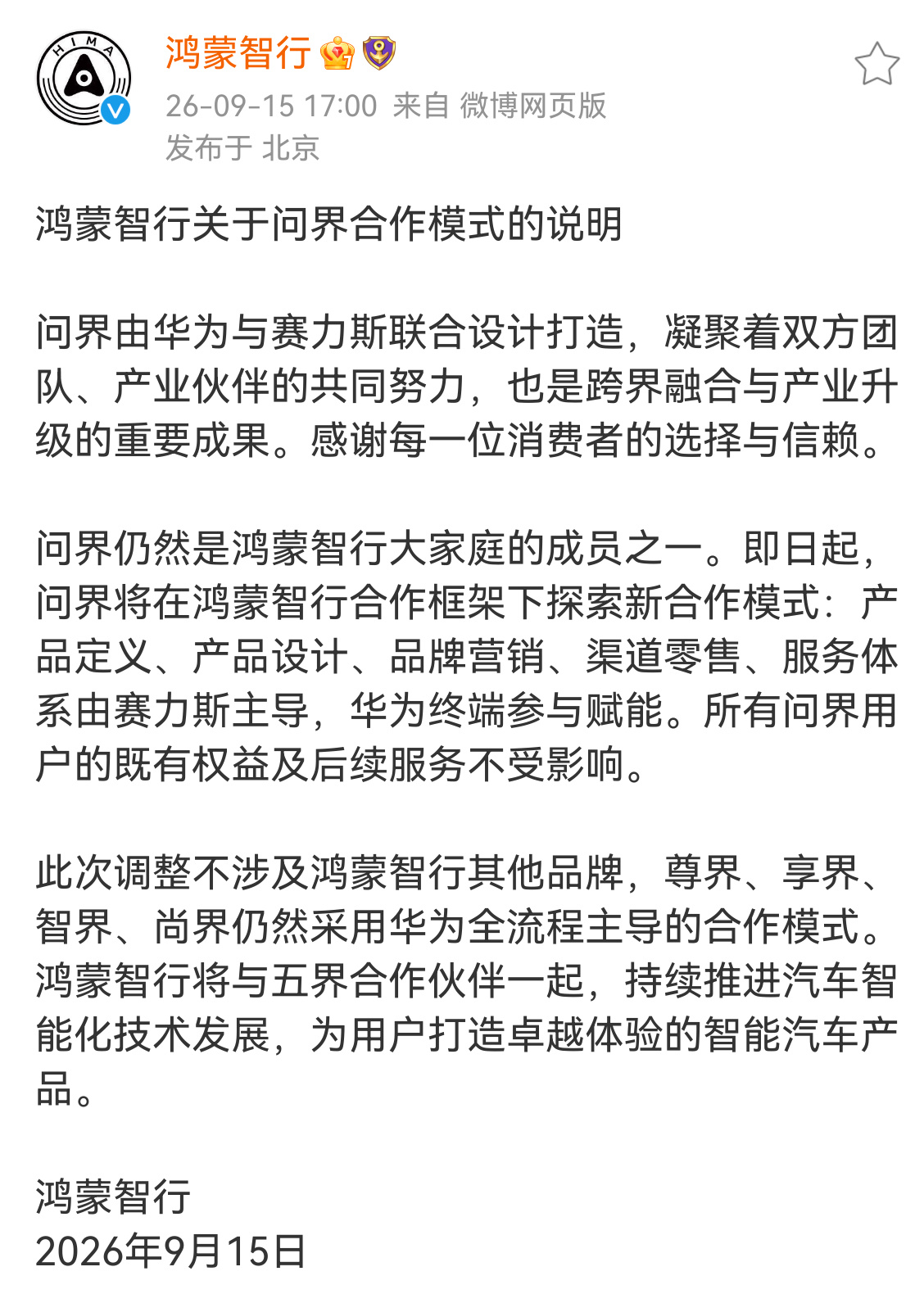
Huawei is formally stepping back from running the brand that made its car business famous. On Tuesday evening, the tech giant's car alliance Harmony Intelligent Mobility (HIMA) and the carmaker Seres published near-identical statements announcing that AITO — the marque whose M-series sport utility vehicles Huawei helped design, price and sell through its own retail network — will henceforth be led by Seres. Product definition, design, brand marketing, channel retail and after-sales service all move under the carmaker's control, while Huawei's device arm, Huawei Terminal, will instead "participate in empowerment," both companies said in statements signed September 15.
The announcement landed as a controlled shock. Both companies stressed that AITO remains inside the HIMA family and that owners' rights and service are unaffected; only the four younger marques — Stelato, Luxeed, Zhijie and Shangjie — keep the Huawei-led model. But the substance was clear: the most successful of Huawei's five car brands is now the first to leave the nest. HIMA's post drew several hundred comments within a day, and one reaction circulating alongside the announcements put the fear bluntly: without Huawei, a lot of people will not consider a Seres-built car at all, and sales of the flagship M8 and M9 SUVs are likely to slip. A widely shared note by auto commentator Han Lu summed up the new structure plainly: of the five brands, "four belong to Huawei, one goes to Seres."
Seres, the Chongqing-based SUV maker that became Huawei's first car partner under the 2021 "smart selection" scheme, is walking out with the alliance's most valuable asset. Caixin's lead business story on Wednesday framed the restructure as a symptom of the alliance's profitability problem: the partner brands are young, mostly loss-making, and Seres' "departure" could unsettle the other carmakers' commitment to the model. In Wednesday trading the auto sector opened low, with Seres among the names falling in sympathy.
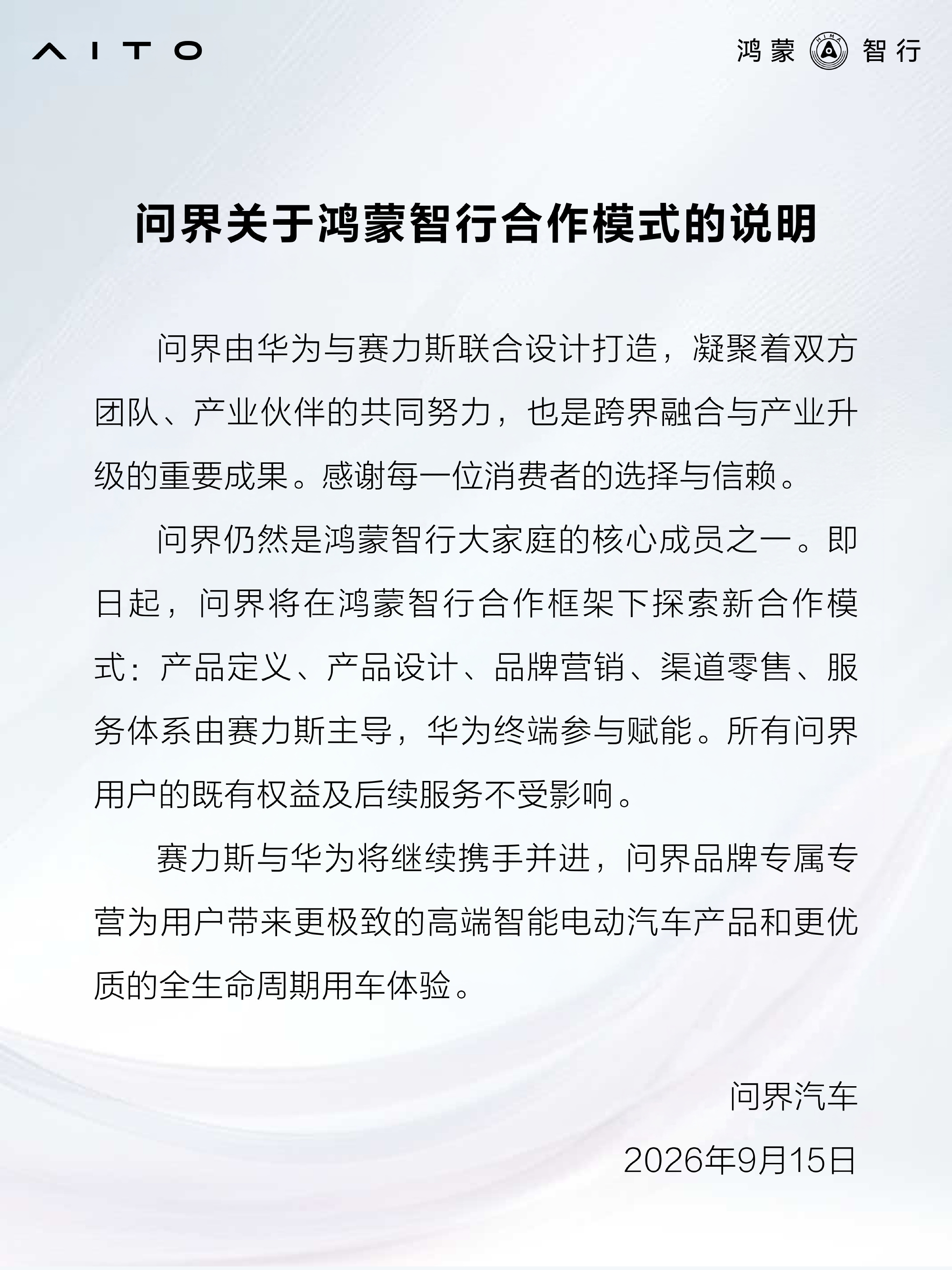
For readers outside China, the shift is best read as the end of the model that built the world's most successful phone-maker-turned-car-brand: Huawei never built cars itself, but it defined, priced, marketed and through Huawei stores sold them, in exchange for Seres and four other partners sharing their margin structure. That structure is now being unwound from the top down, with Huawei's stake in AITO's success — and its accountability — formally reduced. The question that climbed Zhihu's trending board asked precisely that: why push Huawei into the background now, and what becomes of Huawei's vow not to build cars itself? Seres executives, meanwhile, used Weibo to promise owners that a service upgrade is on the way. The tell, for now, is the word the two statements share: AITO will "explore a new cooperation model" — the language of a partnership becoming, quietly, a supply relationship.