The Kidnapper Who Took His Son Is Getting Out. Sun Haiyang Is Bracing.
Wu, the man who abducted Sun Haiyang's four-year-old son in 2007, walks free in three weeks after serving the five-year maximum for child abduction. Sun says he fears for his family's safety — and is still chasing the 420,000 yuan a court ordered Wu to pay.
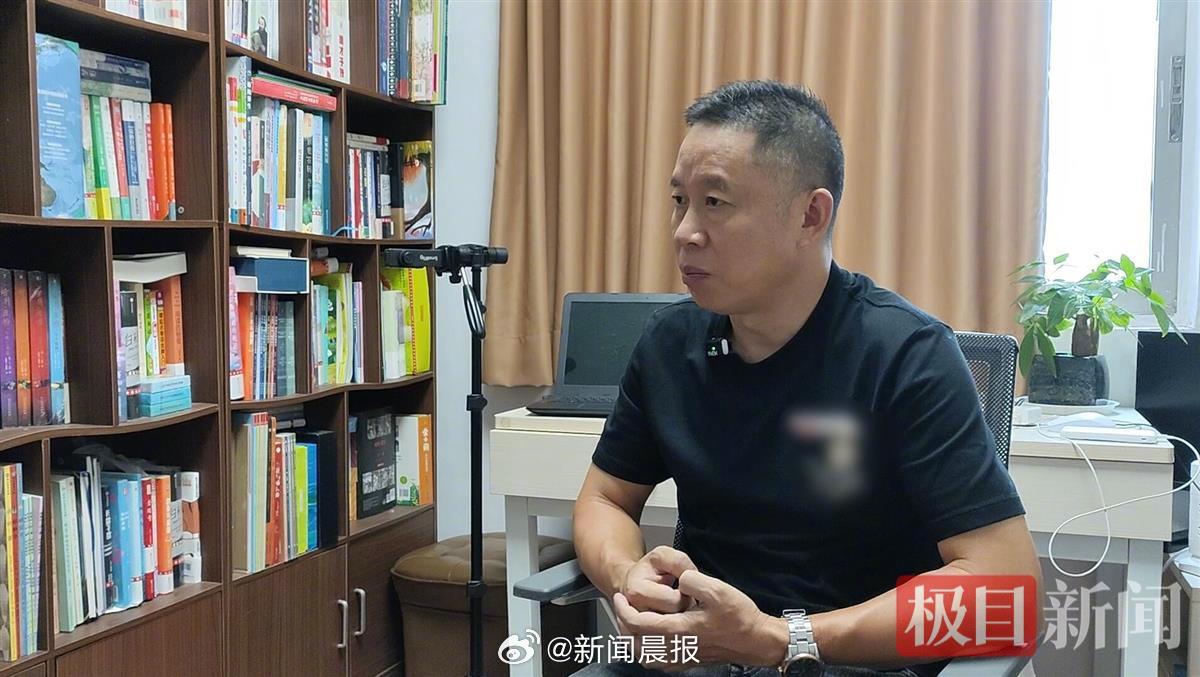
Twenty-one days from now, the man who kidnapped Sun Haiyang's son walks out of prison. Sun, whose fourteen-year search for his abducted boy became the real-life basis of the 2014 film "Dear," told reporters on September 4 that he worries about his family's safety when Wu, who took four-year-old Sun Zhuo from a shop doorway in Shenzhen in 2007, completes his five-year sentence later this month. "I'm worried about my family," he said, in comments carried by the broadcaster Baixing Guanzhu. "But I'm not afraid of him."
The case is one of the best-known in China's long reckoning with child abduction, and its legal endgame has never sat easily with the public. Wu was arrested in Dongguan in 2021 and convicted in October 2023 by a Shenzhen court of abducting children by deception — an offence whose maximum is five years, far below the penalties for trafficking children for sale, because prosecutors could not prove a sale. He received exactly the maximum: five years. His nephew got two for harbouring him. The same court ordered Wu to pay 420,000 yuan in civil compensation to each of the two families whose sons he took, Sun's and another father's. As Sun told reporters this week, none of that money has been paid. He says he will pursue it for as long as it takes — and any recovery will go to other families still searching for missing children.
That residue of grievance is what gives the release its charge. Sun spent fourteen years running a shop in Shenzhen that doubled as a search headquarters, its windows papered with flyers, after his son vanished in 2007; father and son were reunited in December 2021, a month after Wu's arrest, when DNA matching confirmed the young man living in Shandong was Sun Zhuo. Sun Zhuo, now in his twenties, chose to return to Shenzhen to finish school near his birth parents — the family's private answer to an impossible choice — while the country argued over whether five years for fourteen years of a family's life was a verdict or an insult.
The story has been the number-nine item on Baidu's trending board since September 4, where the framing is Sun's fear of retaliation, and it lands weeks after the indictment of "Aunt Mei," the trafficking suspect who evaded capture for nearly two decades kept China's child-trafficking debate at a rolling boil. Human-trafficking cases hold a singular place in Chinese public life: the scale of the abductions of the 1990s and 2000s, the parents who never stopped searching, and the viral apparatus of DNA databases and reunion videos have made a handful of families — Sun's foremost — stand-ins for all of them.
Wu leaves prison with the compensation judgment still unpaid and a public that remembers exactly what he did. Sun, asked whether he feared the man would seek revenge, gave the answer that has been quoted across every platform carrying the story: let him come out — the debt is still owed.