Why Portraits of a Cleaner at a Tsinghua Art Show Are Dividing Chinese Viewers
A solo exhibition by Tsinghua Academy of Arts & Design professor Ding Hong has drawn both sympathy and anger after viewers identified the raw, red-faced figures in her watercolors as campus cleaning staff, delivery riders and other ordinary women.
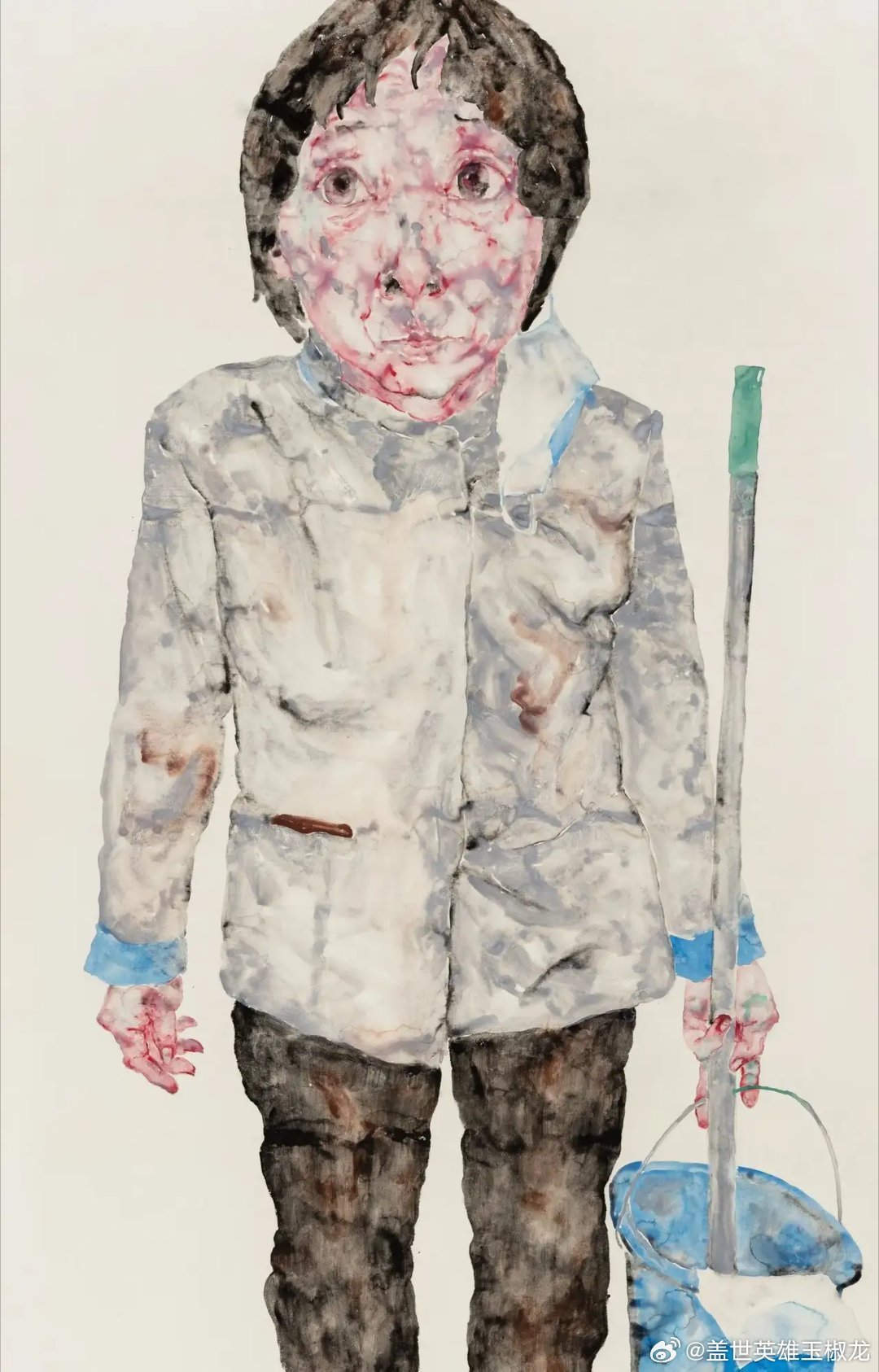
A solo exhibition by a professor at one of China's most prestigious art schools has turned into a debate over who gets to decide how working-class women look when they are put on canvas.
The show, by Ding Hong of Tsinghua University's Academy of Arts & Design, was described by the school as releasing women's strength, using the Chinese phrase 释放她力量. But when Weibo users began circulating her watercolors, many stopped at the faces: a campus cleaner, rendered in mottled red and pink with heavy, almost bruised features; a delivery rider painted as a fleshy mass; a young woman with raw, exposed-looking skin.
The strongest reaction came from the Weibo account @盖世英雄玉椒龙, who posted one work with the caption, Wait, Ding Hong actually painted this figure as a Tsinghua cleaner... what did the cleaner ever do to deserve this? The post drew nearly 5,000 likes and hundreds of comments in the span of a day.
Other works from the exhibition went further. One poster who shared nine images warned viewers that the pictures might cause discomfort; among them were a crouching figure clutching a megaphone, a woman with a ponytail wearing white sneakers, and several men and children with the same mottled red faces. The figures are less outright monsters than people whose skin and hands appear flayed or flushed, a painterly choice that struck many as cruel.
Defenders argued that the reaction was exactly the point. In academic painting, the argument goes, an artist is not obliged to flatter a sitter; a portrait can use distortion to make visible somebody society usually passes without noticing. Ding's choice of subjects — cleaners, delivery riders, class representatives — was read by some as an attempt to push the emotional texture of China's service workers into a museum space.
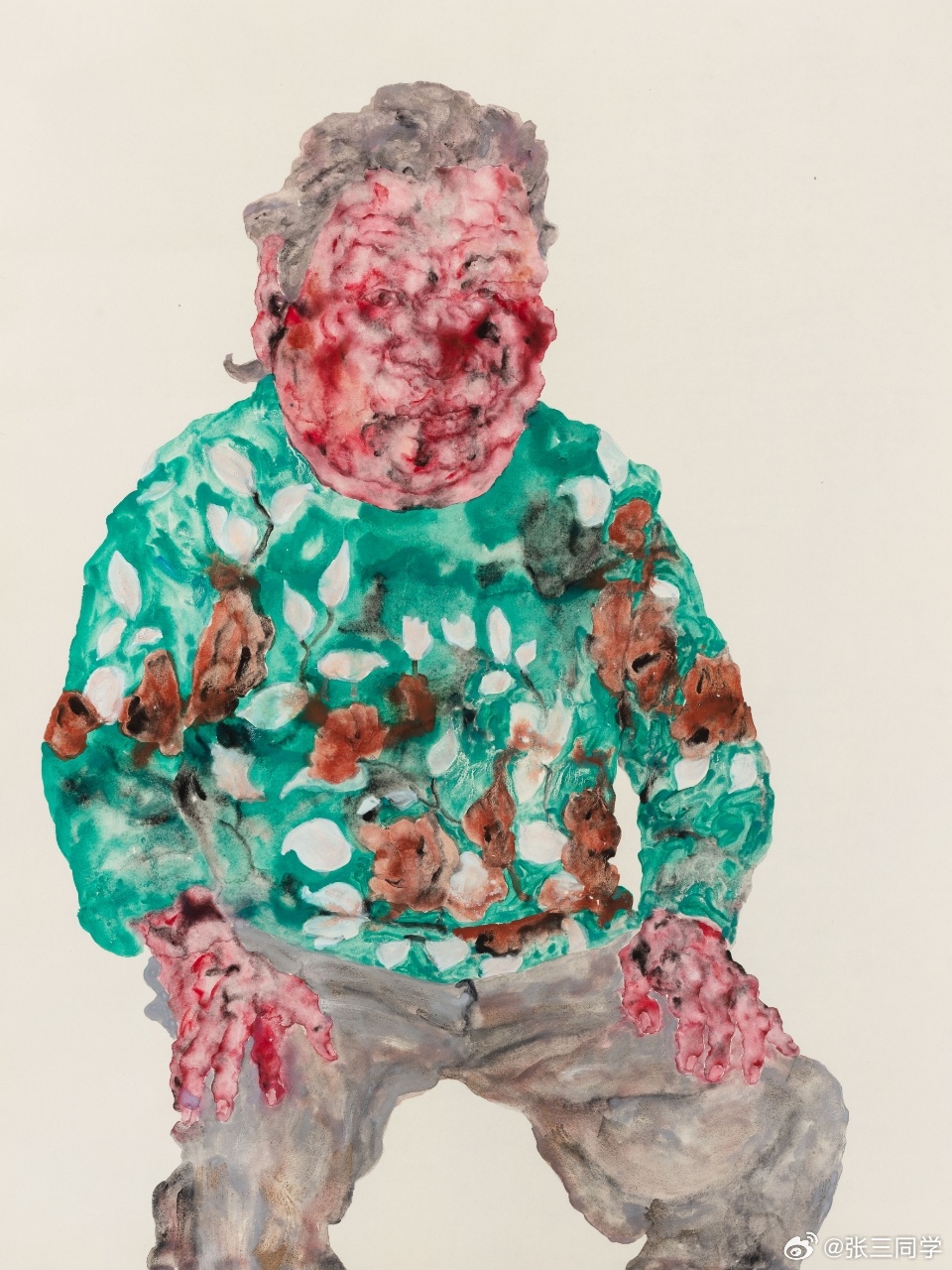
Critics saw the opposite. They argued that elites have a long habit of making the poor look grotesque from a safe distance, and that showing a cleaner with a raw, oozing face is not honesty but contempt disguised as expressionism. A cleaner, they wrote, did not ask to be the emotional totem of somebody else's exhibition.
Neither side has an official ruling to point to. Tsinghua's academy has not issued a response, and the hotword has travelled mostly on the strength of the paintings themselves. What the argument does expose is a wider faultline in Chinese public taste: whether contemporary art should idealize ordinary people, or break that idealization to make them visible — and who, if either, actually gets hurt in the process.