The Saluting Robot at Brazil's Parade Was Wearing a Chinese Build
A humanoid robot in camouflage saluted President Lula at Brazil's Independence Day parade, presented as the army engineering institute's EOD research platform. Chinese social media quickly flagged the detail underneath: the hardware is a G1 from Hangzhou's Unitree Robotics.
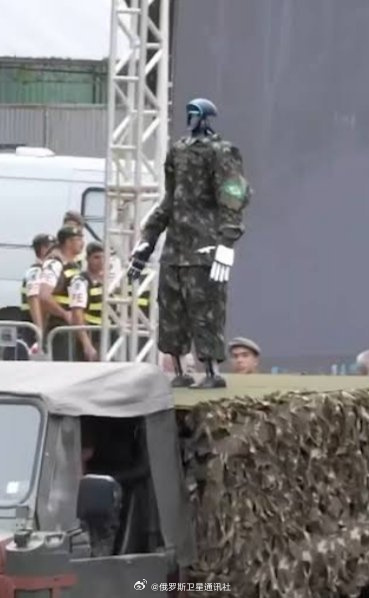
When Brazil held its Independence Day parade in Brasília on Monday — 204 years of independence, President Luiz Inácio Lula da Silva and the first lady watching from the stands — one of the more improbable entrants rolled past on a military vehicle: a humanoid robot in digital camouflage uniform and white gloves, waving to the crowd, then turning to salute the president. Chinese state media made it a trending topic within hours, because of what the robot was wearing, where it was made, and who got the salute.
The parade framing was Brazil's own. The robot, according to the Chinese coverage citing on-site commentary, belongs to the research program of Brazil's IME, the army's military engineering institute, and is used for work on AI, automation and high-risk tasks — bomb disposal, specifically: identifying and remotely handling explosive devices so that soldiers do not have to. As the robot saluted from atop its vehicle, the first lady was seen applauding in response.
But the detail Chinese readers latched onto came in a follow-up. Citing multiple reports, RT's Chinese account summarized the hardware: the body of the saluting robot is a G1, the humanoid built by Hangzhou-based Unitree Robotics — the Chinese company whose robots have become the internet's familiar faces of bipedal agility. A Weibo poster steeped in the topic flagged the gap explicitly: Brazilian coverage describes a robot developed by IME, he noted, while social-media users pointed out the platform itself is Unitree's mass-market model.
That combination — a commercial Chinese robot body, a Brazilian army uniform, a head-of-state salute — is precisely why the story traveled. Unitree has spent the past two years as the world's most visible supplier of relatively affordable humanoids, its robots dancing at China's own Spring Festival gala and trotting through research labs worldwide; a G1-class machine standing at attention for a South American president is a small scene with a large implication about who manufactures the world's humanoid future, and how far it already reaches. Chinese wires covered the parade in matter-of-fact terms — the reports from Brasília emphasized the bomb-disposal purpose and the salute — while the story climbed Baidu's trending board at No. 5 under the headline that robots in military uniform appeared at Brazil's parade.
For Brazil, the parade showcased a home-grown program that is honest about its constraints — a research platform for hazardous duty, dressed for the occasion. For China's robotics industry, the episode was an unplanned export milestone: the first time a Unitree body has been seen saluting a foreign head of state. Whether the next one is also wearing someone else's uniform is the question the industry is now watching.