Xianyu's 'Jargon': Coded Listings Turn China's Second-Hand App Into a Black Market
A trending topic documents the rotating euphemisms sellers use on China's biggest second-hand marketplace to move everything from AI subscriptions to sexual services — and shows why keyword filters keep losing.
China's largest second-hand marketplace, the Alibaba-owned app Xianyu, is back in the spotlight for items that were never meant to be resold. A trending topic this week, "Xianyu jargon" (闲鱼黑话), has exposed how sellers on the platform use coded language — rotating euphemisms, deliberately garbled characters, and product listings that mean something other than what they say — to move goods and services that would be removed the moment they were named.
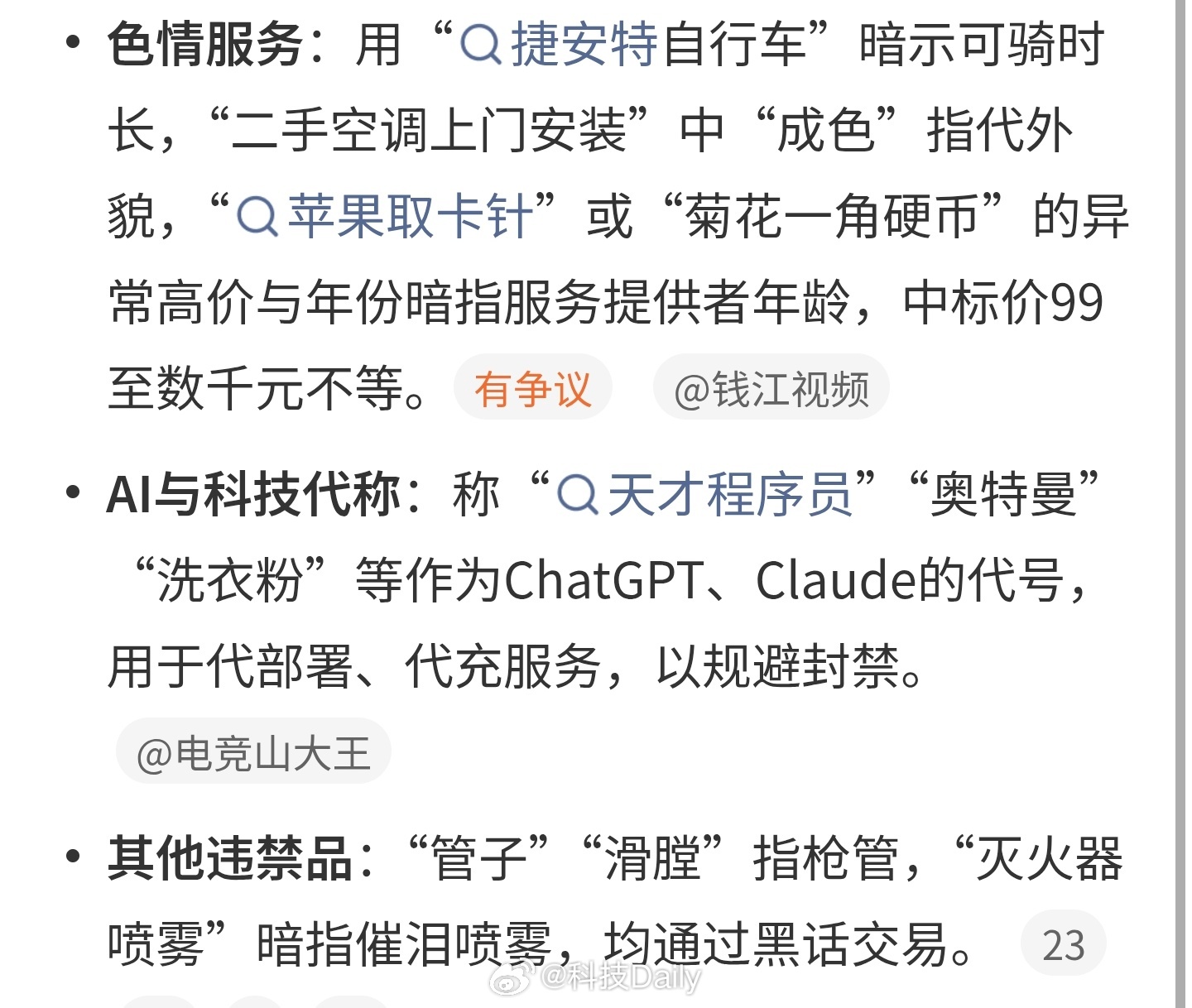
The exposure came through chat logs. A screenshot collage circulating on Weibo shows a seller offering a down jacket at 1,680 yuan while replying only in stock phrases that never engage with the buyer's questions — the visual signature, in the post's reading, of a listing that is not about clothing — with the seller's account shown above the chat as already deregistered. That post drew more than 16,000 likes. A list laying out the current lexicon, shared by the technology account Keji Daily and tagged "disputed" by the platform, catalogues three families of code: sexual services listed as "Q giant bicycle" or "second-hand air conditioner installation"; AI subscriptions sold as "washing powder" — the code, the list explains, for ChatGPT or Claude; and weapons as "pipes" or "smoothbore."
The term 黑话 — "black speech", argot — has a long history in Chinese, from secret-society cants to trade slang; applying it to a shopping app's listings is the point. Xianyu is the country's default platform for second-hand goods, and its listings are policed largely by keyword filters. There is a cat-and-mouse economy in the substitutions: sellers post a down jacket and negotiate in the comments, and the filters that catch direct terms cannot catch a jacket that is never mentioned.
The platform has been here before, and the site has covered it: in September, Xianyu pledged a crackdown after an underage-prostitution ring was exposed on its marketplace, and days later cleared itself of underage-listing claims and reported the case to police. The difference this time is the framing. In September the story was about a single criminal case; the "jargon" frame is about the marketplace itself — the suggestion that the code is not a workaround but an economy, with its own conventions, its own updates, and a rotation fast enough to outrun the platform's filters. "The platform can't keep up with the speed at which these people update their vocabulary," the Keji Daily post concluded; "I hope there's a serious investigation. And the courier side shouldn't be accepting unsafe items either — who would have thought Xianyu would become a black market."
The current trending topic is a measure of how far the game of substitution has run ahead of the filters — and of how much of what looks like clutter in a second-hand app is not for sale to every buyer.