EU Complaint Forces Chinese Auto Supplier to Walk Back 107 Graduate Dismissals
A Chinese auto-parts maker emerged as the center of a viral employment dispute after it moved to push out 107 newly hired graduate students — then reversed within days when the graduates complained to the European Union. The company supplies lights to BMW, Mercedes-Benz and VW, and its apology and compensation offer were trending on Weibo as job-security anxiety spreads among young workers.
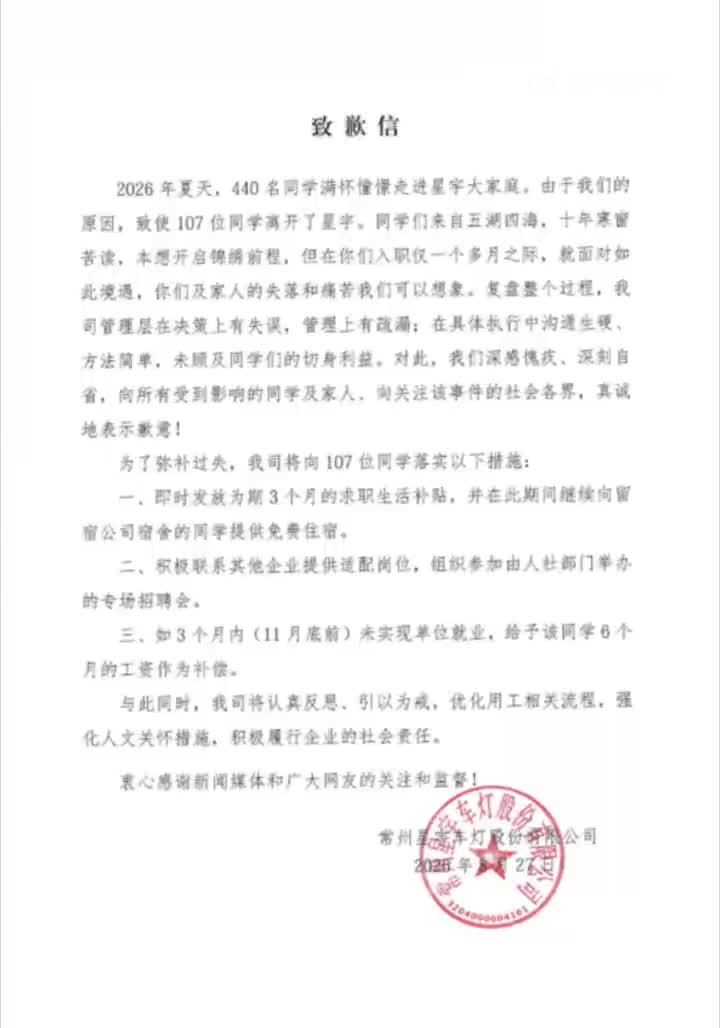
Changzhou Xingyu Automotive Lighting Systems, one of China's biggest makers of car lamps, spent August 27 apologizing in public after a mass dismissal of new graduate hires became a national argument about how employers should treat people just entering the workforce. In a letter stamped with the company's red seal, it apologized to 107 students and offered them living subsidies, free accommodation and six months of salary if they had not found work, after the city's human-resources bureau opened an investigation.
What pushed the case from an ordinary labor dispute into a hotword was the route the graduates took. Unable to move the company through domestic complaint channels, they turned outward — lodging complaints with the European Union, whose major automakers rely on Xingyu as a core supplier. Once the EU route was involved, the state stepped in quickly, according to the viral accounts.
The posts carried the argument in lacerating form. One widely shared commentary summed up the dynamic: one moment the company waves the banner of high-end manufacturing, the next it treats master's-degree holders as disposable assembly-line temps. Facing a supplier with contracts in Europe, the students reportedly used the overseas rules the company cares most about to make the case hurt. A second post made the same point bluntly: because Xingyu feeds lights into the supply chains of BMW, Mercedes-Benz and Volkswagen, it has a stake abroad that could not ignore a labor complaint.
The episode fits a broader argument about youth employment in China. A record number of university graduates has spent the last several years entering a labour market in which offers can be withdrawn and probation contracts used to keep new workers disposable. Against that backdrop, the Xingyu case became a proxy: if 107 highly educated hires could be told to leave barely after starting, what security did anyone have? But the fact that the dispute reversed only after it reached foreign institutions also fueled a sobering counterpoint — that the fast remedy came through overseas oversight, not through the domestic contract that should have protected them.
A People's Daily commentary said the company's behaviour had turned contracts into scraps of paper, trampled on workers' rights and breached social credit, and warned that such conduct would not be tolerated.
By the time the apology letter was circulating online, the case had already changed shape: the city's labour bureau was investigating, the human-resources director had been suspended, and weibo users were debating less about one company than about the social contract it had violated. That is what made a dispute inside a car-lamp factory worth an outsider's attention — not the number of students, but the two competing answers to the same question: which institutions, at home or abroad, are actually able to hold an employer accountable.