Xu Song Marries a Host Fourteen Years Younger, and Part of His Audience Says Goodbye
The singer Xu Song, an idol of China's internet-music era, announced his marriage to television host Feng Xi on 19 September — and instead of universal congratulations, some fans of up to 18 years posted public departure letters, arguing the 14-year age gap had broken the 'otherworldly talent' mystique they had signed up for.
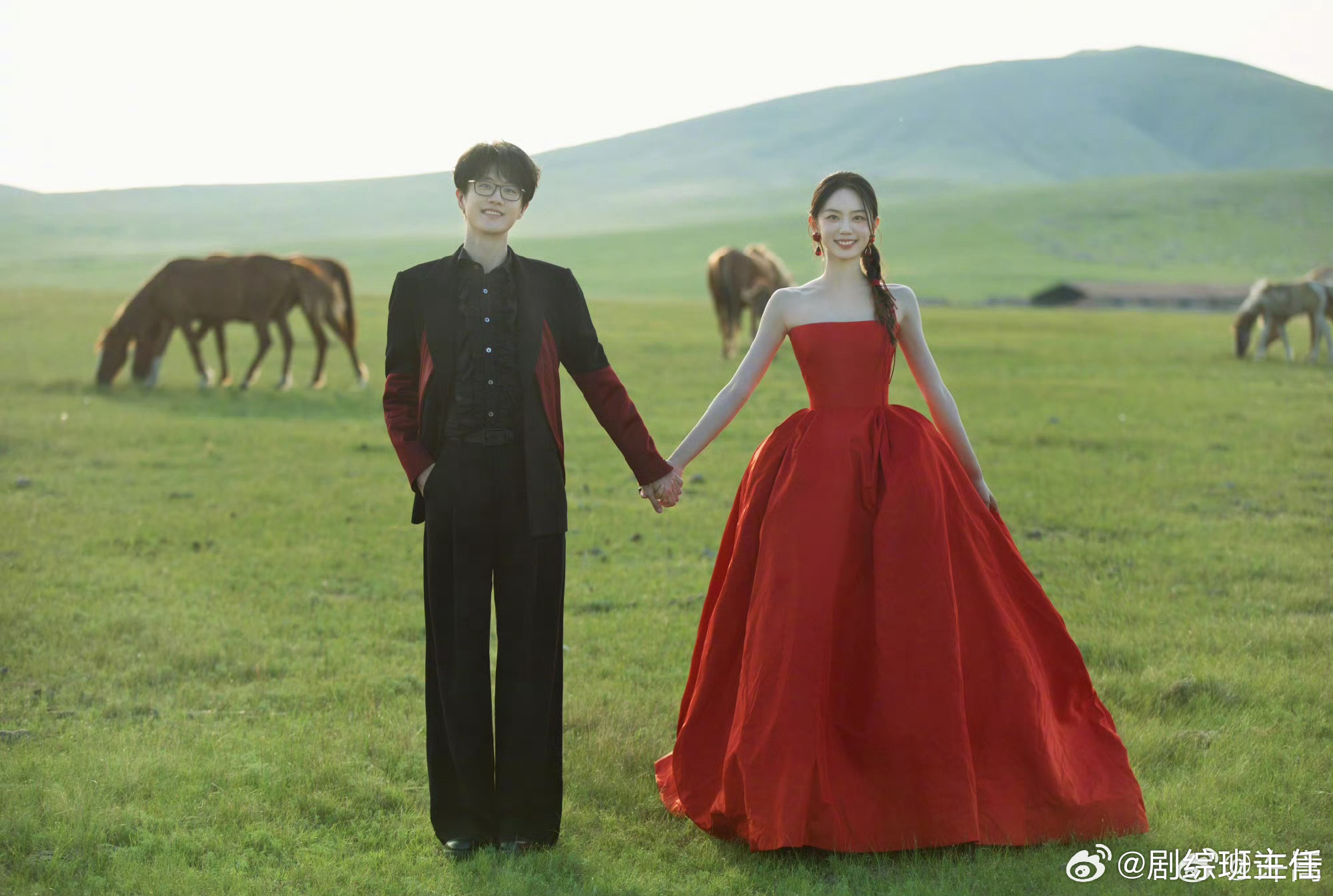
The singer Xu Song, a fixture of China's internet-music era whose fans have famously aged alongside him, announced on 19 September that he had married Feng Xi, a television host fourteen years his junior — and part of his audience responded to two decades of loyalty by publicly announcing they were leaving.
The wedding announcement itself was unremarkable, two photographs in a grassy field with horses: "Our life story has written a new chapter," it read, a post that drew 98,000 likes (the announcement). What followed is the more interesting Chinese text. Fans posted departure letters with titles like "In my 18th year of being a fan, while the whole internet is blessing him, I choose to un-fan," recounting concerts attended since 2013 and explaining that the departure was not about the marriage itself but about the groom (the letter).
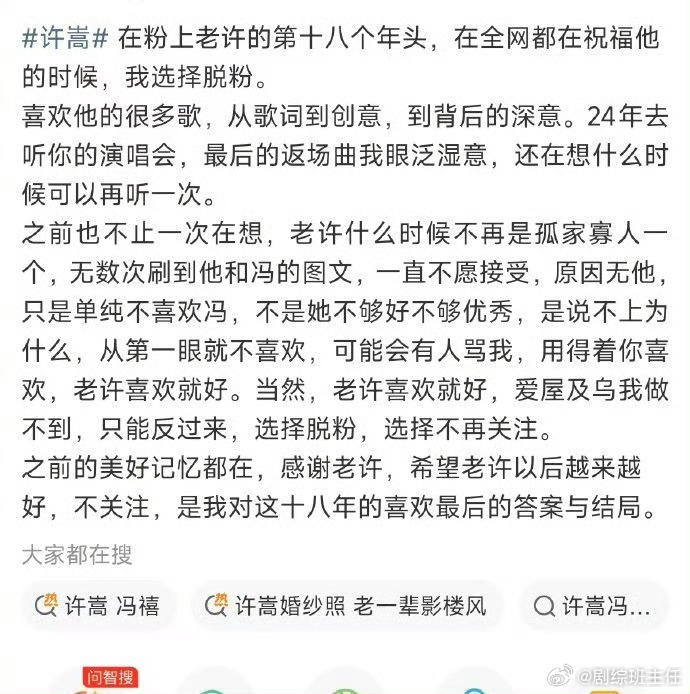
The stated grievance is the fourteen-year age gap, and what it does to a particular kind of fandom object: the 才子, the refined, otherworldly talent whose romantic life fans prefer not to imagine. Xu Song built his career outside the industry machine — writing, producing and releasing his own records online since his twenties — and the persona that grew around that independence now collides with a very ordinary fact: he is 40, wealthy, and married a woman born after his debut. "The otherworldly-talent filter is shattered" (才子滤镜碎了), as one entertainment account put it (the analysis).
There is money underneath the sentiment, and it is considerable. Xu Song has no public equity holdings, but his label Taihe Music is racing toward a Hong Kong IPO, and its prospectus shows the company paid a single artist more than 680 million yuan across 2024 and 2025 — a sum the business press did not hesitate to attach to its biggest name (the prospectus detail). Taihe, formed from the merger of three venerable Chinese labels whose roots go back to 1987, booked 1.3 billion yuan in revenue in 2025, and the fandom drama was prominent enough to surface in 36Kr's morning business brief (the brief). The wedding landed, in other words, in the middle of a listing process in which the star is the asset.
The ex-fans wrote their letters; the rest of the internet wrote the counter-argument. The dominant response treats the departure letters as a category error: he was never theirs to begin with. As one widely shared post had it, at 40 and financially free, Xu Song hardly needs permission — the alternative to marrying would have been wearing the "scumbag" label for stringing along a girlfriend for four years (the pushback).
Underneath the squabble sits an old question about what Chinese fandom is for. Xu Song's audience grew up with him through the era of downloads and campus playlists; the parasocial contract was never explicit, but "he writes the soundtrack, we guard the mystique" came close. The marriage merely stamped a date on something fans had known for a while: the soundtrack artist is a person, and the person is aging in public, on his own schedule.