How You Benchang's Family Let the 'Ji Gong' Actor Die on His Own Terms
In his final days the 92-year-old actor chose to stop eating and drinking, and his family neither force-fed him nor rushed him to hospital — moistening his lips instead. His daughter's account of a calm, unhurried death at home, and the family's decision to donate every condolence gift to his charity foundation, has reopened a conversation about what a good death looks like in China.
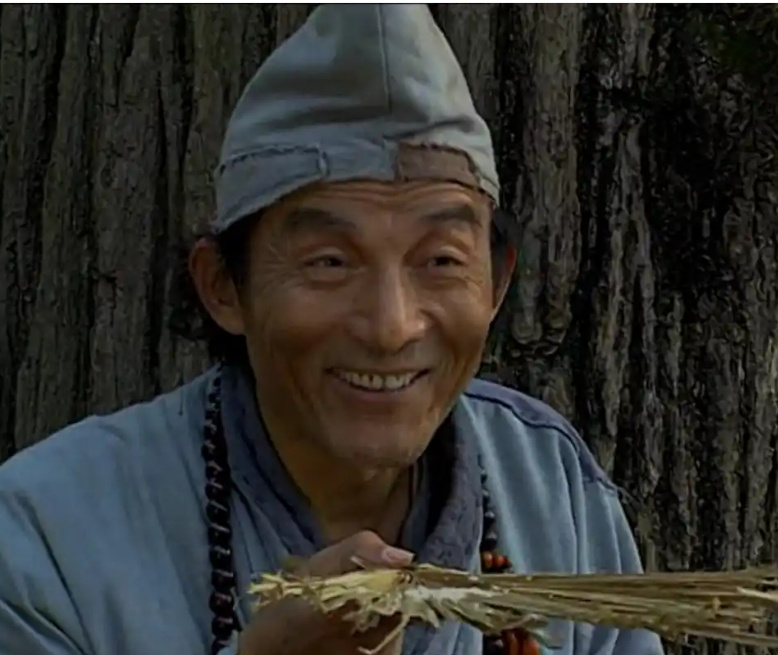
For his last two or three days, the actor You Benchang took no food and no water. His family did not force either on him, and they did not take him to hospital to be kept alive; when his lips dried, they moistened them with a wet cotton swab. He died in Beijing on September 24, at 92, in surroundings he knew — the death the Chinese language has a word for, 寿终正寝, a natural passing at the end of a long life, which tradition counts among the great blessings. His daughter You Sihan described those days in a video posted on Saturday, and by Monday the details were high on Baidu's national trending board as their own headline: in his last two or three days, it read, You Benchang chose not to eat or drink (Baidu).
A death like that, she said, can be "entirely self-directed — calm, and unhurried. For him, it was a whole and composed kind of freedom." The family's rule for the sickroom was not to disturb his exit. "To give him respect, to go along with him, to give him freedom — that was our greatest love for him" (@浪涨新闻). What she was describing, without using the term, is palliative care of a kind most Chinese families still do not plan for: the default, in a system built around filial duty and aggressive intervention, is to treat to the end — feeding tubes, resuscitation, a hospital bed — because letting a parent go can look like neglect. Her account is being read, in places, as a description of how that default can be refused.
The family also closed the ledger on the mourning itself. The 帛金 — the condolence money mourners give a bereaved family — will be donated in full to the Jigong Public Welfare Foundation, which You founded in 2018 to fund art education for rural children and companionship for elderly people living alone. Every gift will be published on the foundation's account, the anonymous ones "written honestly as anonymous," his daughter said. "We believe this was also the old master's wish" (@大皖新闻).
Those who came to him late — he was well into his eighties when he played the tycoon's mentor in Wong Kar-wai's Shanghai drama — met him through that same role of patient benevolence, as our obituary recorded (died in Beijing at 92). He had an explanation for why a ragged, laughing monk from a 1985 TV series never wore out: "Ji Gong, Ji Gong — the aid goes to the public (济公济公,济的是公)," a pun he turned into a programme. "As a man of the arts, the way I carry it forward is to guide people's hearts through art."
He left one more line that keeps resurfacing under the farewell messages. In a speech in the spring of 2024, he addressed "my dear children": "If you're tired, lost, weary — come and look at me, a 'ninety-something' (90后). Don't rush. Hold your nerve. Walk on bravely, and the road ahead will be in full bloom" (@今视频长天新闻). The pun — 90后 ordinarily means the generation born in the 1990s — was the sort of joke he spent a career making: age reversed into encouragement.