Fake Floods, Runaway Robots: China's Fact-Checkers Chase AI Video Hoaxes
Within days, Chinese officials debunked an AI-generated video claiming thirty people were stranded in a Guangxi flood, and fact-checkers traced a viral 'robot uprising' clip series to an AI filmmaker. Both cases show how everyday synthetic hoaxes spread — and how county bureaus and verification desks are answering them.

Within three days this month, Chinese officials and fact-checkers took down two very different viral videos with the same root: both were entirely fabricated by AI, and both were believed long enough to cause trouble.
The first was a disaster that never happened. In mid-September, clips circulated claiming that flooding on the Hongshui River in Donglan County, Guangxi had left thirty people stranded. The claim had a specific date and place, which is what made it travel. On September 17 the county's emergency management bureau published a statement, relayed by news outlets including Jiu Pai News, saying an investigation with the local weather and water departments had found no such flooding ever occurred. The "footage," the statement said, had been stitched together and AI-generated, and showed scenes that were not Donglan at all.
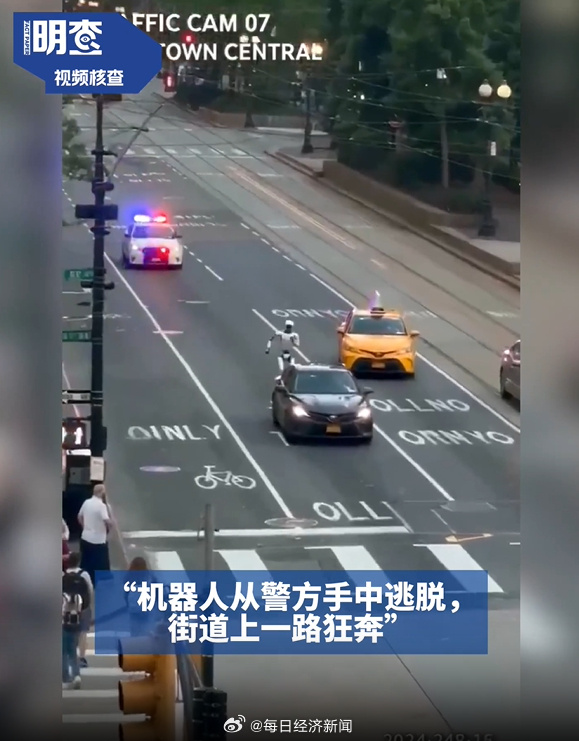
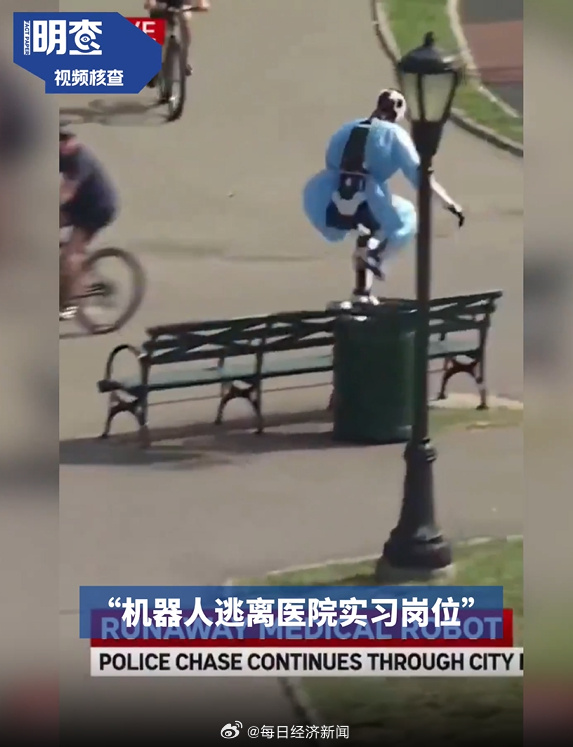
The second hoax was stranger. Videos showed a humanoid robot sprinting away from a police car down a city street, then a "runaway medical robot" hoisted onto a park trash bin — an apparent robot uprising. The Paper's verification desk, Mingcha, traced the clips and found they were all AI-generated, with the originals posted by an AI filmmaker, @maison.films, whose work had been stripped of its framing and recirculated as news. The National Business Daily carried the fact-check on Weibo with the telltale frames attached.
What both cases show is the texture of AI-era misinformation in China, and the response built to meet it. Neither hoax involved politics or foreign interference; they were everyday fabrications of the kind that exploit sympathy, panic, and the convincing grain of synthetic video. The rebuttals came from the layers closest to the facts — a county bureau that could simply confirm its own river, and a verification desk that could trace a clip to its creator — rather than from any single national takedown. "Disaster rumors drain public goodwill; doctored videos swap in scenes to manufacture panic," one Weibo user wrote under the debunking posts. A commenter under the debunking posts put the cost plainly: "Disaster rumors drain public goodwill" — the warned-and-ready fatigue that follows every fake alarm, in a country where real flood season is still a live memory.
The channels doing the debunking are also adapting. Verification write-ups like Mingcha's now arrive with the suspicious frames published as evidence, watermarked and annotated, so readers can recognize the clip if it resurfaces in their feeds. And the reaction under the posts suggests the audience knows the pattern: commenters urged people to check official notices before forwarding "disaster footage" — exactly the behaviour the rumor economy feeds on.
China's regulators have spent the past year building rules around synthetic content, from labelling requirements to the shutdown of AI "griefbots" in a separate case the site covered last week. The Donglan statement and the robot fact-check are what enforcement looks like at street level: a county press conference, a traced video, a warning not to repost. The hoaxes will keep coming, and so, for now, will the notices — the question is whether the debunk can ever move as fast as the fake.