Apple Raises iPhone Prices in China as Its First Foldable Finally Arrives
Apple lifted iPhone prices in China and unveiled its first foldable, the iPhone Duo, at its fall event under new CEO John Ternus — raising the question of whether buyers will pay nearly 16,000 yuan for a first-generation device in the market Huawei and Xiaomi dominate.
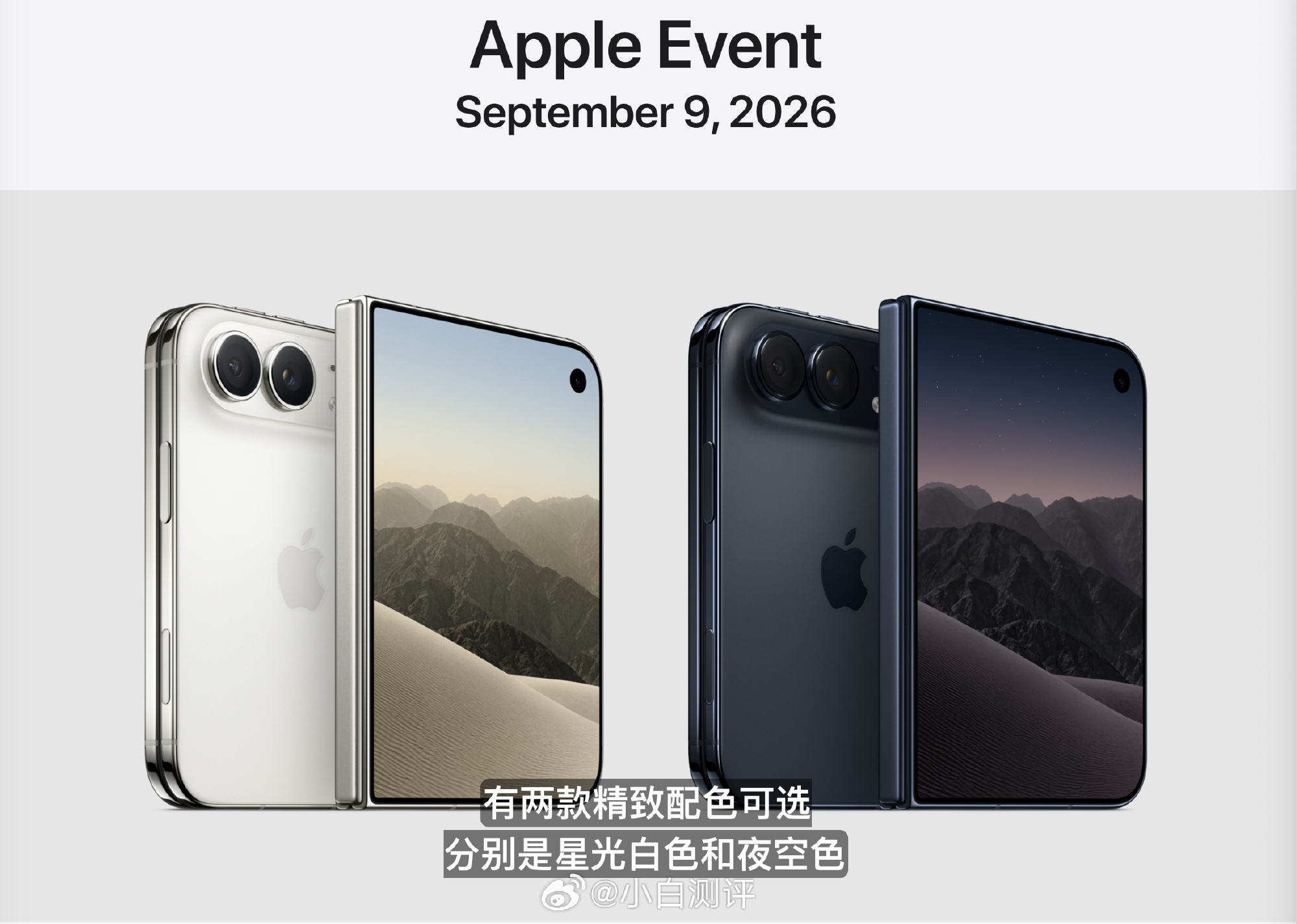
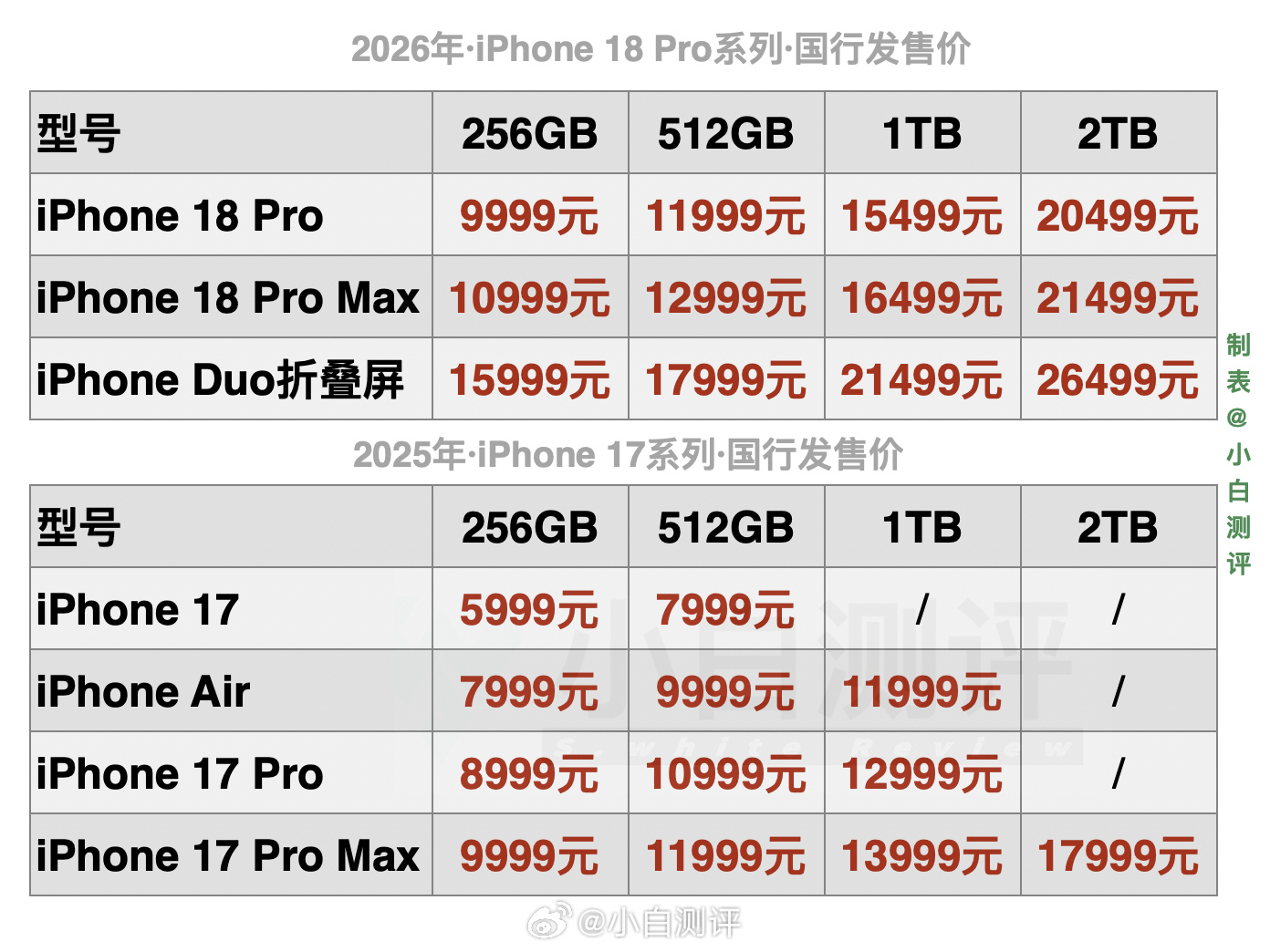
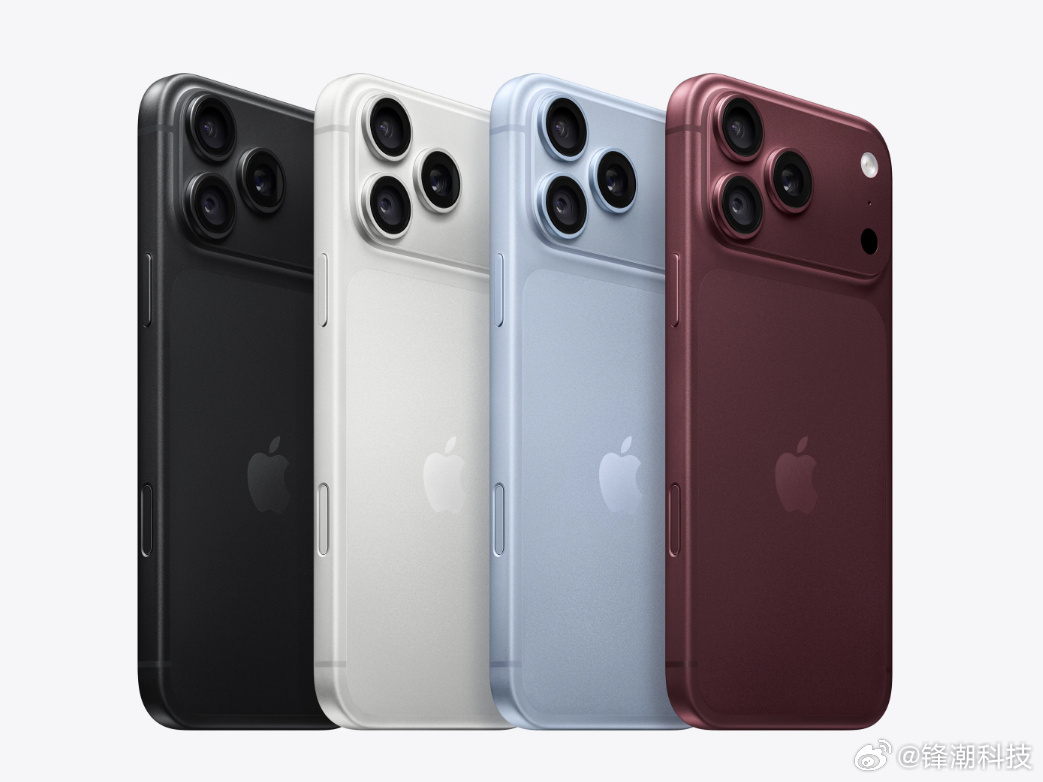
Early on September 10, Beijing time, Apple held its first fall product event under a new chief executive, and the news for Chinese buyers landed quickly: prices are going up. The iPhone 18 Pro now starts at 9,999 yuan (256GB), the Pro Max at 10,999 yuan, and the older iPhone 17 lineup jumped by 800 yuan across the board, while the iPhone 17 Pro and Pro Max were pulled from sale entirely. Topping it all came the product Chinese consumers had been waiting on: the iPhone Duo, Apple's first foldable, priced from 15,999 yuan.
The sticker shock was laid out in a side-by-side chart from the tech reviewer account @小白测评, which matched this year's China prices against last year's and showed the foldable sitting far above anything else in the lineup.
The Duo is Apple's answer to a category Chinese brands have owned for years. It opens into a 7.6-inch inner screen with the camera hidden beneath the display, folds around a 5.4-inch outer screen, reads fingerprints from the side button, and will gain Apple Pencil support after launch. Pre-orders open October 16, with shelves a week later. Supply may be the real constraint: Hong Kong outlet HK01 reported, citing Japanese media, that initial production is running at only a few hundred units a day, and "how do you pronounce Duo" was itself a trending search on Baidu the morning after the event.
The price rises did not come out of nowhere. Hours before the numbers appeared, one Weibo commentator argued confidently — in a post liked more than 1,300 times — that Apple would hold prices steady this year, because a hike would only help domestic brands and Apple wanted the goodwill of "more for less." The price tables dropped anyway. Not everything got dearer: the new AirPods 5 fell 210 yuan, prompting one user to write, "well, damn, 210 cheaper — now they've got me." Even before launch, scalpers on Baidu were advertising proxy-buying services for the new phones at fees of up to 1,000 yuan.
The foldable's Chinese debut is, above all, a landing in hostile territory. As our preview noted, Huawei and Xiaomi dominate a foldable market they have been refining since 2019, and Xiaomi used the same week to bet on its own new "mid-fold" design. Foldables have sold about 100 million units worldwide in seven years, as The Paper noted, but Chinese brands routinely start well below 10,000 yuan. On Baidu, the day's standing question was blunt: is Apple too late to the foldable?
The event dominated Baidu's hot-search board with more than a dozen separate entries and topped Zhihu's daily question list, evidence of how far the launch travelled beyond Apple's own keynote. For Chinese readers, one line in the spec rundown stood out more than any price: as reviewer @搞机王腾霄 noted, Siri's new AI features still do not support China. Whether a first-generation Apple foldable at nearly 16,000 yuan can beat domestic rivals at half the price — on a phone whose smartest feature stops at the border — is the question October 23 will answer.