A Chengdu Startup Wants to Rent Your Face to Advertisers for 500 Yuan a Scene
An app in Chengdu lets ordinary people list their portraits for AI and advertising use, with sellers taking 70 percent of each deal. A bank employee's face was licensed seven times in three days — and made him about 2,500 yuan — a glimpse of a market that lawyers say has outrun the rules.
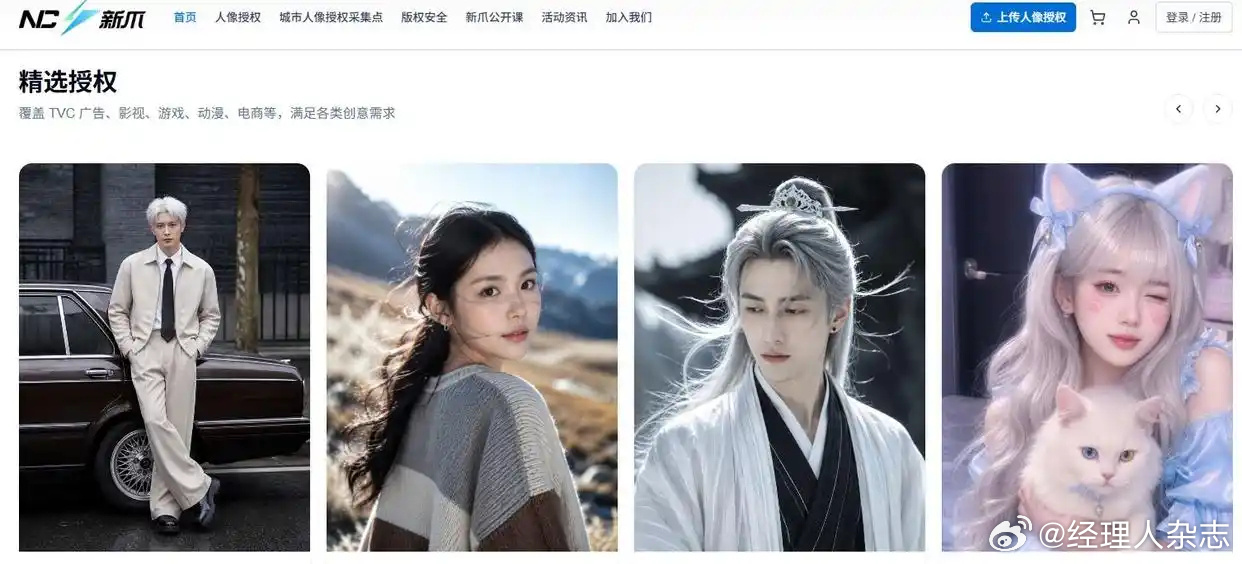
On a platform called Xin Zhua, a Chinese word that means "new claws," the most valuable asset for sale is the human face. A bank employee in Chengdu listed a few photographs of himself, handsome enough that the startup's team encouraged him to sign up. Within three days, his portrait had been licensed seven times by advertising companies, at 500 yuan per scene. After the platform took its 30 percent cut, he collected about 2,500 yuan.
The transaction is the founding anecdote of a business that launched quietly two months ago and has already brokered close to 70 deals worth about 40,000 yuan, according to a Daily Economic News report. Xin Zhua's pitch is that every face is a reusable digital asset: a seller uploads a portrait, buyers bid or license it for a short drama, a game character or a brand's TV commercial, and the platform splits the revenue. The price floor is modest — not lower than 500 yuan per AI drama scene — but the same face can be licensed again and again.
The market is still lopsided. About 80 percent of the roughly 200 listed sellers are actors and livestream hosts who already know how to sell an image; the founders say they have another 400 to 500 people in reserve and insist ordinary people are "the biggest gold mine." A second Weibo post from Manager Magazine notes that the platform takes 30 percent as an information-service fee, with the face's owner keeping the rest. Overseas analogues are already running: Britain's Actorsy lets performers sell face, voice and motion data for as little as £150, while America's PersonaShare allows those assets to be licensed for AI model training.
That global spread is exactly why the story is more than a startup curiosity. A face is not like a photograph. It is sensitive personal information, and it is biometric — which means a leak cannot be undone by changing a password. Chinese courts have been wrestling with the consequences: Guangzhou's internet court alone has handled about 700 related cases in three years, and a Beijing court ruled this past March that using someone's portrait in AI-generated content without consent is illegal even if the image has been altered.
Those rulings point to a thinner line than buyers may realize. Licensing a photo for a single scene is not the same as consenting to AI training, and each new project may require fresh permission. Conveniently, that nuance is invisible on the pricing page. What the buyer sees is a 500-yuan button. What the seller has not signed up for — a model trained to reuse their face indefinitely, a deepfake circulating after the license ends — is exactly what the law is still catching up to.
The bank employee who made 2,500 yuan in three days got his story in the news. If the market grows as its founders expect, his face may be the least interesting thing he sold.