How a Fabric Label Reading '100% Tabby Cat Fur' Ended a Chinese Brand's Launch
A Chinese womenswear brand pulled a fur-collar coat after shoppers spotted its own label admitting the 'flower brown' version was 100% tabby cat fur. The episode has opened a wider argument about fur sourcing, labeling honesty, and what China's animal-welfare rules do not cover.
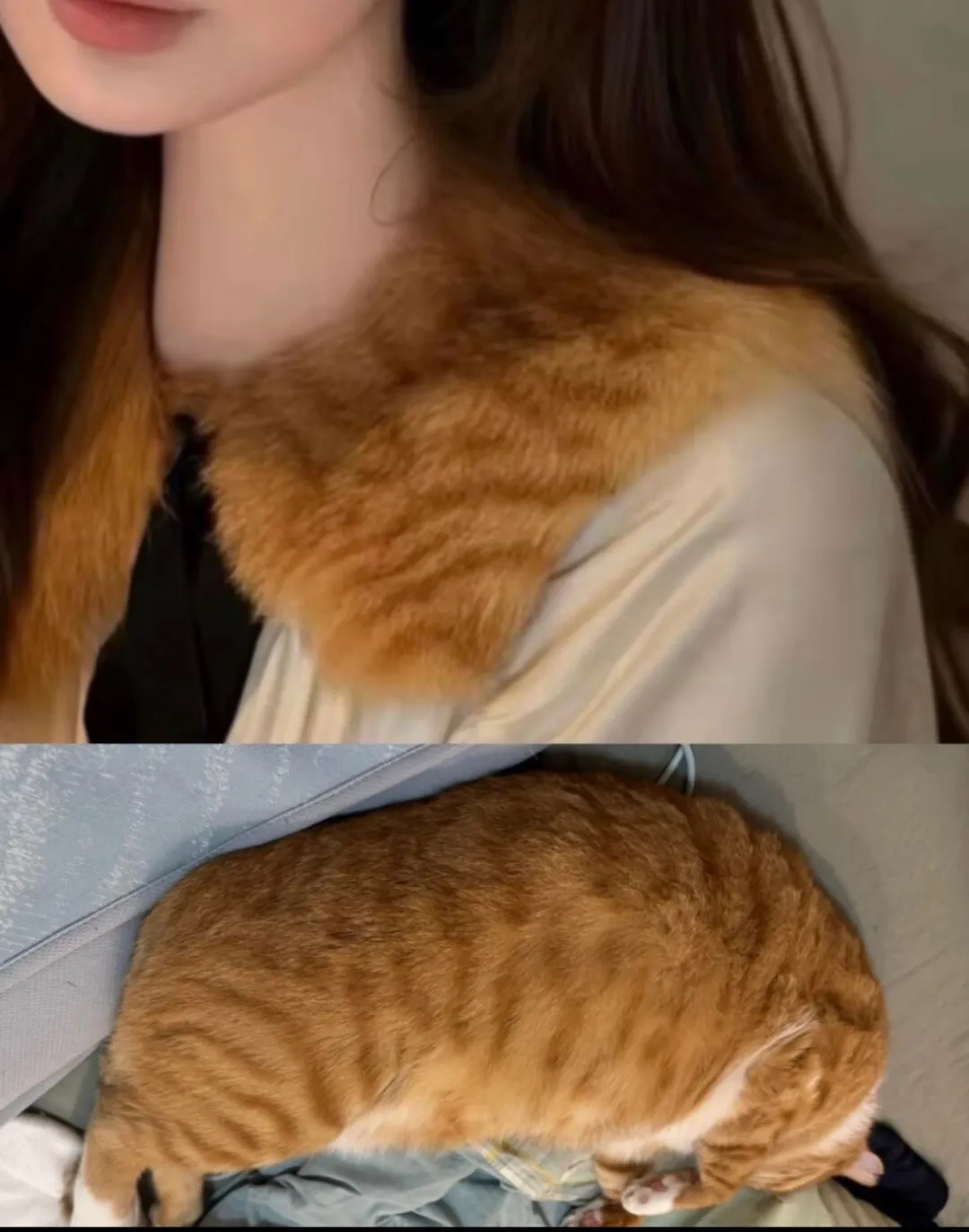
The coat was never supposed to be news. Before it went on sale, shoppers found the story in the product's own fabric label — and by the evening of October 10, CHICYOU, an influencer womenswear brand whose storefront advertises more than 400,000 orders a year, had pulled the listing and issued an apology.
The item was a fur-trimmed coat in three colorways. The label, printed on the product page, listed white as 100% fox fur and black as 100% blue fox fur. Then came the third line: the "flower brown" version was made of "100% tabby cat fur," with a craftsmanship note specifying that the collar used the fur from a tabby cat's back, undyed. A shopper shared screenshots on Weibo, and the label did the rest.
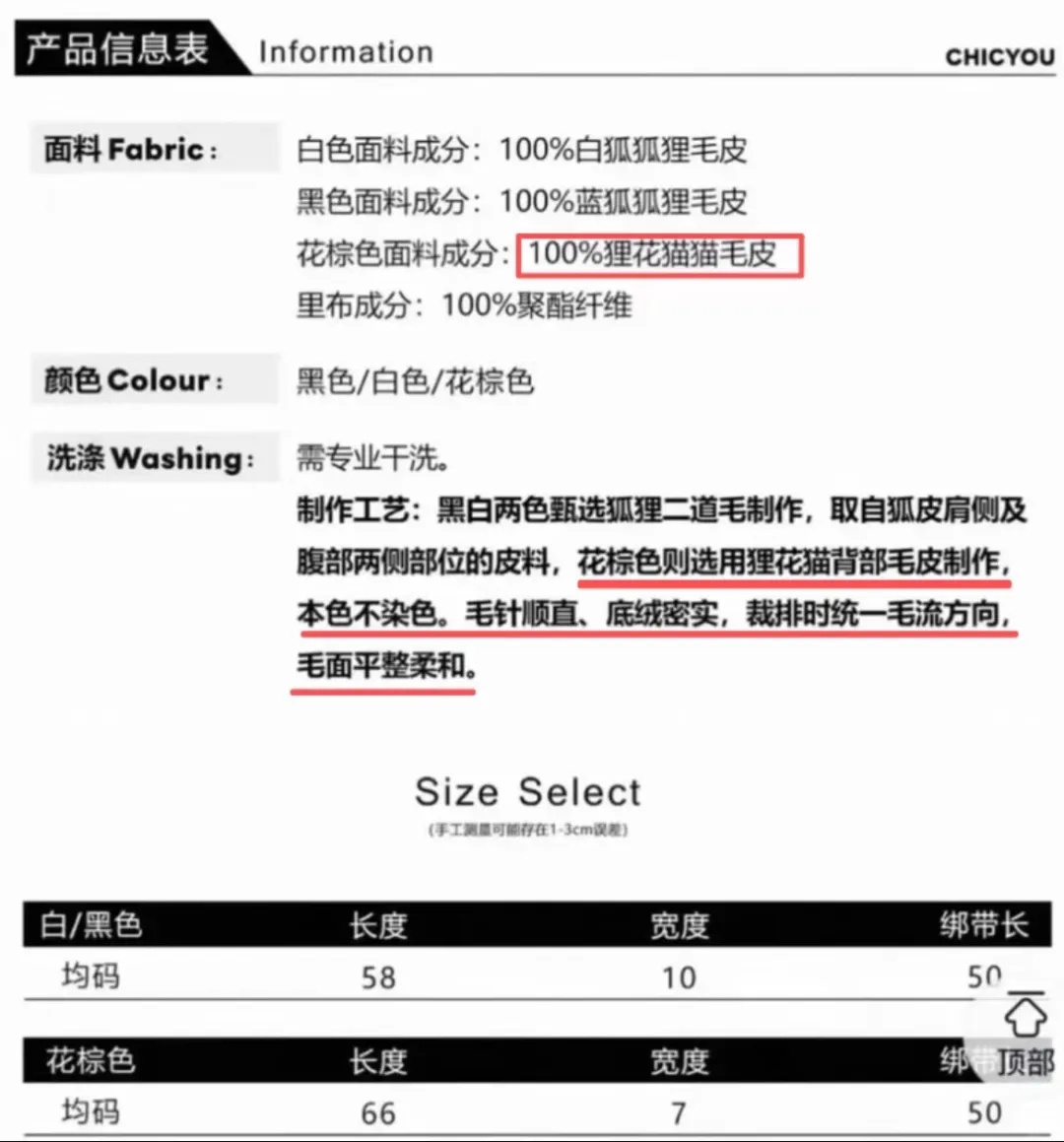
The posts that carried the screenshots were reshared nearly 500 times, and the anger quickly outgrew the brand. "This was sitting right there in the fabric table in plain sight," wrote one Weibo user who goes by 鸭圣婆. "And suppose it were fox — would fox be fine?" She ended her post with a call to boycott fur products altogether, fox included.
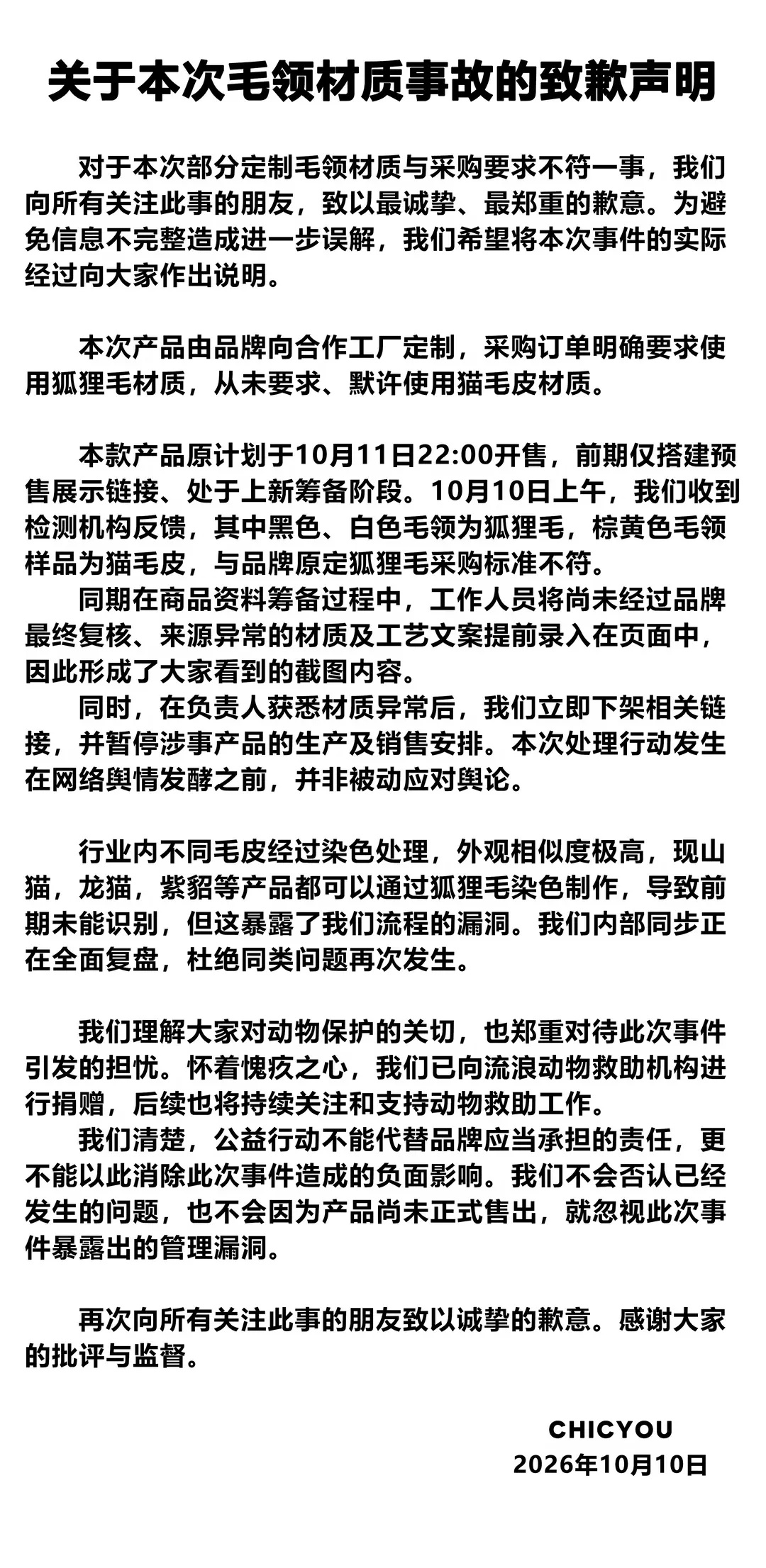
CHICYOU's apology offers a rival account. The brand says its purchase order explicitly required fox fur, that it never requested or tolerated cat fur, and that a testing agency flagged the brownish-yellow sample on the morning of October 10 — the day before the coat was due to go on sale at 10 p.m. The listing was pulled, production suspended, and the statement framed the episode as a supplier's betrayal. What the statement could not explain away is the label: someone wrote "100% tabby cat fur" on a product page, priced it, and photographed a collar to match.
The story climbed Zhihu's trending board, where the leading question is not about one shop but about sourcing: which fur channels may actually be legal, and where the trade in companion-animal fur meets China's lightly regulated fur market. The brand's 2.06 million followers watched the answer unfold in real time.
The coat's release never came. What shoppers are still waiting for is an answer to the simpler question underneath: how a collar labeled 100% tabby cat got as far as a printed fabric table at all.