Why China Is Arguing Over How to Read a 1,300-Year-Old Poem
When CCTV's Qixi gala read a Tang dynasty line as 'shuāi' rather than the 'cuī' a generation memorized in school, China relaunched an old argument about whose pronunciation of the classics counts. A Peking University philologist's answer: the character everyone is fighting over is not the one the poet wrote.
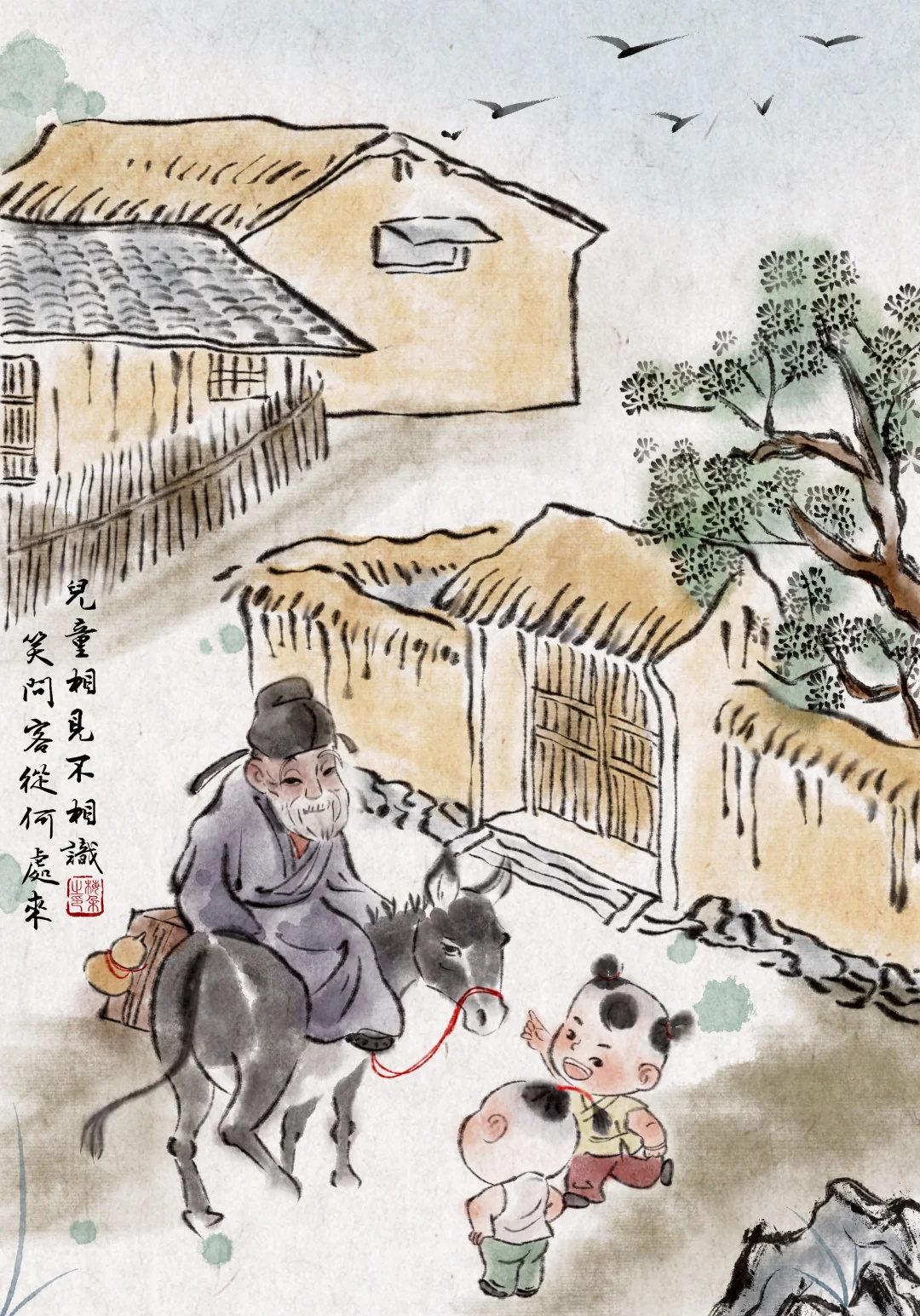
The line comes from "Coming Home," an eighth-century poem by He Zhizhang that every Chinese schoolchild memorizes: my accent is unchanged, but the hair at my temples has thinned — 乡音无改鬓毛衰. At this year's Qixi festival gala, China Central Television's presenter read the last character as shuāi, the ordinary modern word for "to fade." Millions of viewers had learned it as cuī at their desks.
The row is old, but the fullest answer this week came from Peking University philologist Sun Yuwen, and it dismantles the premise. Chinese reading standards, he told state media, operate on three levels that the public keeps collapsing into one. The state's official pronunciation table governs modern speech and does not legislate how classical poems are recited. Dictionaries such as the "Modern Chinese Dictionary" preserve historical readings for meaning, not for performance. Textbooks choose whichever reading teaches best. Quarrel about which layer you are standing in, and the "correct answer" changes.
His second point cuts deeper. The character in He Zhizhang's line was probably never 衰 at all. The original, Sun said, was 䰄 — an obscure graph meaning bushy-haired — read sāi. Copyists in the Song and Yuan era, centuries after the poem was written, swapped in the commoner 衰, and the reading drifted with it. The cuī that half of China defends as the authentic old pronunciation, and the shuāi that CCTV used, are both attachments to a substitution: readers are arguing about a word the poet did not write. As for the xiá that many were taught for "slanting" in "Mountain Travel," Sun traces it to the old practice of bending a character's pronunciation mid-poem to force a rhyme — a habit Ming dynasty scholars had already debunked.
The argument lands, this autumn, on new ground: the textbook. With the school year that began this week, the national curriculum's new textbooks have finished replacing the old ones across every year of primary and middle school — the end of a rollout that started in 2024, and the first time the country's classrooms are teaching entirely from one standard. Whatever readings those volumes print will be, for the next generation, simply how the poem goes. On Zhihu, where the gala reading climbed to the No. 1 spot, teachers and parents have been debating exactly that: which reading the classroom owes the child, the dictionary's or the ancestor's.
Sun's own verdict is calm. Pronunciation change, he said, is itself a form of inheritance — the language carrying the past forward is allowed to sound different from it. The affection people feel for the reading they memorized is worth something too; it is just aimed at a memory of the classroom, not at the Tang dynasty.