Leukemia Is No Longer 'Incurable,' China's Health Commission Declares
At a rare press conference on cancer outcomes, a Peking University hematologist said most leukemia patients can now be fully controlled — and credited a Chinese-developed arsenic regimen that became a world standard.
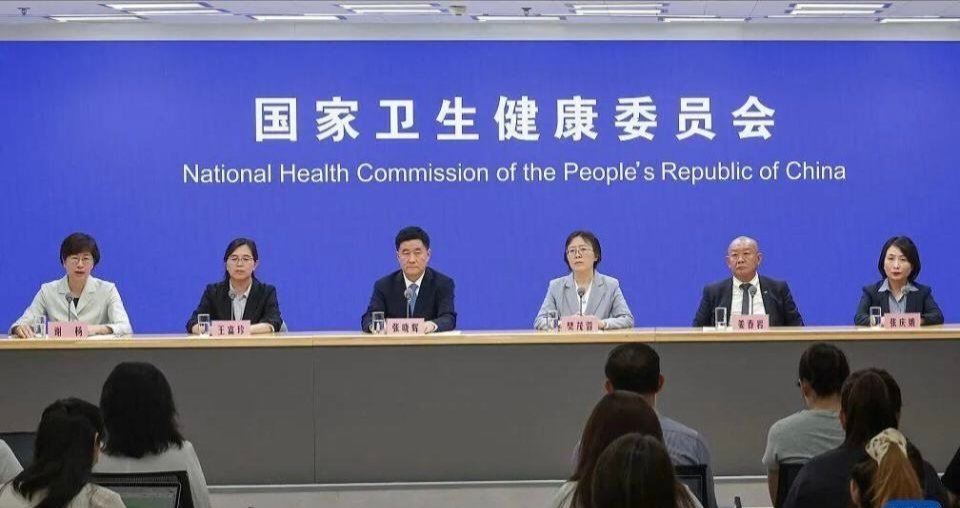
"Leukemia is no longer an incurable disease." The declaration did not come from a journal or a drug company, but from the National Health Commission itself, at a press conference in Beijing on August 21 — a statement about how ordinary cancer treatment has become, delivered by the office that runs China's hospitals.
The speaker was Zhang Xiaohui, a hematologist at Peking University People's Hospital, and his framing was deliberately administrative rather than triumphant: thanks to targeted therapy, immunotherapy and blood stem-cell transplantation, most leukemia patients can now reach complete control of the disease. Chronic myeloid leukemia, once a death sentence that required long, painful treatment, is now "managed like a chronic disease," he said — most patients are cured of its worst effects and return to work. State media carried the announcement widely, and a Beijing Daily post on it drew more than 5,000 likes within the week.
The part of the announcement with the deepest Chinese fingerprint is acute promyelocytic leukemia, the variant that once killed patients fastest. Zhang noted that treatment for APL is a case where "China has reached the world's front ranks" — the "Shanghai protocol" (上海方案) that pairs all-trans retinoic acid with arsenic trioxide, a regimen developed in Shanghai in the 1990s that turned a near-certain death into one of oncology's great cure stories, and which hospitals worldwide now follow. An outsider reading Chinese health news should register the sequence: the arsenic in the cure is the same poison of old crime fiction, dosed into modern medicine.
The reaction online was less a celebration than a matter-of-fact updating of the record. Practicing physicians dropped in to note that this has been true for years — "it stopped being an incurable disease long ago; many patients are cured outright" (one surgeon wrote) — while patient-facing accounts translated the presser into practical hope: one widely shared post lists which leukemia types reach clinical cure or long-term survival and reminds readers that a normal life afterward is realistic. On Zhihu, the question of how the breakthrough was achieved drew answers walking through the immunology, keeping the story on the platform's science desks all week.
What the declaration leaves out is the bill. None of the coverage priced the targeted drugs and transplants behind "complete control," and China's medical-insurance negotiations — which have brought leukemia drugs into public coverage in past rounds — are the machinery that decides who actually gets treated. The commission chose the phrase "no longer incurable" with care: it is a statement about the state of Chinese medicine, and an invitation to measure it against access.