Waist-Cut, Knee-Cut: Home Prices Halve Even in China's Strongest Second-Tier Cities
Viral price tables show every Wuhan district cheaper than five years ago, with Nanjing, Suzhou, Hangzhou, Tianjin and Qingdao commonly down more than half from peak. The posts mark a second act in China's property slump: the repricing has reached the prosperous regional capitals ordinary families were told would hold value.
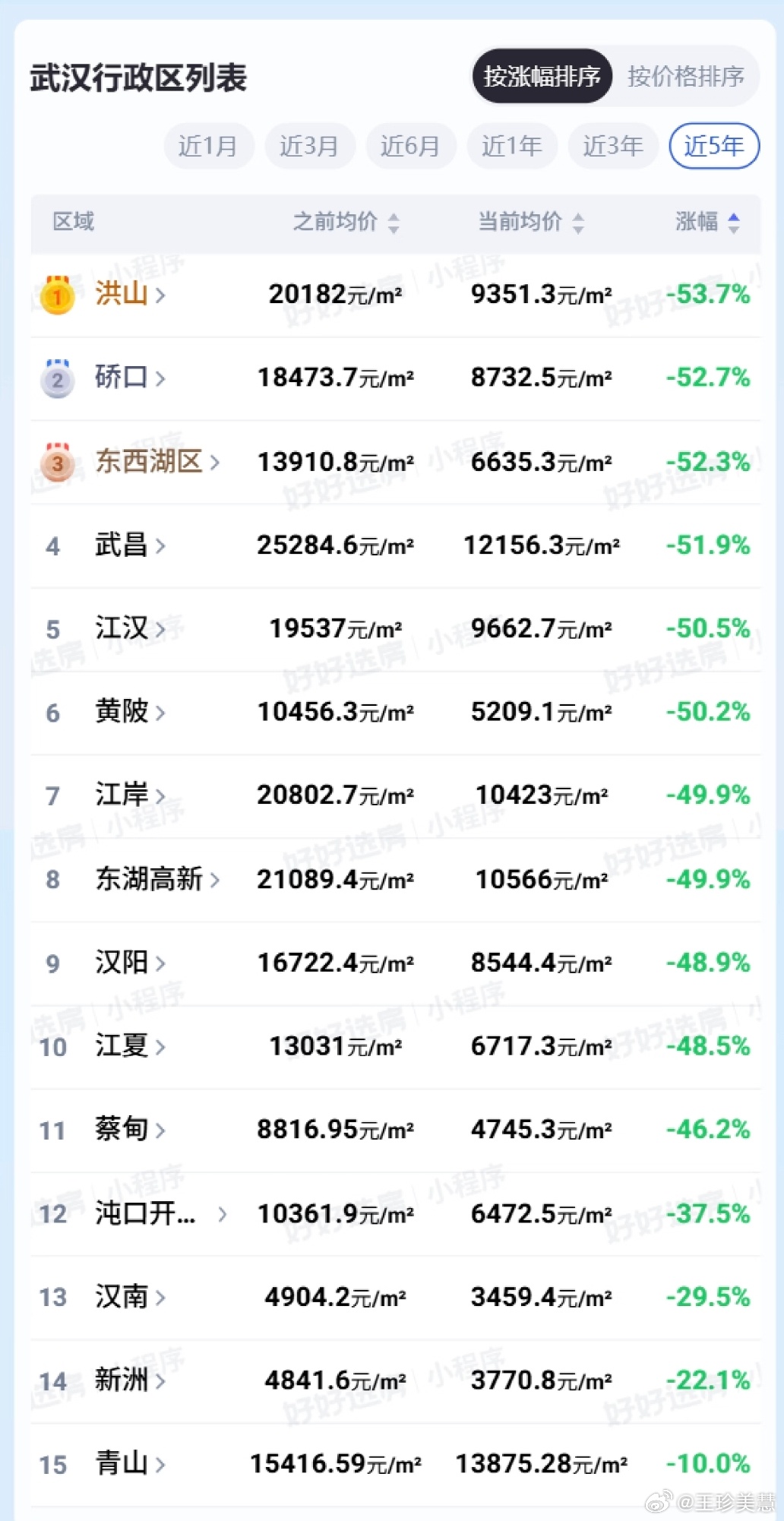
The phrase of the week in Chinese real-estate talk is "yaozhan" — cut at the waist. This week's trending variant went further: posts cataloguing price falls in China's "strong second-tier" cities, the prosperous regional capitals that were supposed to be immune, found that in several of them a halving no longer describes the damage.
A widely shared screenshot from a property app ranked all 15 districts of Wuhan by their five-year price change. Every district's bar pointed down. The poster's caption invented a new unit of measurement: other cities were cut at the waist, but "Wuhan housing prices are knee-cut" — and actual deals, she added, close one to two thousand yuan per square meter below even the app's asking prices.
Another post put numbers on the whole cohort: by this September, Suzhou, Hangzhou, Nanjing, Tianjin and Qingdao — the "strong second-tier" label's usual suspects — had commonly fallen more than 50 percent from their peaks. Nanjing apartments that once listed at 40,000 to 50,000 yuan per square meter now change hands below 20,000; Suzhou deals were cited at around 14,000. The post singled out a luxury Nanjing development that halved from 80,000 yuan per square meter — a development that at its peak turned buyers away at 80,000 yuan per square meter.
One Weibo user summed up the slide with a memory from 2023: touring the prestige towers of Nanjing's Hexi district, where viewing a fitted-out "large flat" required proving 5 million yuan in assets, and units started above 15 million. "I'd guess those owners are all trapped now," she wrote.
For an international reader, the significance is what housing does to China's household balance sheet. Roughly two-thirds of Chinese family wealth sits in property, bought often with family-pooled down payments during a three-decade boom that policy itself encouraged. The 2021-2022 developer defaults began the repricing; what this week's posts document is the second act — the slump reaching the desirable, employable cities that migrants were told would hold value, and dragging the resale market down with new-build discounts.
The trending debate is less about sympathy for owners of 15-million-yuan flats than about a question of timing: whether to buy into a falling market that official messaging calls "stabilizing." Every halved price list that trends makes the wait look rational — and, for the developers and local governments that depend on land sales, another quarter harder to reverse.