A Holiday Road Trip, the Pill, and a Pulmonary Embolism: China's Viral Health Lesson
A 26-year-old woman who had taken oral contraceptives for months developed deep-vein thrombosis and a pulmonary embolism after a week of 5-to-12-hour car rides and minor surgery. Chinese doctors used the case to explain the 'three factors' of clotting — and why each risk alone is modest, but stacked they can be dangerous.
The holiday read like a normal one: months of oral contraceptives behind her, a 26-year-old woman — Chinese media call her Xiaoyu, a pseudonym — spent a week on the road, riding in cars five to twelve hours a day across several cities. Back in Hangzhou, she used a spare day for a minor elective surgery, then rested as instructed. Days later her right leg began to ache and swell; then came the tightness in her chest. The diagnosis: deep-vein thrombosis that had thrown clots into her lungs — a pulmonary embolism, at 26.
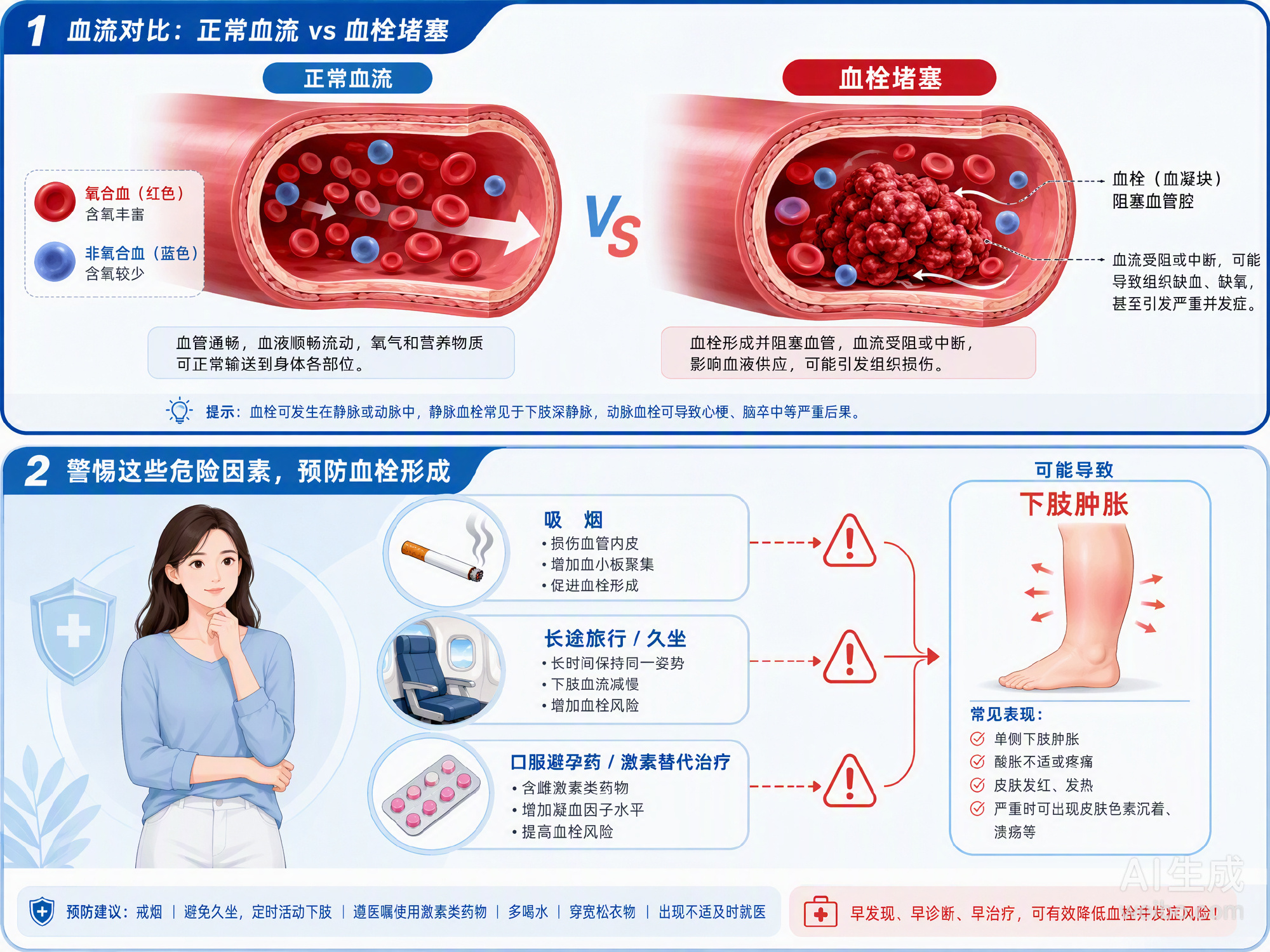
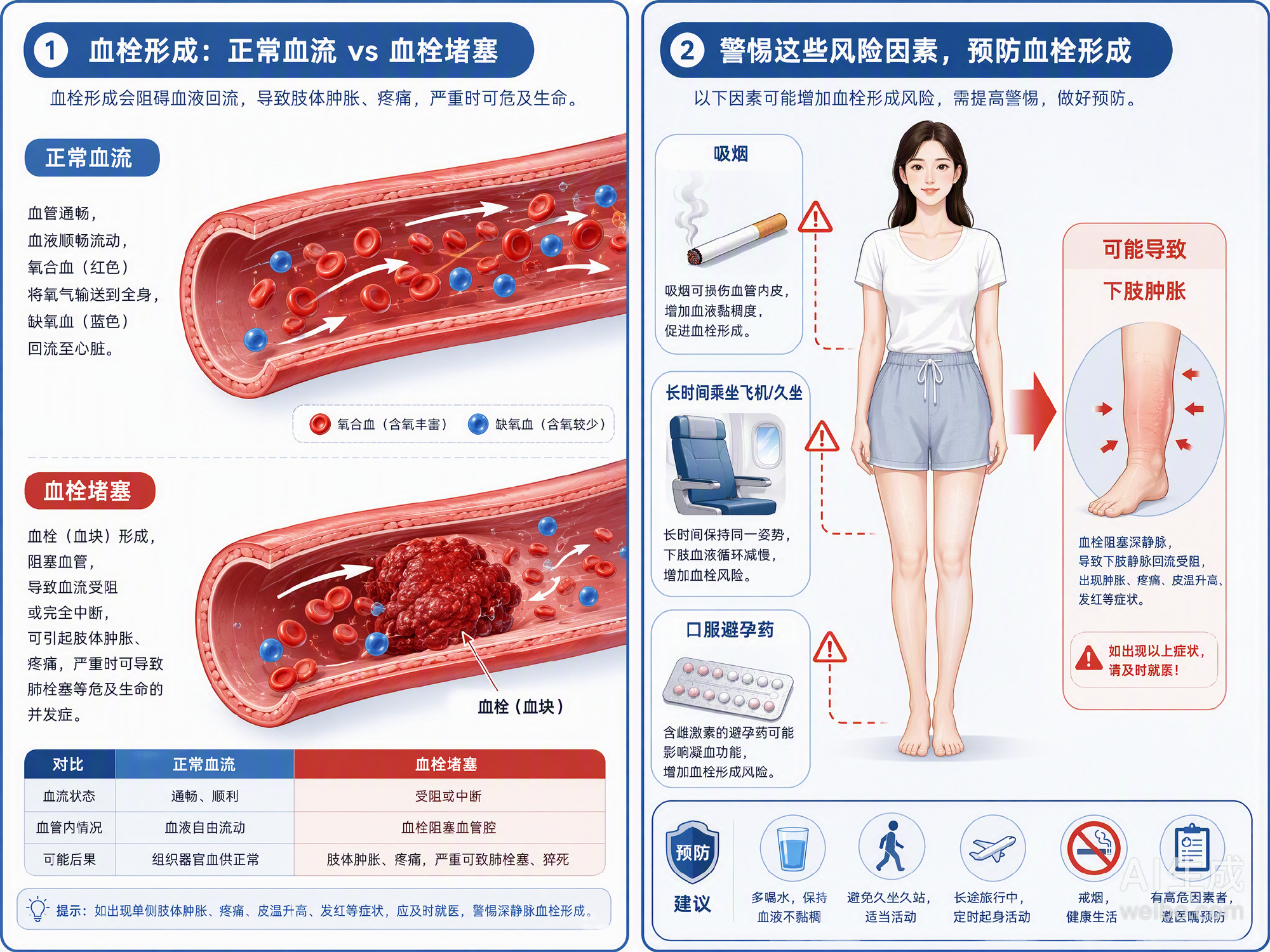
The case trended twice on Weibo on September 5 — once under a hashtag about the pill and blood clots, once under her story — and the tone of the posts was less alarm than arithmetic. Zhejiang Hospital vascular surgeon He Zehuang laid out the classic triad that blood-clot medicine has used for 170 years: blood that sits still, a vessel wall that is injured, and blood that clots too readily. Hormonal contraceptives containing estrogen raise that third factor; marathon car rides supply the first; surgery and the bed rest that follows supply both. "She collected all three," the doctor said of Xiaoyu's month. Individually each risk is modest; stacked, they compound.
That framing — a stack, not a single villain — is what made the posts worth reading. A widely shared explainer from a vascular doctor walked through the mechanism plainly: the pill's estrogen shifts the blood's clotting balance, so on its own the risk stays low, but add long immobility, a procedure, or smoking and it multiplies. Commenters passed around the warning signs worth knowing: swelling, heaviness or aching in one leg, and sudden chest tightness — and, importantly, what not to do. "Don't rub it, don't slap it, don't wait it out," one post urged; massaging a leg that might harbor a loose clot can send it toward the lungs.
The story also travels against a local current: hormonal contraceptives are used by millions of Chinese women, yet clot risk is rarely part of the conversation — contraceptive counseling in China has historically centered on IUDs and other methods, and the pill is often bought and taken with little medical contact. The doctor whose video still circulated with the story put the headline bluntly: women who take contraceptive pills "casually" increase their clot risk without knowing it.
None of the posts suggested abandoning the pill; the advice was to assess before starting, disclose risk factors to a doctor, and treat long travel days as a medical event — stand, walk, flex the calves. Xiaoyu, media reports noted, is recovering. The episode's residue is the triad itself, now shared into millions of feeds: three ordinary things, each harmless alone, that a young body can turn into an emergency when they arrive together.