Knife Hidden in a Gratitude Banner: Guiyang Doctor Stabbed by Patient Is Out of Danger
A colorectal cancer patient in Guiyang hid a blade inside a silk thank-you banner and stabbed a young doctor who was not even his physician. After two days in intensive care the doctor is stable, the suspect is in custody — and China's doctors are once again asking, publicly, why they stay in the job.
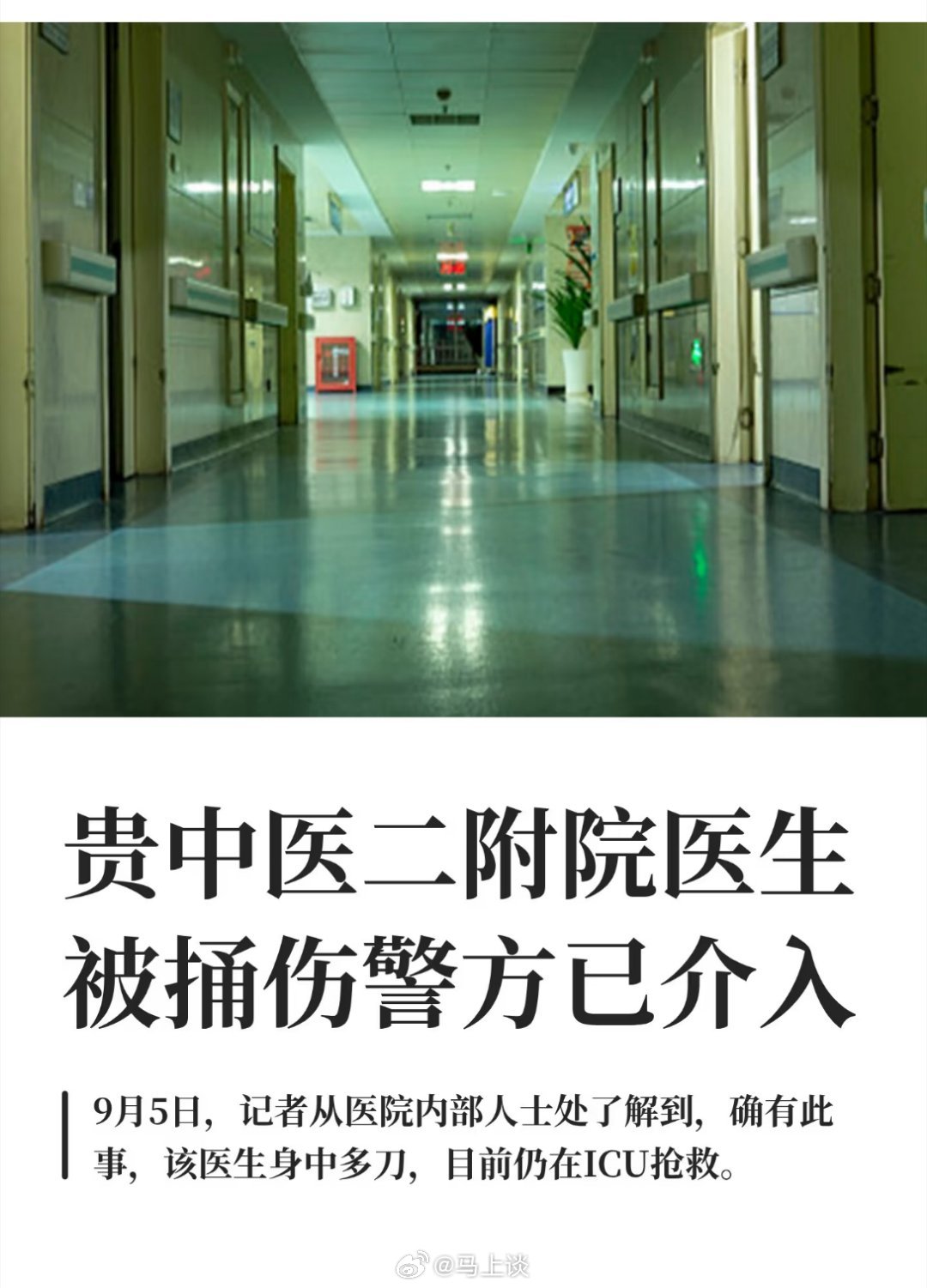
A patient walked into a hospital in Guiyang last week carrying a folded silk banner — the kind Chinese patients traditionally present to doctors as a public thank-you — with a knife hidden inside it. By the time the visit ended, a 30-something resident in the proctology department had been stabbed repeatedly and was fighting for his life in intensive care.
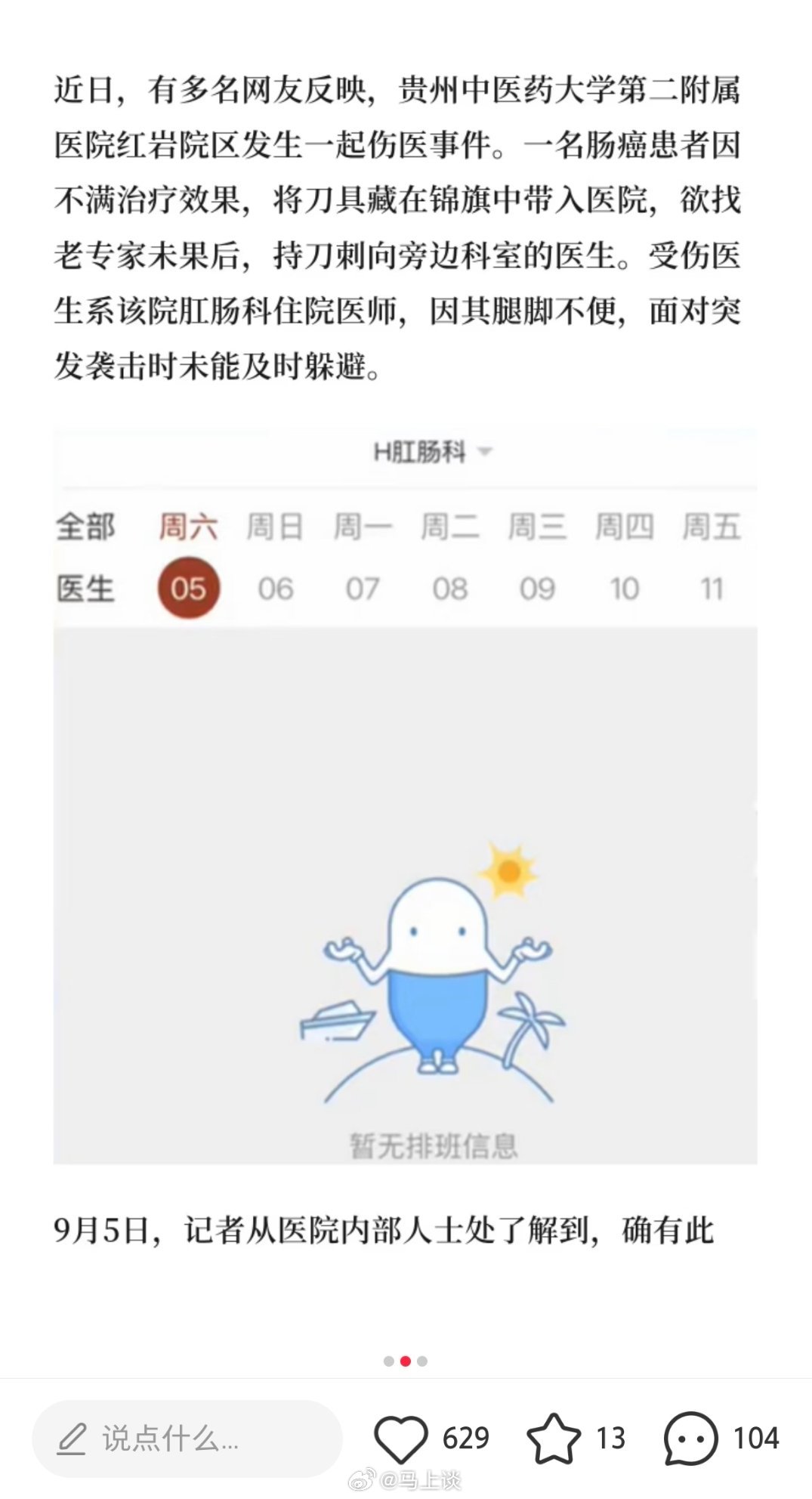
The attack took place on the morning of September 4 at the Hongyan campus of the Second Affiliated Hospital of Guizhou University of Traditional Chinese Medicine. According to accounts that spread across Weibo and were confirmed in part by hospital insiders, the attacker was a colorectal cancer patient unhappy with his treatment who had come to confront the senior expert who had treated him. Unable to find him, he turned the knife on a doctor from the neighboring department — a young resident who had no treating relationship with the man at all. Colleagues described him as a survivor of polio whose limited mobility left him unable to dodge the first blows; unverified posts circulating over the weekend said he suffered hemorrhagic shock from wounds to his arms, shoulders, head and neck.
For most of September 5 the story ran on nothing but such secondhand reports, and the silence became part of the story. The regional paper Modern Express confirmed through a hospital source that the doctor was in the ICU, and Guiyang's health bureau acknowledged the case, but the hospital issued nothing; as of Friday night the doctor's name still sat in the published clinic schedule for the coming week. That changed in the early hours of September 6, when the Nanming district police announced that a suspect surnamed Hu had been detained at the scene and formally arrested on criminal charges — and that the wounded doctor, now out of danger, was in stable condition. The hospital, a screenshot shared widely on Weibo shows, has meanwhile pulled the doctor's clinic listings, leaving his department unbookable through September 20.
The banner detail is what settled the story into the national mood. Silk banners are the ritual currency of gratitude between Chinese patients and doctors; a blade folded into one reads as a violation of the relationship itself. "The knife was hidden behind a banner of thanks — entirely deliberate," one much-shared comment ran, noting that the victim "suffered through polio to become a doctor at all, and was stabbed for a patient who was never even his." The main Modern Express report on the case drew more than 24,000 likes.
Even before the police statement, the stabbing had collided with a second trending topic that weekend: a long essay by a young surgical resident remembered a colleague who, 40 hours into a sleepless stretch and having lost two patients in a day, sat drinking alone in the hospital canteen. "'Pancreatic cancer has a five-year survival rate of 8 percent. It feels like everything we do is useless — how do you keep going, teacher?'" the junior doctor asked. The answer he received — "because of that 8 percent" — gave the trend its name, and the essay, liked more than 10,000 times, filled with doctors trading reasons they stayed in the work. Commenters moved between the two hashtags all weekend; grief and endurance, in the conversation China was having about its doctors, were the same subject.