Huawei Smart Driving Reaches China's $12,600 Family Cars
Dongfeng Forthing's Xinghai V6, a large six-seat MPV preselling from 89,900 yuan, brings Huawei's Qiankun ADS 5 SE highway and city navigation assist to the price bracket where most Chinese families shop — a marker for how far driver assistance has fallen downmarket.
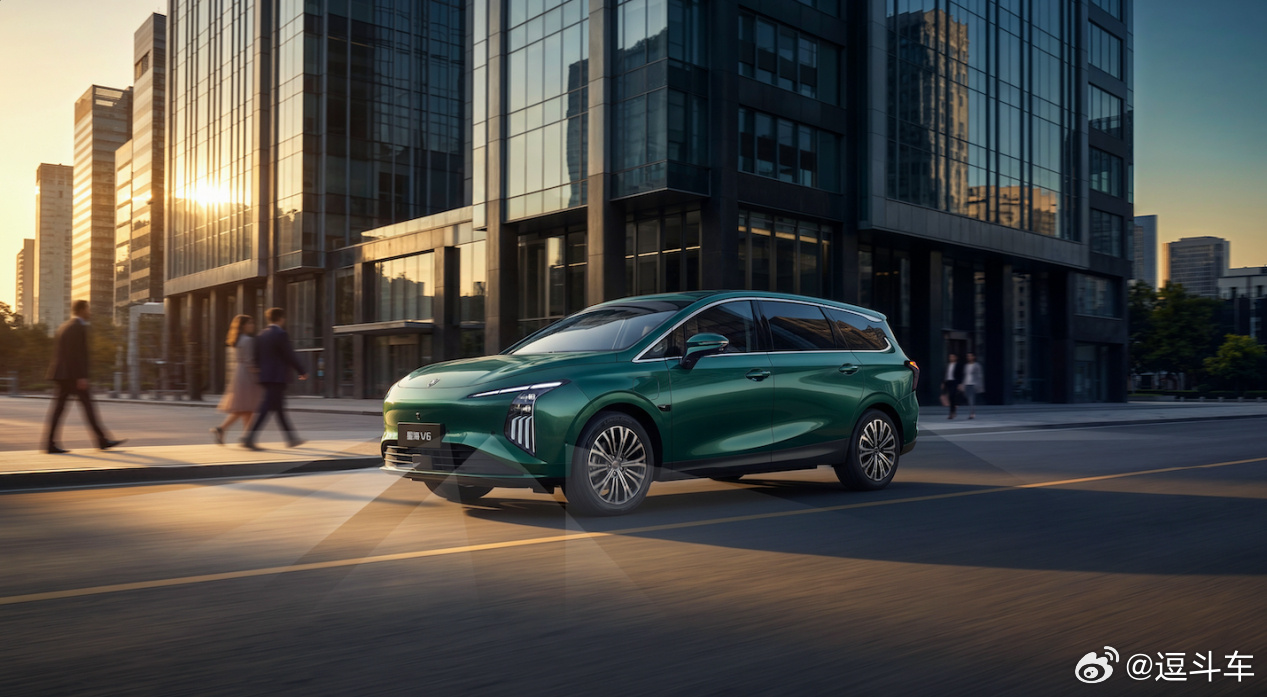
The most consequential number in China's car market this week was 89,900 yuan — about $12,600. That is the presale price of the Xinghai V6, a large six-seater MPV from Dongfeng's Forthing line that went on sale Friday, and its top trims carry something that until recently could not be bought at any price near it: Huawei's Qiankun ADS 5 SE driver-assistance system, with highway and city navigation assist and automated parking across scenarios. The trending topic spelled it out: "Hundred-thousand-yuan class, Huawei Qiankun ADS SE, Xinghai V6 launches."
The Xinghai V6 itself is a straightforward family vehicle — 4.8 meters long, a 2.9-meter wheelbase, up to 510 kilometers of CLTC electric range — pitched at exactly the class of car an extended Chinese family actually buys. What makes it a marker is the equipment list. Advanced driver assistance arrived in China as a luxury feature: Huawei's full Qiankun system debuted in the premium AITO line, and city navigation-on-autopilot was, two years ago, the selling point of cars twice this price. Now a supplier-branded "SE" version of the same stack is equipment on a minivan-shaped MPV that undercuts the traditional joint-venture compact segment. The pricing logic is the same one that moved air conditioning and touchscreens downmarket: a feature that one maker ships at 100,000 yuan stops being optional at any price above it.
Huawei has spent the year rearranging itself for exactly this. The company that once built its own cars with Seres under the AITO brand has been stepping back from that flagship arrangement even as it signs its driving stack into more third-party vehicles — the site followed that restructure this month, and earlier this month marked the Freelander 8, a revived Land Rover nameplate built in China with Huawei's brains. The Xinghai V6 extends the same supplier strategy to its logical floor: if the brand is to be the "Android of smart driving," the money is not in 400,000-yuan flagships but in making the system ordinary.
Speed is coming from the regulator too. Since September, national mandatory safety standards have set a legal floor for assisted-driving systems from L2 up, the site has reported — the framework that lets a system like Qiankun SE be marketed broadly without the wilder "autonomous" claims that once drew fines. A budget six-seater advertising highway and city navigation is a product of that clarity as much as of Huawei's scale.
There is a quieter indicator of how this trend spreads. Two of the top posts under the trending topic were not from car accounts at all but from district-level government "good morning" feeds in Ningbo, which staple whatever hot hashtags the platform surfaces onto their daily greetings — with the iPhone 18 and a mobile game alongside the V6. Manufactured as that looks, it reflects a real consensus: smart driving has stopped being a selling point and started being wallpaper. When Huawei's driving stack ships on a 90,000-yuan MPV, the question for the market above it — the 200,000-to-400,000-yuan segment where ADAS once justified the premium — is what exactly that premium is now for.