Selling at a Loss to Win a Market: The Chip Chemical Behind China's Latest Anti-Dumping Fight
A viral question — why would Japan sell a chip-making chemical to China below cost? — has answers in this week's trade data: Beijing imposed anti-dumping deposit rates as high as 99.2% on Japanese dichlorosilane on September 8, alleging subsidised dumping meant to squeeze out a Chinese competitor just as it qualified with major wafer fabs.
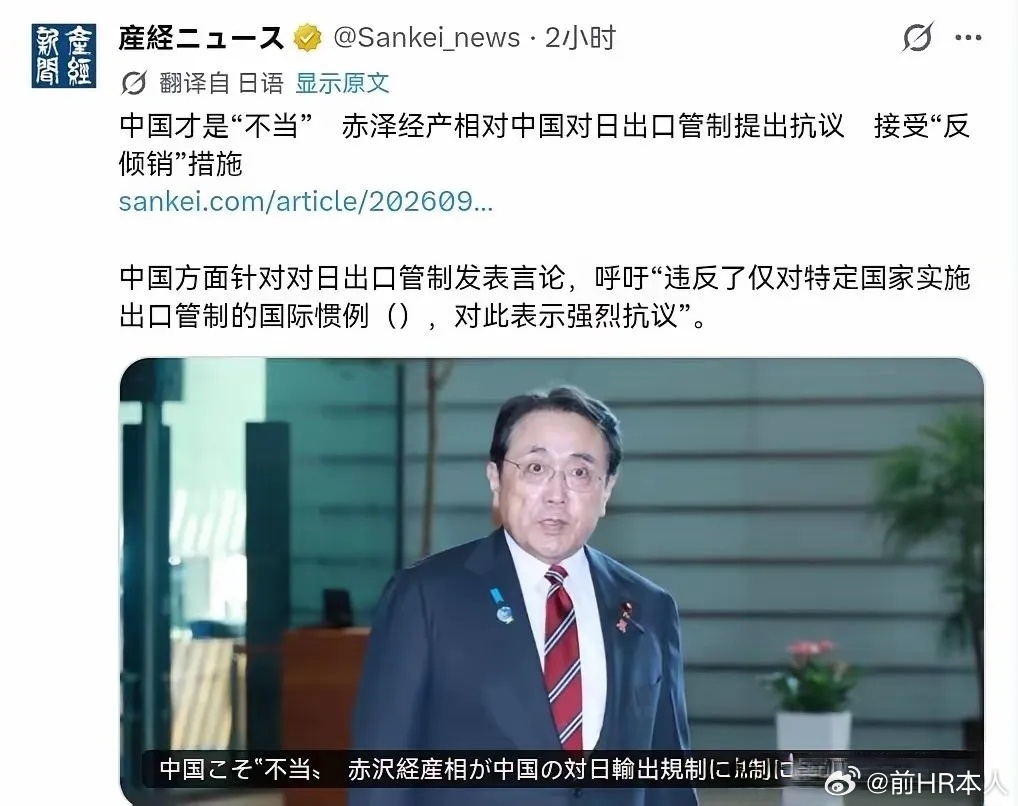
Why would anyone sell at a loss? The question trended on Weibo this week under the heading 日本亏本也要卖给中国图什么 — Japan sells to China at a loss; what's the game? — attached to a story about a chemical most readers had never heard of: dichlorosilane, a specialty gas used in the deposition steps of chip manufacturing.
The numbers came from state-linked coverage. The same product sells for about 432 yuan a kilogram inside Japan but roughly 223 yuan to Chinese buyers — a discount of nearly half, below production cost, per the reports. “同一产品,日本本土售价约432元/公斤,对华出口仅223元/公斤,价差近一半”, one widely shared post summarised. The alleged logic, in the Chinese framing: subsidise the shortfall, seize the market, raise prices later — the playbook China says it watched in solar panels and LCD panels, industries where Japanese and Korean firms' price wars ended with Chinese dominance.
What gives the week's posts their edge is that the story has already moved from complaint to countermeasure. On September 8, China's commerce ministry imposed anti-dumping deposit rates on Japanese dichlorosilane of up to 99.2% — hitting industry giant Shin-Etsu Chemical hardest — after an investigation opened earlier this year. “日本半导体材料威胁要断供,结果变断根” — Japan's semiconductor materials threatened supply cuts, and ended up severed instead — one commentator wrote, with visible satisfaction.
For the Chinese side the fight is a proxy war over supplier trust. Posts note that domestic producers have broken through in high-purity production and been certified by leading wafer fabs, meaning the anti-dumping duties land just as substitution becomes practical — 报道称国产替代进程提速, as one post put it. Japanese suppliers have protested the ruling and demanded its withdrawal.
The outside reader should note what the story says about how trade conflict now runs through chemistry sets as much as tariffs: a colourless gas that deposition tools puff onto wafers has become the latest front in the semiconductor supply-chain contest, and the side that can make it domestically is the side that stops caring what the other charges.