Ancient Household, Modern Grind: 'Lan Xiang Ru Gu' Becomes China's Dark-Horse Drama Hit
The CCTV-8 costume drama 'Lan Xiang Ru Gu' has become the autumn's dark-horse television hit by denying its heroine any protagonist's halo — and Chinese viewers are reading her survival-by-wits in a great household as an allegory of big-tech office life.
The autumn's dark horse on Chinese television is not a thriller or an idol romance but a costume drama that refuses its genre's oldest trick. 'Lan Xiang Ru Gu' ('As Before, the Fragrance of Orchid'), airing nightly on CCTV-8 and Tencent Video, reached a 19.74% real-time market share this week — remarkable for a serialized drama — and the reason audiences give is the premise it declined: the heroine, Xu Lanxiang, has no golden protagonist's halo, no doting patron, no convenient coincidences. She is a fallen merchant's daughter clawing back status inside a great household, and viewers are reading her the way they read themselves: as an employee.
That reading is not a critic's invention. One of the most-shared video essays about the show bills it as 'a fallen heiress's memoir of big-tech work' (落魄大小姐,大厂打工记), and the framing has stuck because the fit is precise. The household's hierarchy of managers and factions maps onto the corporate ladder; Lanxiang's survival depends on managing up, managing sideways and never letting the powerful see her whole hand. Baidu's trending board, which normally reserves its drama slots for popularity alone, is running the show with the caption that it 'abandons the traditional instant-gratification formula for a grounded survival narrative told from a small heroine's perspective.' At a moment when Chinese workplaces are squeezed and promotion ladders feel rigged, a drama about a woman with no safety net is the fantasy.
The show's provenance matters to its reception. It comes from the same stable of brocade-and-intrigue titles as dozens before it — a field so uniform that an earlier Trending on Weibo piece ran the rule over why all these costume dramas sound the same — which is precisely why the deviations get noticed. And it is having its moment while a mainland romance sits near the top of Netflix's global chart, a reminder that the genre's audience now spans platforms and borders.
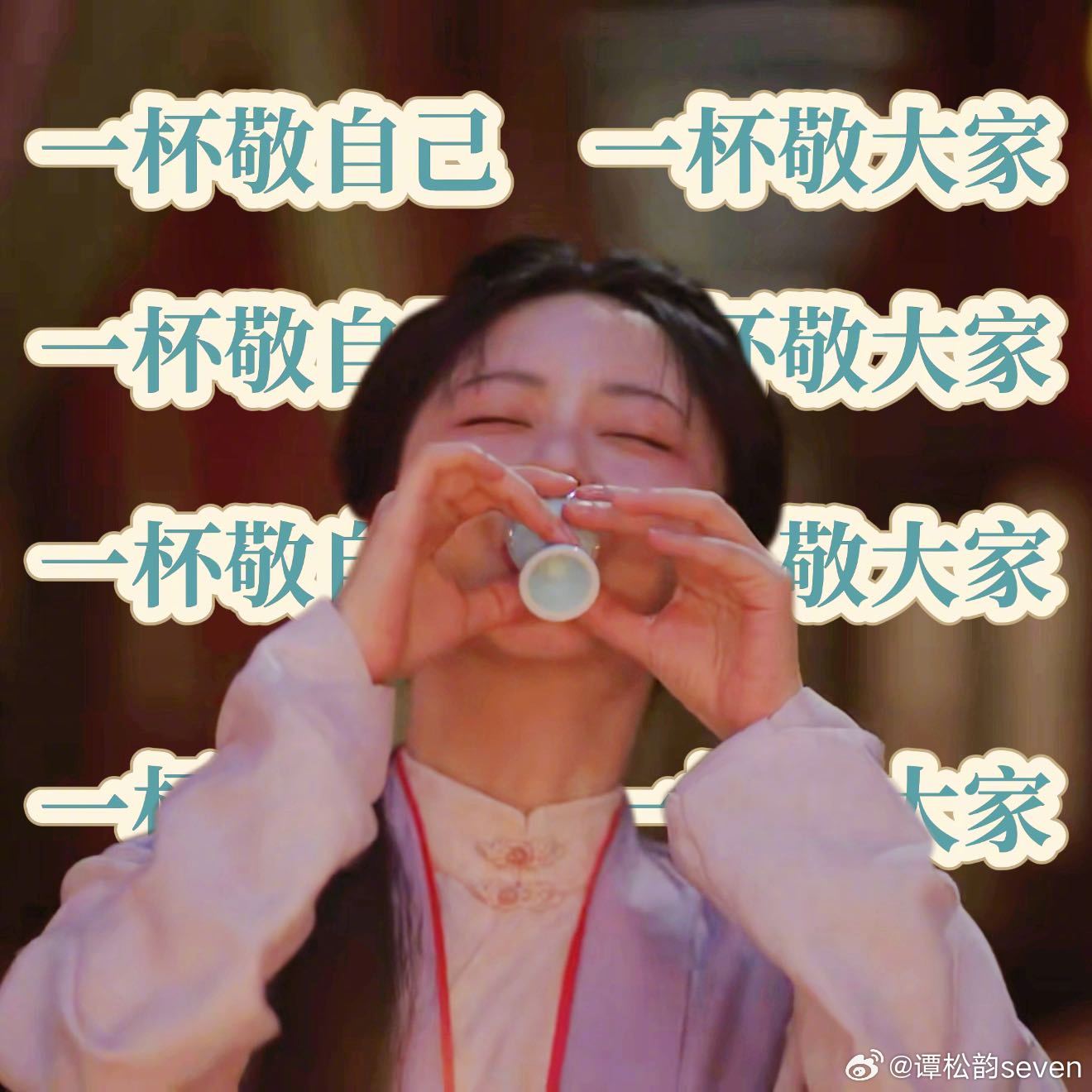
The cast's own engagement has become part of the story. Tan Songyun, who plays Lanxiang, posts fan-service tidbits about her character between episodes; her account drew tens of thousands of shares for a single behind-the-scenes toast ('one cup to myself, one cup to everyone'). The production runs a nightly 'melon-field' meme game that hands viewers reusable reaction images — a lightbulb over the heroine's head captioned 'smart as Xiang' is the current favorite — an unusually disciplined fan-farming operation for a state-broadcaster slot.
Not all the publicity has been welcome. Zheng Hehuizi, the actress playing Du Cuique, the household's scheming antagonist, has been accused of over-promoting herself during the show's run, and answered on a livestream this week. 'I don't like the word marketing. Any actor has the right to promote their project and their role,' she said — a small flare-up that shows how much is now riding, financially and reputationally, on a hit's afterlife in feeds and fan groups.
The drama's numbers will fade when the finale airs. The habit it speaks to may not: Chinese viewers have spent years watching the workplace drama disguised as palace intrigue, and this season the disguise is optional — the palace is the office, and everyone in it is on a contract.