All Brocade and 'As Before': Why Chinese Costume Dramas All Sound the Same
A viral Weibo thread catalogs how Chinese costume dramas have converged on a handful of poetic title formulas — 'As Before,' 'Like a Dream,' endless 'Brocade' — until viewers can no longer tell them apart. The joke says something real about the web-novel adaptation pipeline behind the genre.
The hot-search phrase 长剧起名,观众已经学杂了 — roughly "long-drama naming: viewers have crammed themselves into confusion" — is Chinese internet slang doing precise work. 学杂了 is what a student says when too many subjects have blurred into one muddle. Applied to Chinese costume dramas, it means the titles have stopped being names and become a weather pattern: viewers literally cannot keep them straight.
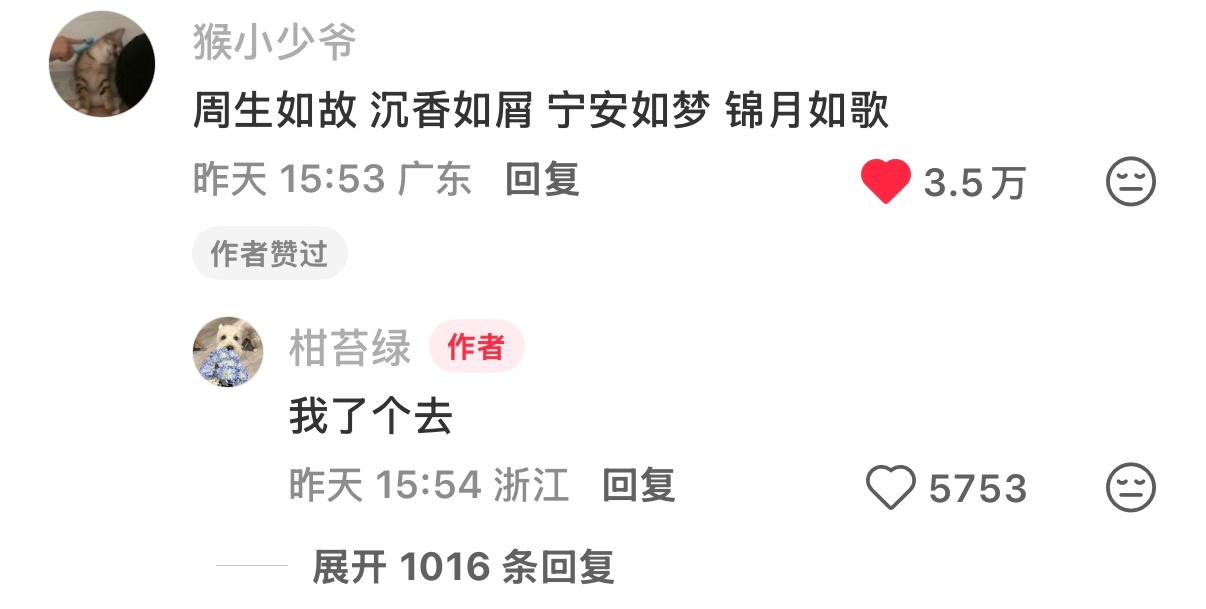
The phrase's reference image is a nine-screenshot post by the Weibo user Qingya Xunjiu, who wrote "I'm dying — long-drama naming has viewers all mixed up," to a chorus of agreement. The real punchline sits in the screenshots: a comment listing four recent hits — 周生如故 ("Zhou Sheng, As Before," released abroad as One and Only), 沉香如屑 ("Agarwood, Like Ash," Immortal Samsara), 宁安如梦 ("Ning'an, Like a Dream," Story of Kunning Palace), 锦月如歌 ("Brocade Moon, Like a Song") — has been liked more than 30,000 times, mostly by people scrolling through and realizing they cannot say which is which. The shared engine is the pivot word 如 ("as" or "like"), imported from classical poetry to make any two characters sound like a line of verse: X如故, X如屑, X如梦, X如歌.
The brocade problem
The 如 titles are only half of it. A second screenshot compiles the 锦 ("brocade") family: 花开锦绣 ("Blooming Brocade"), 锦绣未央 ("Brocade Weiyang"), 锦绣芳华 ("Brocade Splendor"), 锦绣安宁 ("Brocade Tranquility"), 锦绣南歌 ("Brocade Songs of the South") — and that is before 锦心似玉 and 锦月如歌 themselves. The words are chosen for exactly the reason they fail: they are poetic, auspicious and safe, signaling at a glance that a show is a costume romance with beautiful people and a happy ending. In an adaptation pipeline that turns hundreds of web novels into episodic dramas a year, the title is genre signaling for platforms and algorithms — which is why they converge.
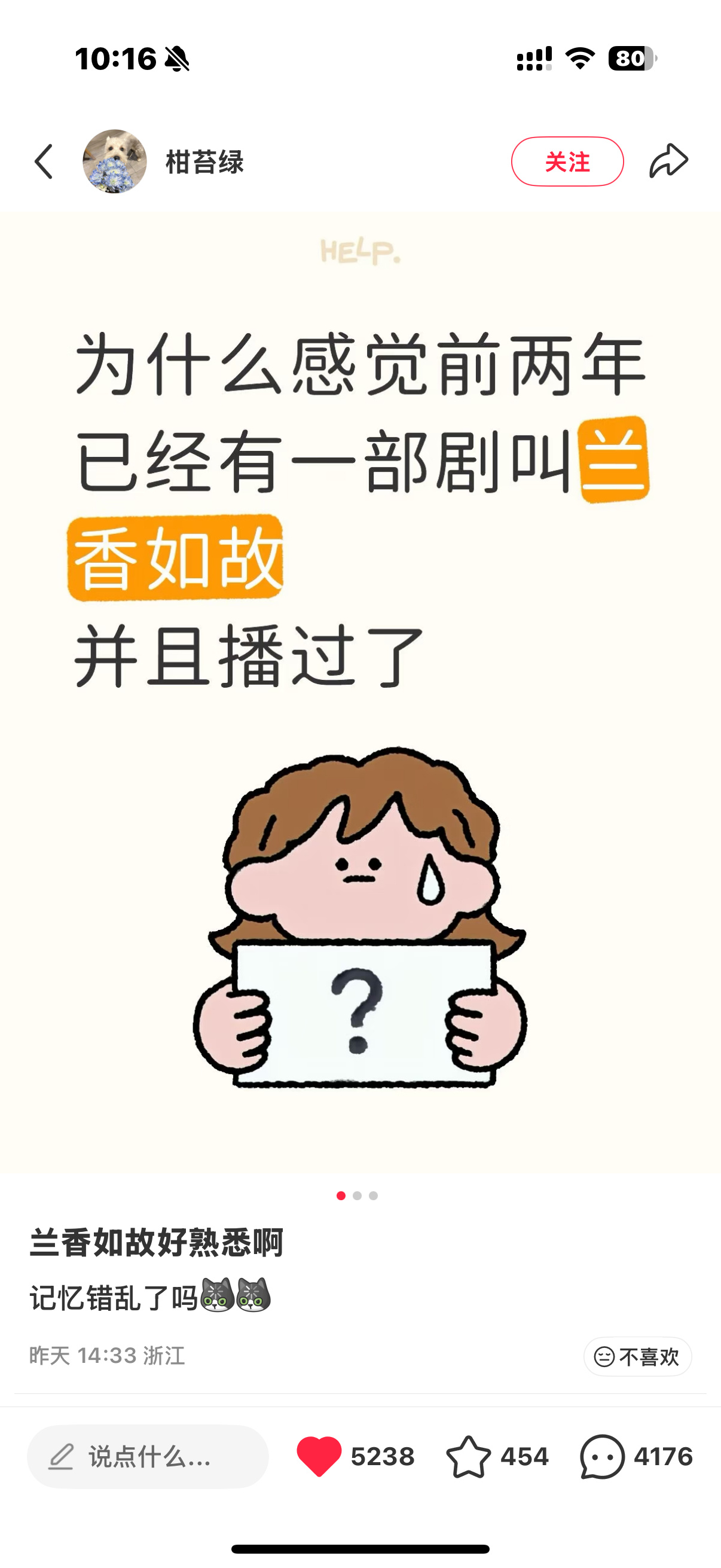
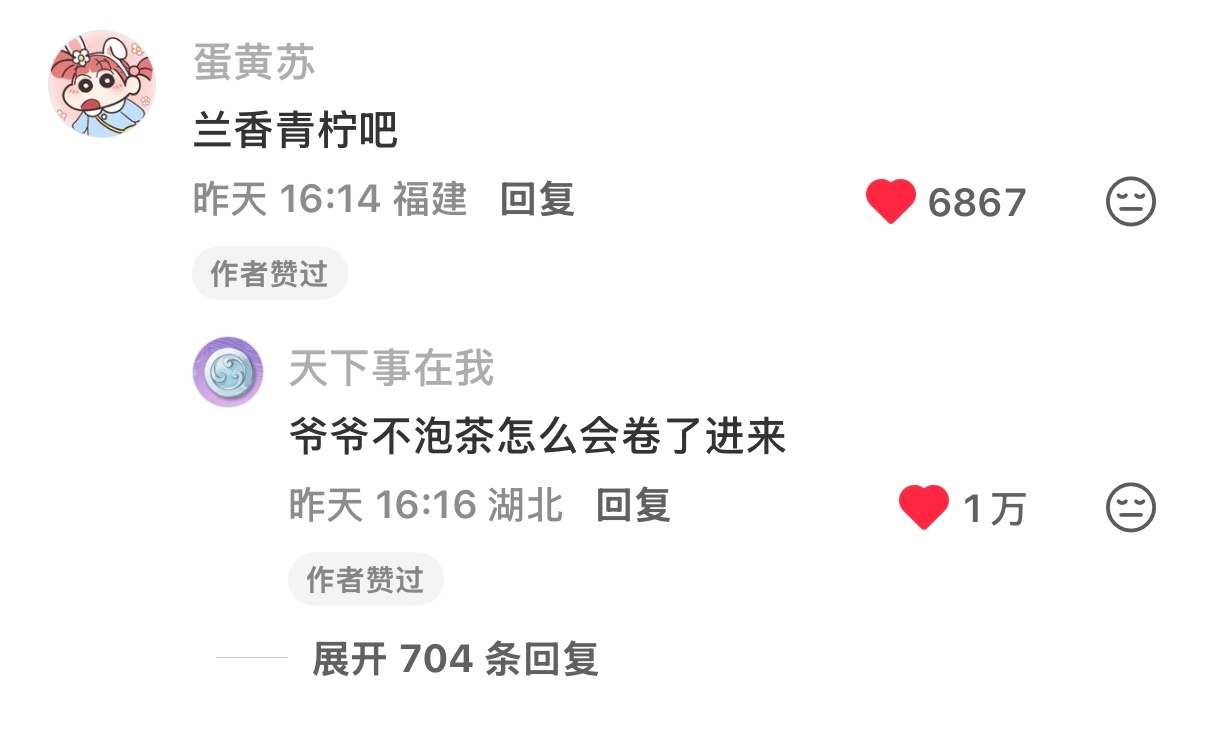
The convergence has consequences the thread documents in real time. One poster asks why the current hit 兰香如故 ("Orchid Fragrance, As Before") feels like something that "already aired two years ago" — a confession of false memory that thousands endorsed. Commenters have started inventing mashups: 兰香青柠 ("orchid fragrance with a twist of lime"), until someone points out the hybrid now sounds like the bubble-tea brand "Grandpa Won't Brew Tea" — a reply whose popularity the original poster endorsed.
Names as a genre's report card
The joke lands because the industry is mid-boom. 兰香如故, the very title posters keep confusing with its predecessors, became Tencent Video's fourth drama this year to pass a 30,000 heat score — as we covered earlier, its cast chemistry is a running internet subject — while commenters under the naming hotword were already grading the genre's paperwork rather than its episodes. One, pining for variety, nominated the single character 《宫》 ("Palace") as the best title the genre ever produced, and called the whole current batch "a pot of porridge."
The open question is whether the formula can survive being named. When a title convention becomes the joke — mashed up, misremembered, blended with milk tea — distinctiveness is suddenly the scarce resource, and the studios churning out next year's 如故s are up against an audience that has, in the phrase of the moment, already studied it all into a muddle.