Lula Wins a Fourth Term and Brazil's Markets Crash: Why China Is Watching
Luiz Inácio Lula da Silva won a fourth term as Brazil's president on Sunday with 51.8 percent of the vote; by Monday morning, São Paulo's stock exchange had tripped its circuit breaker and Chinese funds tracking Brazilian stocks had locked at their daily limit. The crash — and Beijing's one-line response — made the election one of the most-read foreign stories on the Chinese internet.
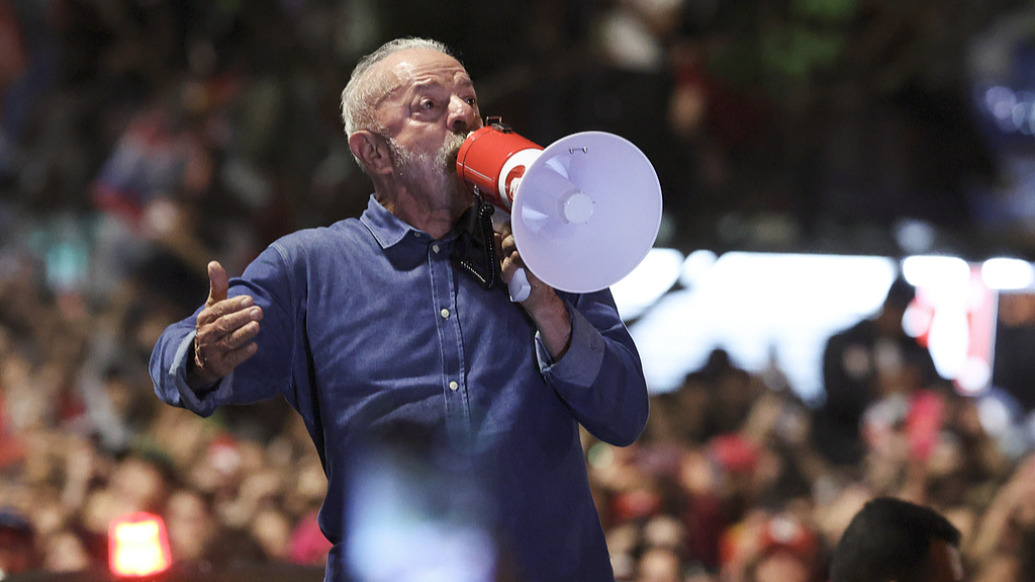
Luiz Inácio Lula da Silva, 81, won a fourth term as Brazil's president on Sunday, taking 51.79 percent of the vote to 48.21 percent for Flavio Bolsonaro, a senator and the son of former president Jair Bolsonaro. The margin — about 4.4 million votes out of more than 124 million cast — was built entirely in the runoff: on October 4, Lula had finished some 2.2 million votes behind the younger Bolsonaro, making him the first candidate since Brazil's return to democracy to win a presidential election from second place in the opening round. Flavio Bolsonaro has refused to concede and says he will formally contest the result.
Markets had spent the interlude betting against him. After the first round put a Bolsonaro ahead, São Paulo's Ibovespa index rallied to record highs; on Monday it handed them back. The exchange opened 10 percent down and tripped its circuit breaker, suspending trade for roughly half an hour — a mechanism Brazil last used during the 2008 financial crisis and the COVID shock. Within the first hours the index was down nearly 17 percent, the real lost more than 8 percent against the dollar at the spot open, and in New York the Brazil-focused ETF EWZ fell 26 percent, its worst session on record. Brazilian companies listed in the US fared worst of all: the investment bank XP shed more than half its value, the payments firm PagSeguro more than a third, and the lender Itaú close to a quarter.
The crash landed in Chinese portfolios the same morning: two exchange-traded funds in Shanghai and Shenzhen that track Brazilian indices both locked at their 10 percent daily limit. The circuit breaker was among Weibo's top trending topics by mid-morning, and one user, 花姐念叨叨, compressed the confusion into a few lines: "Yesterday, Lula was elected president of Brazil. But on Monday Brazilian index futures fell 20 percent and tripped the circuit breaker, and the real collapsed 11.5 percent. So do the Brazilian people believe in Lula, or don't they?" She went on, recalling that when Venezuela's president was arrested not long ago, Venezuela's stock market soared — "did the Venezuelan people support Maduro, or didn't they? Honestly, the world is a marvelous place."
At Monday's regular press briefing, foreign ministry spokesman Guo Jiakun was asked about the Bolsonaro camp's refusal to concede. His answer — "China respects the choice of the Brazilian people" — was the government's entire public position, and it sat on Baidu's news board beside the market carnage. Chinese media went deeper: Caixin's photo desk ran pictures from Brasília's victory rallies, ThePaper filed its analysis under the title "Won the Election, Lost the Congress", noting that Lula's Workers' Party faces a right-leaning legislature that will constrain him from his first day, while Deutsche Welle's Chinese service pointed out that the crash had really just erased the first-round rally — the market had round-tripped to where it stood before the election.
Lula will be sworn in on January 5, 2027, at the start of a term that would push his combined time in office past 16 years. The question Chinese commentary keeps returning to is what he can do with it: the fiscal anxieties that emptied the market on Monday — spending, state companies, central-bank independence — will be waiting on day one, alongside a hostile congress. For China, the largest buyer of Brazilian iron ore and soybeans, that contest matters more than the election did.