Lao Gan Ma Denies the AI Layoff Story, but Its Own Payroll Records Raise Harder Questions
China's most famous chili sauce brand says a viral claim that AI cameras replaced 600 workers with 48 is untrue. But its own insurance records show the payroll falling for four straight years, and it is now facing multiple labor-dispute cases — a row that has become a national argument about automation and what a beloved brand owes the people it once employed.
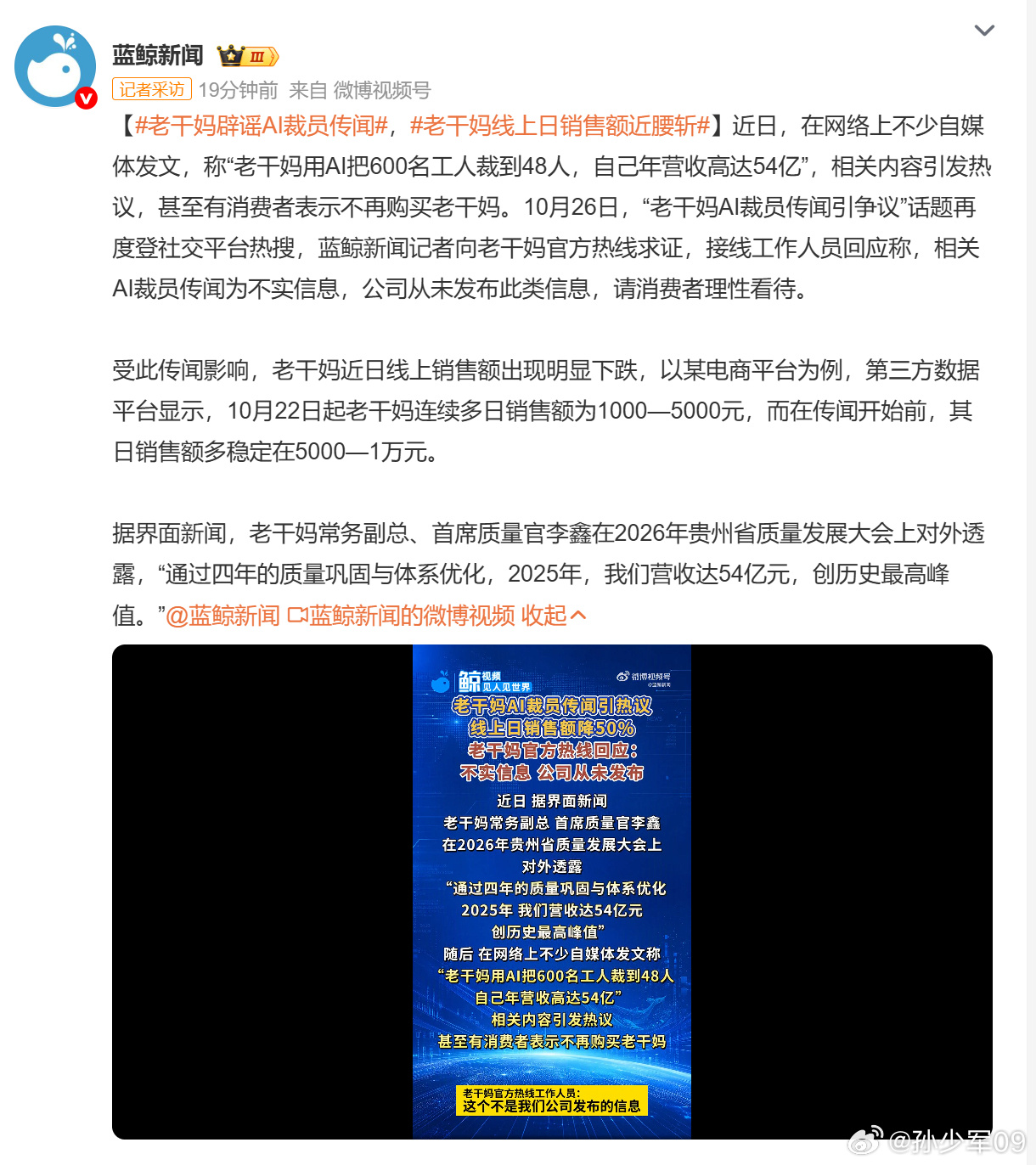
Lao Gan Ma, the chili sauce brand whose jars fill Chinese student kitchens the world over, is at the center of a national argument about automation and work. The trigger was a viral claim that AI cameras had cut a chili-sorting line from 600 workers to 48. The company denies the claim, but the underlying figures it cannot dispute are its own.
At a Guizhou province quality conference in late September, Lao Gan Ma executive Li Xin gave two numbers: 2025 revenue of 5.4 billion yuan, and a chili-sorting line where AI visual inspection now leaves 48 workers doing the final, experience-based checks — down from more than 600. One Weibo commentary that drew wide attention traced the arithmetic: the company never said what happened to the 552 people in between, whether reassigned, transferred, or gone. As of late October, it had not answered that question. On the technology itself, the same commentary is matter-of-fact: the cameras scan the conveyor every 0.3 seconds, spot moldy or black-spotted chilies, and blow them away with air jets — replacing workers who would otherwise go blind from years of staring.
On October 26 the company's hotline told Blue Whale News that the "600 to 48" claim was untrue and that it never published such content. The same screenshot, carried on Baidu's trending list, notes that Lao Gan Ma's online sales have nearly halved in the wake of the row — evidence of how much a beloved brand can lose from a single week of controversy. A Daily Henan report found that the company's social-insurance rolls have fallen for four consecutive years: 2,912 employees insured in 2022, 1,783 in 2023, 941 in 2024, 740 in 2025. That is a 58 percent drop in two years, and the company now faces multiple labor-dispute cases as a defendant.
The figure that crystallized the anger is a piece of company lore. Three decades ago, founder Tao Huabi was turned away by every glass factory in Guiyang until Guiyang No. 2 Glass Works let her pick up returned bottles by hand. When bigger factories later came with lower prices, she kept the small supplier's business. Per the commentary, 60 percent of Lao Gan Ma's bottles still come from that works, with three of its four lines running around the clock for her. The chili-sorting workers, commenters argue, are the same kind of creditor — the people who were there at the beginning. "This company once proved it could refuse to do the math that way," the commentary says. "This time it chose to do the math, and said nothing."
Two weeks ago, the site ran a different story from the same factory: Lao Gan Ma returning to a record year with AI cameras sorting its chilies. That piece was about industrial pride. The posts that followed it revealed what the pride was built on, and the company's response — a denial of the number, silence on the people — has only sharpened the argument.
What happens next will be watched by more than condiment buyers. China's labor market is absorbing AI at speed, and the Lao Gan Ma debate has become a proxy for a question every manufacturer is facing: not whether the machines can do the work, but whether the company that owes its name to the people who did it first will say so.