Netizens Took a Viral Accusation Case to a Malaysian University, and It Promised Action
After a woman's accusation against a 4-year-old boy backfired in Changsha, Chinese netizens traced her to a Malaysian university and flooded its inbox with formal complaints — and the university says it will take 'necessary measures', raising new questions about cross-border online accountability.
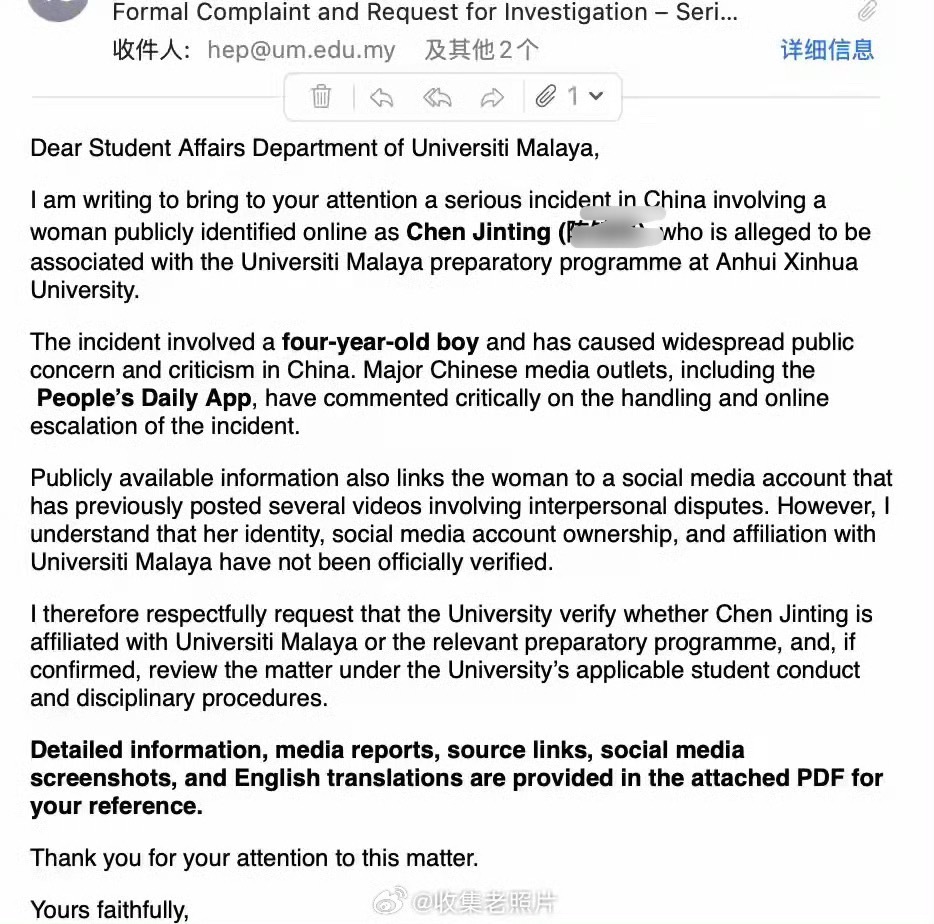
A wave of complaint emails sent from China has reached the University of Malaya in Kuala Lumpur, and the university says it will take "necessary measures" — the latest turn in a case that has occupied Chinese social media for days, and a demonstration of how far Chinese internet accountability campaigns can now travel.
The trail begins with a case that consumed Chinese social media last week, when a woman's viral accusation that a 4-year-old boy had groped her in Changsha collapsed under scrutiny — the site covered the backlash to it as the surveillance footage and public opinion turned. What kept the story alive afterward was not the toddler, but the woman: online detectives connected her account to a student at Malaysia's oldest university who posts lifestyle vlogs to a sizable following, and the gulf between the two personas became the story's second act.
That connection was unverified, but it was enough to set off a campaign. Netizens drafted formal complaints and sent them to the university's student-affairs office, then posted the receipts. One widely shared screenshot shows an email with the subject line "Formal Complaint and Request for Investigation" addressed to the office's address; another shows a reply from the university's official account acknowledging that the message had been received.
The response, and the pile-on
On Thursday the university's response itself became the trend: the institution said it "will take necessary measures," without specifying what those would be. The sports journalist Wang Weichen, whose post drew more than 10,000 likes, put the consequence plainly: the study-abroad vlog series the woman had been filming was unlikely to continue. Other posters circulated what they said were excerpts of the complaint letters, which accuse her of fabricating the groping claim and of mistreating the child — allegations that remain contested in the public record, and which the university has not addressed in detail.
The episode sits on contested ground, and Chinese commenters are arguing about it rather than celebrating. Supporters of the campaign frame it as due diligence that platforms and courts failed to deliver, pointing to the original case's explosive arc: an adult accusation against a toddler, a counter-narrative from the boy's family, and a national argument about when accusation equals guilt. Critics see a mob formalizing itself — strangers writing to a foreign university to end a stranger's education, on the strength of screenshots. A post urging that the matter "go through formal litigation instead" drew thousands of likes, a sign the discomfort is not marginal.
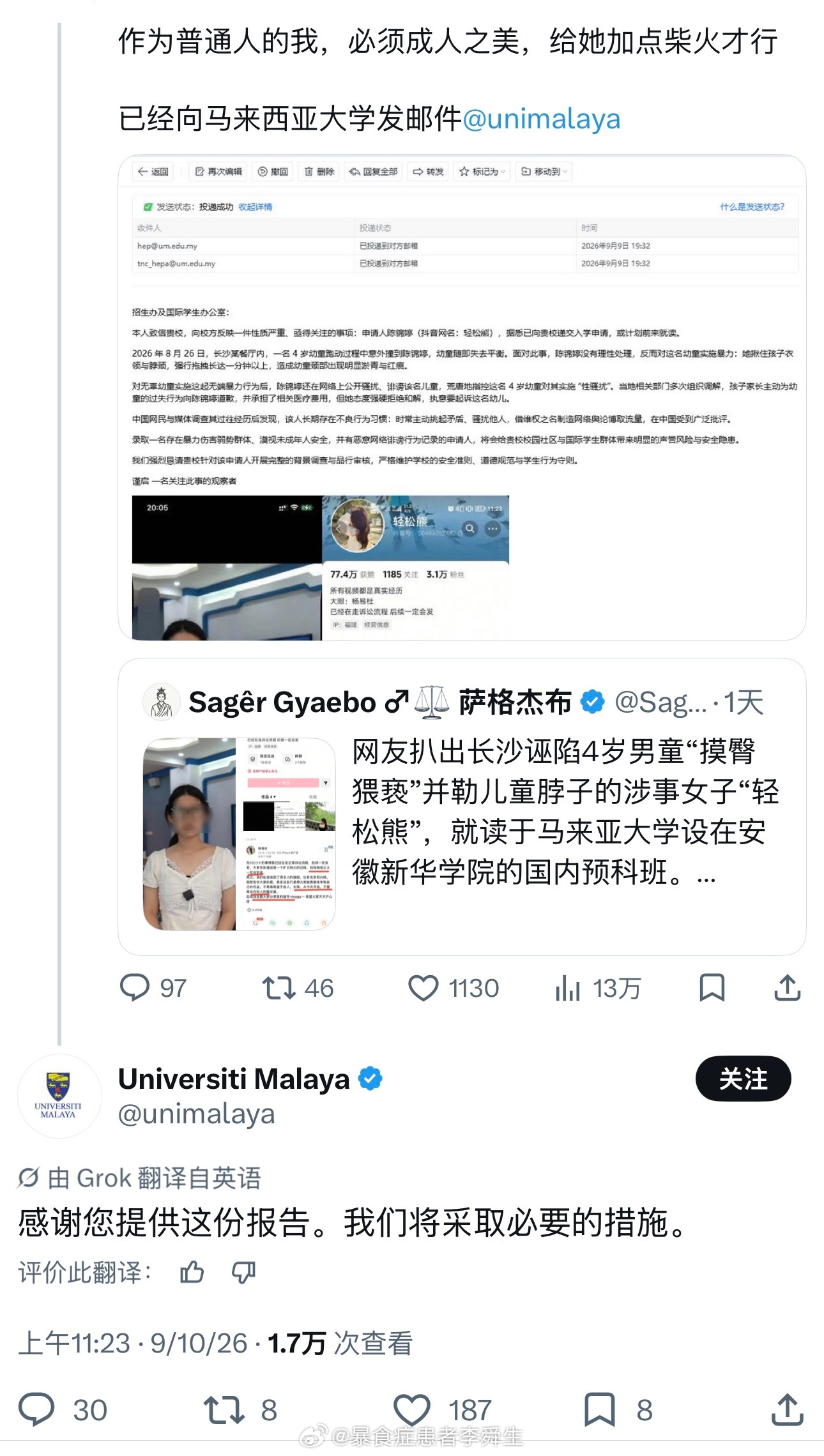
The university has not said what, if anything, it will do. The measure of this campaign will be whether "necessary measures" means an inquiry into the conduct alleged — or an enrollment quietly ended without one.